NOVEMBER 7, 2023.
Following a vote from
the National Council
of Chadian Petroleum
Companies, AIU
Graduate Mahamat
Lamine Yacoub, has
been elected Secretary
General of this Council. This
council brings together all the marketers, service
stations and oil companies
throughout
the country.
Mahamat Lamine
Yacoub has completed
a Doctorate
program in Business
and Economics at Atlantic
International University.
NOVEMBER 7, 2023.
Following a vote from
the National Council
of Chadian Petroleum
Companies, AIU
Graduate Mahamat
Lamine Yacoub, has
been elected Secretary
General of this Council. This
council brings together all the marketers, service
stations and oil companies
throughout
the country.
Mahamat Lamine
Yacoub has completed
a Doctorate
program in Business
and Economics at Atlantic
International University.
 OCTOBER 25,
2023. One of our
students, Kanbiro
Orkaido Deyganto,
who is enrolled at
AIU in the Doctorate
of Business Administration
& Finance program, has just
published an article in the Qeios
journal, London, UK.
His research article, titled
“Determinants of Micro, Small
and Medium Enterprises (MSMEs) Sustainable Development in Africa”,
highlights the crucial factors
that contribute to the sustainable
development of MSMEs
in Africa, shedding light on their
economic and social impact.
This publication signifies not
only his personal achievement
but also the valuable contribution
to the scholarly discourse
surrounding sustainable development.
Article: https://www.qeios.
com/read/QG42D5
OCTOBER 25,
2023. One of our
students, Kanbiro
Orkaido Deyganto,
who is enrolled at
AIU in the Doctorate
of Business Administration
& Finance program, has just
published an article in the Qeios
journal, London, UK.
His research article, titled
“Determinants of Micro, Small
and Medium Enterprises (MSMEs) Sustainable Development in Africa”,
highlights the crucial factors
that contribute to the sustainable
development of MSMEs
in Africa, shedding light on their
economic and social impact.
This publication signifies not
only his personal achievement
but also the valuable contribution
to the scholarly discourse
surrounding sustainable development.
Article: https://www.qeios.
com/read/QG42D5
 OCTOBER 25, 2023. One of our
students, Lucila M. Del Rosario
Romero, contributed to the
organization of the
event for the 485th
anniversary of the
Autonomous University
of Santo Domingo,
where she
gave a lecture about
mental health. You can watch the video
(Spanish) here: https://youtu.be/
rQMzl1nQhSU?si=wXq58pTw3GbgNYk2
Lucila has
completed a Doctorate
program in
Human Development
Psychology
at Atlantic
International
University.
OCTOBER 25, 2023. One of our
students, Lucila M. Del Rosario
Romero, contributed to the
organization of the
event for the 485th
anniversary of the
Autonomous University
of Santo Domingo,
where she
gave a lecture about
mental health. You can watch the video
(Spanish) here: https://youtu.be/
rQMzl1nQhSU?si=wXq58pTw3GbgNYk2
Lucila has
completed a Doctorate
program in
Human Development
Psychology
at Atlantic
International
University.
 OCTOBER, 2023. Atlantic
International University has
just contributed two books
to the Arba Minch University
of Ethiopia. Both books were
published by AIU’s Academic
Advisor, Dr. Kanbiro Orkaido,
who has been acting as an
ambassador for the Arba Minch
University, our esteemed institution
in Ethiopia.
The books are titled Win
Exam in Management and Win
Exam in Accounting and Finance.
This endeavor not only
showcases the quality of
education provided by Atlantic
International University
but also helps in positioning
our institution as a beacon of
knowledge within the Ethiopian
academic landscape.
OCTOBER, 2023. Atlantic
International University has
just contributed two books
to the Arba Minch University
of Ethiopia. Both books were
published by AIU’s Academic
Advisor, Dr. Kanbiro Orkaido,
who has been acting as an
ambassador for the Arba Minch
University, our esteemed institution
in Ethiopia.
The books are titled Win
Exam in Management and Win
Exam in Accounting and Finance.
This endeavor not only
showcases the quality of
education provided by Atlantic
International University
but also helps in positioning
our institution as a beacon of
knowledge within the Ethiopian
academic landscape.
 Call for Papers
This Conference will be held
July 3–5, 2024 at Lusiada
University, Lisbon, Portugal.
We invite proposals for paper
presentations, workshops/
interactive sessions, posters/
exhibits, colloquia, focused
discussions, innovation showcases,
virtual posters, or virtual
lightning talks.
Call for Papers
This Conference will be held
July 3–5, 2024 at Lusiada
University, Lisbon, Portugal.
We invite proposals for paper
presentations, workshops/
interactive sessions, posters/
exhibits, colloquia, focused
discussions, innovation showcases,
virtual posters, or virtual
lightning talks. NOVEMBER, 2023. This graduate student completed their program
with a high cumulative grade point average, which reflects the quality
of performance within their respective major. Congratulations!
NOVEMBER, 2023. This graduate student completed their program
with a high cumulative grade point average, which reflects the quality
of performance within their respective major. Congratulations! NOVEMBER, 2023.
This graduate student
completed the majority
of the requirements to obtain
honors, which included a 4.0
GPA, published works,
recommendation from
her advisors,
patent a product, etc.
Congratulations!
NOVEMBER, 2023.
This graduate student
completed the majority
of the requirements to obtain
honors, which included a 4.0
GPA, published works,
recommendation from
her advisors,
patent a product, etc.
Congratulations!
 Call for Papers
This Conference will be held
June 26–28, 2024 at
Sapienza University of Rome,
Rome, Italy
+ Online.
Call for Papers
This Conference will be held
June 26–28, 2024 at
Sapienza University of Rome,
Rome, Italy
+ Online.

| Beatriz Evelina Wolff Doctor of Economics Finance Argentina |
Drew Christopher Moree Bachelor of Science Architecture Bahamas |
Jorge Luis Carvajal Sevilla Bachelor of Science Architecture Bolivia |
Janice Tanesha James Master of Science Public Health British Virgin Islands |
Festus Kongyu Ali Doctor of Philosop hy Development Studies Cameroo n |
Kristabel Nalowa Niger-Thomas Master of Science Accounting Cameroo n |
| Sonia Filomena Andrade Correia Master of Management Human Resources Management Cap e Verde |
René Torres Villacorta Doctor of Family Resolution Scholar and Spiritual Conflict Chil |
Otto Krahan Bachelor of Civil Engineering Hydraulics Chile |
Cecilia Andrea Galleguillos Ramírez Bachelor of Psychology Clinical Psychology Chile |
Gabriel Arturo Flores Rozas Doctor of Education Education Chile |
Solange Bonko Odie Master of Management Human Resources Congo |
| Mercedes Josefina Perez Diaz Doctor of Philosop hy Ed. Research, Technology and Innovation Dominican R |
Daniel De Los Santos Bachelor of Political Science Human Rights and Humanities Dominican Republic |
Juan Julio Castillo Castillo Bachelor of Science Electrical Engineering Dominican Republic |
Verónica Isabel Rivas Pacheco Bachelor of Science Nutrition and Dietetics Dominican R |
Hipólito López Santos Doctor of Education Religious Education Dominican Republic |
Jean Maxon Jolivert Master of Science Nutrition Dominican Republic |
| Luis Armando León León Doctor of Business Management Business Management Ecuado |
Mirna Beatriz Ayala Fuentes Bachelor of Science Architecture El Salvador |
Carlos Adrian Saravia Mendez Master of Business Administration Business Administration El Salvador |
Mohammed Farik Doctor of Science Information Technology Fiji |
Bismark Yaw Gyamerah Doctor of Accounting Accounting Ghana |
Benedict Nii Tetteh Yartey Doctor of Education Higher Education Management Ghana |
| Eric Yaw Owusu Doctor of Philosop hy Project Management Ghana |
Katherine A. Ramírez Coronado de H. Bachelor of Business Administration Business Administration Guatemala |
Juan Alberto Celada Rodríguez Bachelor of Business Administration Business Administration Guatemala |
Walter Muñoz Chajón Bachelor of Business Administration Business Administration Guatemala |
Ana Margarita Dieguez Meneses Bachelor of Business Administration Business Administration Guatem |
Herminio Anibal López Fuentes Bachelor of Business Administration Business Administration Guatemala |
| Víctor Leonardo González de León Bachelor of Business Administration Business Administration Guatemala |
Irma Olimpia Coronado Sánchez Bachelor of Business Administration Business Administration Guatemala |
Milton Danilo Orellana Ortíz Bachelor of Business Administration Business Administration Guatemala |
Vivian J. Gramajo Luna de Navas Bachelor of Business Administration Business Administration Guatemala |
Enrique Sebastián de León Méndez Bachelor of Business Administration Business Administration Guatemala |
Nancy Maricela Velásquez Aguilar Master of Science Nutrition Guatemala |
| Haba Cece Jules Bachelor of Computer Science Information Technology Engineering Guinea |
Marco Antonio Zavala Ortiz Master of Science Nutrition Honduras |
German Evelio Fuentes Benites Bachelor of Social and Human Studies Humanitarian Studies Honduras |
Celfa Sanabria Torres Master of Science Legal Studies Honduras |
Novelett Yvonne Wilson Doctor of Science Psychology Jamaica |
Amer Zamel Abdallah Al Yazjin Bachelor of Science Aeronautical Engineering Jordan |
| Kennedy Alwena Kimiywe Doctor of Theology Biblical Studies Kenya |
Eng. Kapkusum Robert Bartile Master of Science Civil Engineering Kenya |
Cooppen Tangavel Bachelor of Science Mathematics Mauritius |
Dra. Cecilia Beatriz Frausto Mota Master of Health Science Nutrition and Wellness Mexico |
Ângelo Manuel de Sousa Pinto Master of Science Mining Safety and Risk Management Mozambique |
Sérgio Ernesto Zimba Master of Science Management and Information Technology Mozambique |
| René Zaide Terrazas Febres Doctor of Science Architecture Nicaragua |
Kingsley Nnadiukwu Okagu Bachelor of Science Social Psychology Nigeria |
Promise Ozichukwu Pat-Aasadu Bachelor of Science Bioengineering Nigeria |
Udo Onyeagba Master of Holistic Health Corporate Wellness Nigeria |
Christopher Nsidibe Umoh Bachelor of Engineering Electrical Engineering Nigeria |
Sunday Harry Akpan Doctor of Philosop hy Petroleum Engineering Nigeria |
| Betty Nkechi Anaele Doctor of Philosop hy Management Nigeria |
Paul Aleakhue Udochi Doctor of Philosop hy Coaching and Leadership Nigeria |
Inegbenekalo Ibhade Tuesday Doctor of Philosop hy Political Science Nigeria |
Morufu Tosin Ibrahim Master of Accounting Accounting Nigeria |
Taribi Oriyebaka, Anthony Master of Science Civil Engineering Nigeri |
Taribi Oriyebaka, Anthony Master of Science Civil Engineering Nigeri |
| Lizzy Oluseun Edward-Onyenweaku Master of Social Science Social Works Nigeria |
Domingo Javier Figueroa Cermeño Doctor of Science Computer Science Panama |
Ivan Noese Doctor of Business Administration Business Management Pap ua New Guinea |
Rodrigo Paredes Lazo Doctor of Science Civil Engineering Peru |
Placide Jean-Marie Ahouadi Doctor of Business Management Management Republic of Benin |
Lester Clarence Celestin Master of TVET Leadership and Mgmt of TVET I&P Saint Lucia |
| Nokuzola Hlaleleni Geja Doctor of Philosop hy Mathematics Education South Africa |
Marko Mayow Bayak Master of Science International Relations and Diplomacy South Sudan |
Jorge Juan Roca Hernández Doctor of Psychology Counseling in Addiction and Violence Spain |
Luis Felipe Tamayo Saldarriaga Bachelor of Science Psychology Spain |
José Luis Esteban Casero Doctor of Education Education Spain |
Elvis B.Z. Dlangamandla / D. Doctor of Science Electrical and Electronic Engineering Swaziland |
| Dolorosa Khetsiwe Shabangu Doctor of Science Public Health Swaziland |
Mahmoud Hassan Bakar Bachelor of International Relations Diplomacy Tanzania |
Amani Omari Masenya Bachelor of Science Health Care Administration Tanzania |
Joaninho Xavier Hei Doctor of Philosop hy Education Timor-Leste |
Alzira Sequeira Freitas dos Reis Master of Develop ment Studies Development Studies Timor-Leste |
Şükrü Derici Bachelor of Arts Business Administration Türkiye |
| Dr. David Kagimu Doctor of Science Public Health Uganda |
azira Henry Mugisha Doctor of Science Environmental Sciences Uganda |
Goodness Chinyaka Bachelor of Music Music Education United Kingdom |
Kunle Pius Ojewale Doctor of Science Public Health United Kingdom |
Kristel Makarena Goncalvez Correa Bachelor of Education English as Second Language Urugua |
Jorge Alex Deutsch De Barros Bachelor of Science Mechanical Engineering Uruguay |
| Kishron Shadique Matthews Bachelor of Science Business Administration USA |
Javier R Felix Vizcarra Bachelor of Science Computer Science USA |
Kettia Jean-Marie Bachelor of Science Psychology USA |
Jean Paul Cristancho Cuartas Bachelor of Science Computer Science USA |
Samanda Martinez Benedicto Doctor of Psychology Clinical Psychology USA |
Soonaviyana Shaabani Doctor of Science Renewable Energy Engineering USA |
| Carlos Mario Aragon Sampayo Master of Science Architecture USA |
Maritza Ramos Cerezo Post-Doctorate of Science Psychopedagogy USA |
Mordecai Ilunga Chibwe Bachelor of Science Information Technology Zambia |
Clifford Zulu Doctor of Business Administration Business Administration Zambia |
Charles Tafadzwa Ndari Bachelor of Arts Architecture Zimbabwe |
Gladys Claris Gowo Doctor of Theology Biblical Counseling Zimbabwe |
| Elizabeth Dziva Bachelor of Arts Media and Communication Zimbabwe |
Lucia Nkomo Master of Business Administration Business Administration Zimbabwe |


Universities as such arise
from the cathedral and
monastic schools of the 12th
and 13th centuries.
The word university comes
from the Latin Universitas Magistrorum
et Scholarium whose
meaning is “Community of
Professors and Academics”.
The first University is
considered to be that of Bologna
—1088, Italy— because
it’s the first to use the name
Universitas at its creation; It’s
also the first to issue highlevel
academic qualifications.
Nowadays Universities have
the function of maintaining
Culture, Teaching and
Research. Regarding Research, independently
of universities,
there are countries that have
Research Institutes: Universities
the Broad Institute of
MIT - Massachusetts Institute
of Technology, and Harvard
University, both in the United
States; about institutes: the
Max Planck in Germany and the French National Center for
Scientific Research in France.
Universities nowadays have
extended all the functions
already mentioned.
In Teaching they have looked
for ways for students to finish
their programs because in
today society Education is very
important to acquire the skills
and knowledge to be part of a
globalized society.
They can be titled by:
Professional Exam - Research
work – Thesis.
Professional experience.
Continuing to a higher grade
level with which they completed
the Program.
Working for a certain time in
companies determined by the
government of the country to
which they belong,
On Average.
Thesis in teams that can be
international.
Taking exams at State Research
Institutes.
When the student finishes his
program, the payment factor
of all the fees that the Universities in turn must have
pay to the States is added to
it and therefore the students
must cover the cost.
Students at any University
are struggling to reach a level
of knowledge and skills that
they don’t yet have to offer to
the job market and money is
not what many have plenty of.
This cost of finishing the
studies becomes difficult for
the students and in turn for
the Universities because then
their performance is affected
by something that is not
academic.
Universities need to have
the service they offer in
the results, therefore in the
graduates.
The tension is added to the
completion of studies because
in many Universities the process
of preparing any research
work was not what they did
during their program.
A research paper is necessarily
a logical scheme and logic
has been removed from almost
all study programs. Science
remains a logical scheme.
At Universities they give
students a scheme with how to
do an investigation where the
possible methods to use and
the techniques to present what
has been done are distinguished
step by step but given
the little practice in the procedure
the student feels that he
is lost, hence the anguish to
finish his program.
At Atlantic International
University —AIU— where
you are doing your studies,
in whatever program, from
the beginning you work with
a scheme that, although they
don’t tell you, is a logical
scheme and they ask you to
do your work following that
scheme so for your final project,
whatever it may be, you
have no problems executing it.
Let’s now see how from the
Universities we can contribute
to the peace.
On September 21, 2023, the
UN celebrated the International
Day of Peace and within the
Conference of its Secretary
General Antonio Guterres, the central points were the
Sustainable Development Goals in
relation to Peace Education and
Disinformation.
“The promotion of peace
contributes to the achievement
of the Sustainable Development
Goals (SDGs) and achieving
these goals will create a culture
of peace”. UN- International
Day of Peace, September 21. https://
www.unrg/es/observances/international-
day-peace#:~:text=El%20
a%C3%B1o%202023%20marca%20
el,que%20supone%20un%20paso%20
intermedio
The purpose of creating a
day of peace is to avoid wars
given what happened with the
two world wars.
The United Nations Security
Council is the one that establishes
the provisions to follow
to achieve peace in situations
where it has been broken.
“In accordance with the
provisions of its ‘Union for
Peace’ resolution of November
1950 (resolution 377(V), the
General Assembly may also
adopt measures if the Security
Council fails to do so, due to
the vote against a permanent
member, unless a permanent
member votes against, in
situations where there appears
to be a threat to the peace, a
breach of peace or an act of
aggression.” UN - Peace, Dignity
and Equality on a Healthy Planet.
https://www.un.org/es/global-issues/
peace-and-security From the above it follows
that in conflicts that threaten
peace the UN will try to generate
solutions to find peace
between countries.
Universities can contribute to
Peace by generating publications
that, as they belong to the
sciences, they present the truth.
One of the problems in
the society in which we live
and discussed on the International
Day of Democracy
on September 15, 2023, was
misinformation.
The world we are living
in is full of misinformation
through platforms whose
purpose seems to be to obtain money regardless of what they
publish.
Nowadays we already have
countries that have created
laws to prevent the damage
they do.
At Atlantic International
University, where you do your
program, your work is published
as long as you make a
well-prepared document following
the guidelines they give
you, where you solve a problem
in your community, national or
international.
With the publication of your
works, you are introducing
yourself into the society that
today’s world needs.
For peace
we can work in
the environment
in which we operate.
Living in peace
must be possible!
BIBLIOGRAPHY. ONU- Día Internacional de la Paz, 21 de septiembre
https://www.unrg/es/observances/international-day-peace#:~:text=El%20
a%C3%B1o%202023%20marca%20el,que%20supone%20un%20paso%20intermedio
| ONU - Contrarrestar la desinformación. https://www.un.org/
es/countering-disinformation | ONU- Paz, Dignidad e Igualdad en un
planeta Sano https://www.un.org/es/global-issues/peace-and-security

6. Reference
According to Lyons (1977),
reference is like the orientation
or the connection that
grips between utterances
and things: words refer to
things, between language and
the world, in the absence of
language users. In another
statement, the same writer
explains the nature of reference
by declaring that it is the
speaker who refers (by using
some appropriate expression)
to the act, he invests the
expression with reference by
the act of referring. Referring
is not something an expression
does; it is something that
someone can use an expression
to do.
7. Presupposition
Presupposition is the concept
of practical and realistic assumption.
It is defined in terms
of expectations the speaker
makes about what the listener/
hearer will possibly agree on
without contest or resistance.
Linguistics professionals consider
presupposition as what is
taken by the speaker to be common
ground of the conversation
members/ participants.
8. Implicatures
The term ‘implicature’ is
used to explain what the speaker
implies, suggests, or means,
as distinct from what he/she
exactly says. There are conventional
implicatures; which are
determined by the conventional
meaning of the words used. Of
much greater interest is the notion
of conversational implicature;
resulting from an overall
belief of conversation plus a
number of popular sayings, adages
or proverbs that speakers
will normally conform to.
The general principle is called
the Cooperative Principle; as
presented by Grice, H.P (1975),
in the following terms:
Make your conversational contribution
the way it is required,
from the stage at which it occurs,
by the accepted purpose or
direction of the talk exchange in
which you are engaged.
The following are conversational
conventions or maxims
that support Grice’s Cooperative
principle:
Maxim of Quantity: Make
your support or contribution as
instructive as is required (for
the actual purpose of the exchange),
and do not give more
contribution than needed.
Maxim of Quality: Only say
what you believe is true, and
avoid saying what you know is
false or something for which
you do not have adequate
evidence.
Maxim of Relation: Be pertinent;
i.e. relevant.
Maxim of Manner: Be perspicuous
and clear enough,
avoid obscurity of expression,
avoid ambiguity, be brief,
(avoid unnecessary prolixity),
and be orderly.
Grice makes it possible to
describe what types of meaning
a speaker can convey
by ‘flouting’ one of these
maxims. This ‘flouting’ of a
maxim results in the speaker
conveying, in addition to the
literal meaning of this utterance,
an additional meaning;
which is a conversational
implicature.
Let us consider the following
exchange as an example:
A: I am out of fuel.
B. There is a garage round
the corner.
In this exchange, the implicature,
derived from the
assumption that speaker B is
adhering to the Cooperative
Principle is that the garage is
not only round the corner, but
also will be open and selling
petrol. We might also note that,
in order to arrive at the implicature,
we have to know certain
facts about the world, that
garages sell petrol, and that
‘round the corner’ is not a long
distance away. We also have to
interpret A’s remark not only
as a description of a particular
state of affairs, but also as
a request for help. When the
study of the intended meaning
goes beyond the exact meaning
of the ‘‘sentence-on-thepage’’,
a vast number of related
issues have to be considered.
Implicatures are partially derived
from the conventional or
literal meaning of an utterance,
produced in a specific context
which is shared by the speaker
and the hearer, and depends
on an acknowledgment by the
speaker and the hearer of the
Cooperative Principle and its
maxims. Implicatures have
to be considered as integrally
indefinite because since they
originate from a supposition
that the speaker has the
intention of conveying the
meaning and conforming to
the Cooperative Principle. Since
the hearer has only limited
access to what the speaker
intended, or how sincerely he
was behaving in the production
of a discourse fragment, any
claims regarding the implicatures
identified will have the
status of interpretation.
9. Inference
Since the hearer has no
direct access to a speaker’s
intended meaning in producing
an utterance, he/she often has
to rely on a process of inference
to arrive at an interpretation
of utterances or of the
connection between utterances.
It may be the case that we are
capable of deriving a specific
conclusion from specific premises
via deductive inference:
(a) if it is sunny, it is warm
(b) It is sunny
(c) So, it is warm.
Let us consider the following
statement: In the kitchen there
was a huge dresser and when
anyone went in you would see
the hats and coats were all
dumped on this dresser. We are
more probably operating with a
rather loose form of inference;
which leads us to believe that
the hats and coats mentioned
in the above statement belong
to visitors to the house which
has the dresser in its kitchen!
The main task is to
determine what we can know
about the meaning and the
context of an utterance given
only the knowledge that the
utterance has occurred. Whenever
we find some sentence in
context, we should ask ourselves
what the effect would
have been if the context had
been slightly different.
Conclusion
A retrospective glance
through the content if this article,
shows that a good usage
of the language is what leads
to successful communication.
By “good usage”, here
we mean the communicative
practice of a language with
logical coherence of words in
order to be understood by our
interlocutor, i.e. the hearer, or
the reader.
Foreign language learners
need to be encouraged by getting
good models and encouragements
from teachers/
facilitators, toward language
practice through interactions
between the two parties
in communication, that is,
the speaker and the hearer,
the writer and the reader,
or between those using sign
language. This is what we
understand by “communicative
approach” that leads to
“communicative competence”.
When we achieve these two,
we achieve successful communication.
THE END
BIBLIOGRAPHY. Auwera, J. V. D. (1981). What Do We Talk about when We
Talk? Speculative Grammar and the Semantics and Pragmatics of Focus.
Amsterdam: John Benjamins | Bloomfield, Leonard (1983) [1914]. An Introduction
to the Study of Language: New edition. Amsterdam: John Benjamins
Publishing. ISBN 978-90-272-8047-3. | Giglioli P.P. (1972). Language
and Social Context. London: Penguin Books Ltd | Green, G. (1989).
Pragmatics and Natural Language Understanding. Hillsdale, NJ: Lawrence
Erlbaum Associates. | Grice, H.P. (1975). Logic and Conversation in Cole, P.
and Morgan, J.L. Syntax and Semantics Vol. 3, Harvard University Press. |
Kambale, M.B. (1996). Applied Linguistics lecture notes, ISP Bukavu, DRC
| Leech, G. (1983). The Principles of Pragmatics. London and New York:
Longman | Lyon, J. (1977). Semantics. Cambridge: Cambridge University
Press | Martinich, A. P. (1996). The Philosophy of Language, (Syntax,
Semantics and Pragmatics), Third Edition. Oxford: OUP. | Sadock, J.M.
(1974). Towards a Linguistic Theory of Speech Acts. New York: Academic
Press | Savignon, J. (1973). Communicative Competence: An Experiment
in Foreign Language Teachin. Philadelphia: The Centre for Curriculum
Development. | Steve, H. (1996, update in 2006). Educational Linguistics:
The Acquisition of Literacy | Stubbs, M. (1983). Discourse Analysis: The
Socio-Linguistic Analysis of National Languages. Oxford: Basil Blackwell
| Trudgill, Peter (1995): Sociolinguistics: An introduction to language and
society, London, Penguin Books. | Wright, T. (1988). Roles of Teachers and
Learners, OUP, London. | Internet sources: www.brusov.am • www.modlinguistics.
com • www.dialogweb.org • www.criticism.com
 The language of Gaelic has been
spoken in Scotland since at least
the 10th century and was at one time the
country’s main language, widespread in
towns and cities across the nation. ...
Since the union of Scotland and England
in the early 18th century, though,
it has been in decline. These days you
are most likely to find native Gaelic
speakers in the Highlands and Islands
of Scotland, with concerns having been
raised about the future of the language.
Now, a new initiative from community
cafe and Gaelic cultural centre
An Taigh Cèilidh —known to locals
in Stornoway on the isle of Lewis as
“the Gaelic Cafe”— seeks to turn the
tide with the release of the first Gaelic
edition of the board game Scrabble, arriving
just in time for Christmas.
Produced in collaboration with London-based Tinderbox Games, who
manufacture and distribute a range of
Scrabble editions, the Gaelic version
will contain only the 18 letters found
in the Gaelic alphabet (J, K, Q, V, W, X,
Y and Z do not feature), and includes
the grave accent on vowels À È Ì Ò and
Ù. The frequency with which each letter
appears has been reconsidered to
reflect its usage in Gaelic, and scoring
has been reformulated to reflect the
respective ease and difficulty of using
different letters in the language. ...
Tinderbox Games already produce
language versions including Welsh,
Irish, Latin, Icelandic and Faroese, said
CEO Jim Harrison, who pointed out that
no two versions are the same, due to
linguistic differences. ...
The language of Gaelic has been
spoken in Scotland since at least
the 10th century and was at one time the
country’s main language, widespread in
towns and cities across the nation. ...
Since the union of Scotland and England
in the early 18th century, though,
it has been in decline. These days you
are most likely to find native Gaelic
speakers in the Highlands and Islands
of Scotland, with concerns having been
raised about the future of the language.
Now, a new initiative from community
cafe and Gaelic cultural centre
An Taigh Cèilidh —known to locals
in Stornoway on the isle of Lewis as
“the Gaelic Cafe”— seeks to turn the
tide with the release of the first Gaelic
edition of the board game Scrabble, arriving
just in time for Christmas.
Produced in collaboration with London-based Tinderbox Games, who
manufacture and distribute a range of
Scrabble editions, the Gaelic version
will contain only the 18 letters found
in the Gaelic alphabet (J, K, Q, V, W, X,
Y and Z do not feature), and includes
the grave accent on vowels À È Ì Ò and
Ù. The frequency with which each letter
appears has been reconsidered to
reflect its usage in Gaelic, and scoring
has been reformulated to reflect the
respective ease and difficulty of using
different letters in the language. ...
Tinderbox Games already produce
language versions including Welsh,
Irish, Latin, Icelandic and Faroese, said
CEO Jim Harrison, who pointed out that
no two versions are the same, due to
linguistic differences. ...
 Perhaps the most significant of this
year’s miraculous occurrences is
that FX’s Reservation Dogs —a series that
has featured an entirely Indigenous cast
with no previously known stars of any
kind, and is at least partially narrated
by the ghost of a warrior named William
Knife-man who died at the Battle of Little
Big-Horn— is ending, triumphantly,
on its own terms after three seasons.
The show premiered in 2021 partly
thanks to the efforts of Taika Waititi
who co-created the series with filmmaker
Sterlin Harjo and then ceded
creative control to Harjo and his (again,
entirely Indigenous) writers’ room
full of improv comedians and poets.
Reservation Dogs is a show about the
tragicomic exploits of all the people
(and spirits) living on a reservation in
Okern, Oklahoma, told from the point
of view of four kids who are absolutely
desperate to leave. Our heroes begin
the series bored and depressed, and
rather than invent ways to divert them,
the show hones in on their boredom
and depression, giving it gentle, granular
attention. ...
Numerous characters throughout this
final season repeat the same maxim:
“Everything is connected.” And that’s a
fine explanation for the presence of all
the stargazers and spirits that wander
across our screen. Everything might be
connected, but that doesn’t mean that
it will snap into place. This final season
is in some sense about what the show’s
sometimes frustrating, sometimes sublime
structural choice —to be a show
about a community, not a clique within
it— really means.
Perhaps the most significant of this
year’s miraculous occurrences is
that FX’s Reservation Dogs —a series that
has featured an entirely Indigenous cast
with no previously known stars of any
kind, and is at least partially narrated
by the ghost of a warrior named William
Knife-man who died at the Battle of Little
Big-Horn— is ending, triumphantly,
on its own terms after three seasons.
The show premiered in 2021 partly
thanks to the efforts of Taika Waititi
who co-created the series with filmmaker
Sterlin Harjo and then ceded
creative control to Harjo and his (again,
entirely Indigenous) writers’ room
full of improv comedians and poets.
Reservation Dogs is a show about the
tragicomic exploits of all the people
(and spirits) living on a reservation in
Okern, Oklahoma, told from the point
of view of four kids who are absolutely
desperate to leave. Our heroes begin
the series bored and depressed, and
rather than invent ways to divert them,
the show hones in on their boredom
and depression, giving it gentle, granular
attention. ...
Numerous characters throughout this
final season repeat the same maxim:
“Everything is connected.” And that’s a
fine explanation for the presence of all
the stargazers and spirits that wander
across our screen. Everything might be
connected, but that doesn’t mean that
it will snap into place. This final season
is in some sense about what the show’s
sometimes frustrating, sometimes sublime
structural choice —to be a show
about a community, not a clique within
it— really means.
 Researchers have made a huge step
forward in understanding how neurons
communicate through extremely
short proteins called neuropeptides.
The map of the C elegans, which details
31,479 neuropeptide interactions between
the worm’s 302 neurons, shows
where each neuropeptide and its receptor
acts in the animal’s nervous system.
It will help scientists better understand
how widespread neuropsychiatric conditions
like eating disorders, obsessive
compulsive disorder and post-traumatic
stress disorder originate.
Neuropeptides are signalling molecules
produced by neurons that allow
them to communicate ‘wirelessly’ with
each other, even if the neurons are not
immediately next to each other. As well
as generating the first comprehensive
map of neuropeptide signalling in a
whole animal, the researchers found
that the wireless neuropeptide network
in C. elegans has a different structure
from wired connections. They are
denser, more decentralised, and have
different key neurons, or hubs. The
wireless network also connects parts
of the nervous system that are isolated
from the wired connectome. ...
The researchers built the map by
combining biochemical, anatomical
and gene expression datasets, using
them to determine which neurons
can communicate with each other
using specific neuropeptide signals.
...
Researchers have made a huge step
forward in understanding how neurons
communicate through extremely
short proteins called neuropeptides.
The map of the C elegans, which details
31,479 neuropeptide interactions between
the worm’s 302 neurons, shows
where each neuropeptide and its receptor
acts in the animal’s nervous system.
It will help scientists better understand
how widespread neuropsychiatric conditions
like eating disorders, obsessive
compulsive disorder and post-traumatic
stress disorder originate.
Neuropeptides are signalling molecules
produced by neurons that allow
them to communicate ‘wirelessly’ with
each other, even if the neurons are not
immediately next to each other. As well
as generating the first comprehensive
map of neuropeptide signalling in a
whole animal, the researchers found
that the wireless neuropeptide network
in C. elegans has a different structure
from wired connections. They are
denser, more decentralised, and have
different key neurons, or hubs. The
wireless network also connects parts
of the nervous system that are isolated
from the wired connectome. ...
The researchers built the map by
combining biochemical, anatomical
and gene expression datasets, using
them to determine which neurons
can communicate with each other
using specific neuropeptide signals.
...
 NASA has successfully demonstrated
that it is possible to produce
oxygen on Mars with the experiment
MOXIE, brought over by the Perseverance
rover. Now, a Chinese team has shown
that it might be possible to produce
oxygen on Mars using only material
present on the Red Planet.
Since the AI was here on Earth, it did
not use actual Martian soil, but meteorites
from Mars. The algorithm worked
out what molecules could be used to
create oxygen evolution reaction (OER)
catalysts. These catalysts would be used
to turn water into oxygen using solar
power. Water is not an abundant resource
on Mars, but there are deposits.
The AI chemist analyzed the composition
of five types of Martian meteorites
by shooting lasers at them. ... The resulting catalyst was excellent.
Researchers report that it could operate
steadily for over 550,000 seconds (almost
6 days and 9 hours) with an electric
current density of 10 milliamps per
square centimeter and an overpotential
of 445.1 millivolts. The team also tested
it at below-freezing temperatures,
consistent with temperatures that
are found on Mars, with no apparent
degradation. ... The AI found 3,764,376
possible formulas. For a single human,
finding the optimal formula from those
would require 2,000 years of labor. The
AI chemist was able to do it in two
months. ... The team is now looking at
applying the AI chemist to more terrestrial
challenges in chemical discovery.
Read full text
NASA has successfully demonstrated
that it is possible to produce
oxygen on Mars with the experiment
MOXIE, brought over by the Perseverance
rover. Now, a Chinese team has shown
that it might be possible to produce
oxygen on Mars using only material
present on the Red Planet.
Since the AI was here on Earth, it did
not use actual Martian soil, but meteorites
from Mars. The algorithm worked
out what molecules could be used to
create oxygen evolution reaction (OER)
catalysts. These catalysts would be used
to turn water into oxygen using solar
power. Water is not an abundant resource
on Mars, but there are deposits.
The AI chemist analyzed the composition
of five types of Martian meteorites
by shooting lasers at them. ... The resulting catalyst was excellent.
Researchers report that it could operate
steadily for over 550,000 seconds (almost
6 days and 9 hours) with an electric
current density of 10 milliamps per
square centimeter and an overpotential
of 445.1 millivolts. The team also tested
it at below-freezing temperatures,
consistent with temperatures that
are found on Mars, with no apparent
degradation. ... The AI found 3,764,376
possible formulas. For a single human,
finding the optimal formula from those
would require 2,000 years of labor. The
AI chemist was able to do it in two
months. ... The team is now looking at
applying the AI chemist to more terrestrial
challenges in chemical discovery.
Read full text
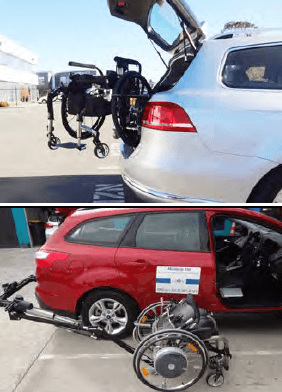 Abiliquip designed and made the Abi
Loader for 13 years, and it is their
flagship international product that has
been sold to 11 countries and loved by
thousands. The Abi Loader is a simple
solution to driving mobility for disabled
drivers with some very clever engineering.
The Abi Loader, at the push of the
drivers’ button, opens the boot and
delivers a wheelchair right up next to
the driver door.
Total driving independence and
class-leading ease of use make this the
premium option for manual wheelchair
users. For rigid chair users, there is no
other device that comes close.
Read full text:
Abiliquip designed and made the Abi
Loader for 13 years, and it is their
flagship international product that has
been sold to 11 countries and loved by
thousands. The Abi Loader is a simple
solution to driving mobility for disabled
drivers with some very clever engineering.
The Abi Loader, at the push of the
drivers’ button, opens the boot and
delivers a wheelchair right up next to
the driver door.
Total driving independence and
class-leading ease of use make this the
premium option for manual wheelchair
users. For rigid chair users, there is no
other device that comes close.
Read full text:
 ‘The Coloniality of Gender and Sexuality:
How the Intimate Lives of
Wixárika People were Changed Forever’
is a digital exhibition supported by The
Santo Domingo Centre of Excellence for
Latin American Research (SD CELAR) at
the British Museum. The digital display
addresses the impact of colonialism on
gender and sexuality among the Wixárika
(Huichol) people in Mexico and it’s
based on a community-based research
project led by Dr Jennie Gamlin.
The white European and Christian
Man became the standard by which all
of humanity was ranked and his position
was reinforced by controlling nations
and communities of people that were
colonised. Many of the nations that were
colonised in America had a more equal gender structure before colonialism:
some had women leaders and parallel
or complementarity gender systems,
meaning that although women and
men held different roles, these were
equal in status.
That is the case of the Wixárika or
Huichol peoples, an Indigenous group
of approximately 48,000 inhabiting the
southern Sierra Madre Occidental, in
North-Western Mexico. Wixárika is one
of 69 Mexican Indigenous languages
and belongs to the large Uto-Aztecan
linguistic family. The Wixaritari’s
outstanding heritage is sustained by
their collective dedication to complying
with ancestral traditions. These
revolve around maintaining good relations
with their ancestors and deities who control nature,
intimately linked
to the agricultural
cycle. ...
‘The Coloniality of Gender and Sexuality:
How the Intimate Lives of
Wixárika People were Changed Forever’
is a digital exhibition supported by The
Santo Domingo Centre of Excellence for
Latin American Research (SD CELAR) at
the British Museum. The digital display
addresses the impact of colonialism on
gender and sexuality among the Wixárika
(Huichol) people in Mexico and it’s
based on a community-based research
project led by Dr Jennie Gamlin.
The white European and Christian
Man became the standard by which all
of humanity was ranked and his position
was reinforced by controlling nations
and communities of people that were
colonised. Many of the nations that were
colonised in America had a more equal gender structure before colonialism:
some had women leaders and parallel
or complementarity gender systems,
meaning that although women and
men held different roles, these were
equal in status.
That is the case of the Wixárika or
Huichol peoples, an Indigenous group
of approximately 48,000 inhabiting the
southern Sierra Madre Occidental, in
North-Western Mexico. Wixárika is one
of 69 Mexican Indigenous languages
and belongs to the large Uto-Aztecan
linguistic family. The Wixaritari’s
outstanding heritage is sustained by
their collective dedication to complying
with ancestral traditions. These
revolve around maintaining good relations
with their ancestors and deities who control nature,
intimately linked
to the agricultural
cycle. ...
 Motocompacto redefines affordable
all-electric personal transportation
with sleek and simple styling, an
innovative, ultra-compact foldable design,
a maximum speed of 15 mph and
zero-emissions range of up to 12 miles.
Inspired by the Honda Motocompo of
the early 1980s, every Motocompacto
comes with a standard compact charger
that can be stowed on-board.
This scooter is perfect for getting
around cityscapes or college campuses
and for use as a first-mile/last-mile
vehicle. ...
Read full text
Motocompacto redefines affordable
all-electric personal transportation
with sleek and simple styling, an
innovative, ultra-compact foldable design,
a maximum speed of 15 mph and
zero-emissions range of up to 12 miles.
Inspired by the Honda Motocompo of
the early 1980s, every Motocompacto
comes with a standard compact charger
that can be stowed on-board.
This scooter is perfect for getting
around cityscapes or college campuses
and for use as a first-mile/last-mile
vehicle. ...
Read full text
 It has been said that “the eyes are
the window to the soul,” but new
research suggests that they may be a
window to the brain as well.
Our pupils respond to more than
just the light. They indicate arousal,
interest or mental exhaustion. Pupil
dilation is even used by the FBI to detect
deception. Now work conducted in our
laboratory at the Georgia Institute of
Technology suggests that baseline pupil
size is closely related to individual differences
in intelligence. The larger the
pupils, the higher the intelligence, as
measured by tests of reasoning, attention
and memory. In fact, across three
studies, we found that the difference
in baseline pupil size between people
who scored the highest on the cognitive
tests and those who scored the lowest was large enough to be detected by the
unaided eye. ...
Pupil size refers to the diameter of
the black circular aperture in the center
of the eye. It can range from around
two to eight millimeters. The pupil is
surrounded by the colorful area known
as the iris, which is responsible for
controlling the size of the pupil. Pupils
constrict in response to bright light,
among other things ...
We found that a larger baseline pupil
size was correlated with greater fluid
intelligence, attention control and, to a
lesser degree, working memory capacity—
indicating a fascinating relationship
between the brain and eye. Interestingly,
pupil size was negatively correlated
with age ...
It has been said that “the eyes are
the window to the soul,” but new
research suggests that they may be a
window to the brain as well.
Our pupils respond to more than
just the light. They indicate arousal,
interest or mental exhaustion. Pupil
dilation is even used by the FBI to detect
deception. Now work conducted in our
laboratory at the Georgia Institute of
Technology suggests that baseline pupil
size is closely related to individual differences
in intelligence. The larger the
pupils, the higher the intelligence, as
measured by tests of reasoning, attention
and memory. In fact, across three
studies, we found that the difference
in baseline pupil size between people
who scored the highest on the cognitive
tests and those who scored the lowest was large enough to be detected by the
unaided eye. ...
Pupil size refers to the diameter of
the black circular aperture in the center
of the eye. It can range from around
two to eight millimeters. The pupil is
surrounded by the colorful area known
as the iris, which is responsible for
controlling the size of the pupil. Pupils
constrict in response to bright light,
among other things ...
We found that a larger baseline pupil
size was correlated with greater fluid
intelligence, attention control and, to a
lesser degree, working memory capacity—
indicating a fascinating relationship
between the brain and eye. Interestingly,
pupil size was negatively correlated
with age ...
 The interior of a weighted blanket is
lined with a heavy material of some
kind (tiny spheres made of glass, plastic
or metal, or natural fillers such as rice,
grain, beans or sand). These fillers are
sewn into pockets or channels and arranged
so that their weight is distributed
evenly throughout the blanket.
Someone lying under a weighted
blanket feels a sensation of gentle pressure
evenly distributed across their entire
body. Occupational therapists refer
to this as deep touch pressure. Research
has found that this type of compression
activates the centers of the brain that
oversee involuntary processes such as
heart rate, blood pressure, respiration
and digestion. It has long been used,
often to beneficial effect, on individuals
with a wide range of sensory disorders. Studies looking into weighted
blankets over the years have observed
a range of potential benefits. These
include easing insomnia in adults living
with depression, anxiety and attention
deficit disorder; lowering anxiety
in some children with mental health
disorders; and improving sleep in older
adults living in a nursing home. The
researchers noted that while using a
weighted blanket, the participants in
their studies were able to fall asleep
more easily, woke less frequently during
the night and felt an increased
sense of calm during the day. A new
study in Sweden has potentially linked
the use of weighted blankets to increased
melatonin production. ...
Read full text:
The interior of a weighted blanket is
lined with a heavy material of some
kind (tiny spheres made of glass, plastic
or metal, or natural fillers such as rice,
grain, beans or sand). These fillers are
sewn into pockets or channels and arranged
so that their weight is distributed
evenly throughout the blanket.
Someone lying under a weighted
blanket feels a sensation of gentle pressure
evenly distributed across their entire
body. Occupational therapists refer
to this as deep touch pressure. Research
has found that this type of compression
activates the centers of the brain that
oversee involuntary processes such as
heart rate, blood pressure, respiration
and digestion. It has long been used,
often to beneficial effect, on individuals
with a wide range of sensory disorders. Studies looking into weighted
blankets over the years have observed
a range of potential benefits. These
include easing insomnia in adults living
with depression, anxiety and attention
deficit disorder; lowering anxiety
in some children with mental health
disorders; and improving sleep in older
adults living in a nursing home. The
researchers noted that while using a
weighted blanket, the participants in
their studies were able to fall asleep
more easily, woke less frequently during
the night and felt an increased
sense of calm during the day. A new
study in Sweden has potentially linked
the use of weighted blankets to increased
melatonin production. ...
Read full text:
 Malcolm Wood, co-founder and
group managing director of Maximal
Concepts, goes head-to-head with
Heidi Spurrell, CEO and founder of Future
Green, in this debate: Is it possible
to live in a zero-waste society?
Heidi Spurrell: YES. “It is possible
with the right mindset and action. This
involves reducing the amount of waste
generated by making conscious choices
every day. This includes choosing reusable
items instead of single use plastics
—for example, buying toothpaste that
comes in a glass jar, instead of toothpaste
tubes; composting food waste;
buying food from markets instead of
stores; and repurposing materials. Minimalism
also plays a key role in reducing
waste when individuals opt to have fewer
possessions and focus instead on buying high-quality, long-lasting products.” ...
Malcolm Wood: NO. “There is waste
created at every level of our existence,
and even in a circular economy, there
will always be waste. Everything we
use to live, move, work and travel
has a cost to the environment. Even
growing vegetables uses up nutrients
in the soil. We are designed to
consume, but this doesn’t mean that
we shouldn’t strive for [zero-waste].
We must learn to live with the lowest
impact on the environment and figure
out where we can replenish or reduce
our impact. ... When it comes to luxury
goods, if you can’t afford to offset
[the purchase] with carbon offsets,
you shouldn’t be buying it.”
Read full text:
Malcolm Wood, co-founder and
group managing director of Maximal
Concepts, goes head-to-head with
Heidi Spurrell, CEO and founder of Future
Green, in this debate: Is it possible
to live in a zero-waste society?
Heidi Spurrell: YES. “It is possible
with the right mindset and action. This
involves reducing the amount of waste
generated by making conscious choices
every day. This includes choosing reusable
items instead of single use plastics
—for example, buying toothpaste that
comes in a glass jar, instead of toothpaste
tubes; composting food waste;
buying food from markets instead of
stores; and repurposing materials. Minimalism
also plays a key role in reducing
waste when individuals opt to have fewer
possessions and focus instead on buying high-quality, long-lasting products.” ...
Malcolm Wood: NO. “There is waste
created at every level of our existence,
and even in a circular economy, there
will always be waste. Everything we
use to live, move, work and travel
has a cost to the environment. Even
growing vegetables uses up nutrients
in the soil. We are designed to
consume, but this doesn’t mean that
we shouldn’t strive for [zero-waste].
We must learn to live with the lowest
impact on the environment and figure
out where we can replenish or reduce
our impact. ... When it comes to luxury
goods, if you can’t afford to offset
[the purchase] with carbon offsets,
you shouldn’t be buying it.”
Read full text:
 The Canadian mining company whose
contract with Panama’s government
has triggered weeks of protests said
Monday that it has reduced operations
and soon may have to suspend them due
to a blockade of its mine’s power plant.
Minera Panama, the local subsidiary
of First Quantum Minerals, said in a
statement that small boats had blocked
its port in Colon province, preventing
supplies from reaching the copper mine.
“If the illegal actions continue impeding
the necessary supplies to operate the
power plant, the company will reduce
the remaining processing train this week
and will temporarily suspend production,”
the statement said.
Last week, naval police reported that
a ship carrying coal decided to turn back
rather than dock in the mine’s port due to “hostility from a group of protesters
who from their boats threw rocks and
blunt homemade objects” before being
dispersed by authorities. Panama has
been roiled by weeks of massive street
protests and highway blockades as
citizens worried about the impact on the
environment pressure the government
to revoke the contract. The protesters, a
broad coalition of Panamanians, fear the
mine’s impact on nature and especially
on the water supply. ...
In March, Panama’s legislature
reached an agreement with First Quantum
allowing Minera Panama to continue
operating a huge open-pit copper
mine in central Panama for at least 20
more years. ...
Read full text:
The Canadian mining company whose
contract with Panama’s government
has triggered weeks of protests said
Monday that it has reduced operations
and soon may have to suspend them due
to a blockade of its mine’s power plant.
Minera Panama, the local subsidiary
of First Quantum Minerals, said in a
statement that small boats had blocked
its port in Colon province, preventing
supplies from reaching the copper mine.
“If the illegal actions continue impeding
the necessary supplies to operate the
power plant, the company will reduce
the remaining processing train this week
and will temporarily suspend production,”
the statement said.
Last week, naval police reported that
a ship carrying coal decided to turn back
rather than dock in the mine’s port due to “hostility from a group of protesters
who from their boats threw rocks and
blunt homemade objects” before being
dispersed by authorities. Panama has
been roiled by weeks of massive street
protests and highway blockades as
citizens worried about the impact on the
environment pressure the government
to revoke the contract. The protesters, a
broad coalition of Panamanians, fear the
mine’s impact on nature and especially
on the water supply. ...
In March, Panama’s legislature
reached an agreement with First Quantum
allowing Minera Panama to continue
operating a huge open-pit copper
mine in central Panama for at least 20
more years. ...
Read full text:
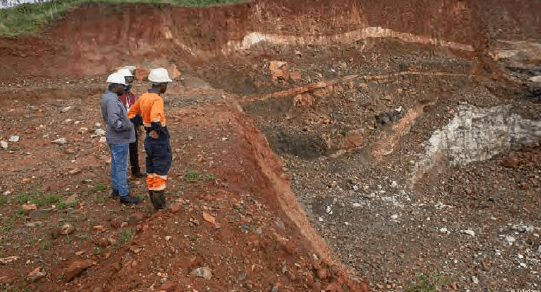 On a Sunday afternoon in March
2023, Darlington Vito was shot in
the head outside an industrial lithium
mine in Masvingo Province, Zimbabwe.
A subsistence miner, he had been
searching for chunks of ore in a rubble
pile when a security guard at the mine
site fired his weapon without warning,
family members and local human rights
activists said in interviews. Vito died a
week later from his injuries. For Vito
and other locals living near the mine,
the global lithium boom brought the
promise of economic opportunity to the
poverty-stricken region. Global demand
for lithium, a lightweight metal used
in electric vehicles, mobile phones and
energy storage systems, is expected to
increase fortyfold from 2020 to 2040, as
the world moves away from fossil fuels
and toward renewable sources of energy to mitigate climate change.
Some Zimbabweans have found
formal employment at the country’s
seven industrial-scale lithium mines,
but thousands of others have flocked to
informal mining sites where they use
basic tools like picks and shovels to dig
up chunks of lithium ore, which they
then sell to traders who truck the ore
across the border to South Africa for
export and processing abroad.
While Zimbabwe’s president has
said the lithium industry will buoy the
nation’s flailing economy, watchdog
groups and local communities say Zimbabweans
have heard similar promises
made about diamonds, gold and other
resources, only to see the benefits
accrue to wealthy elites while locals’
labor and ecosystems are exploited. ...
On a Sunday afternoon in March
2023, Darlington Vito was shot in
the head outside an industrial lithium
mine in Masvingo Province, Zimbabwe.
A subsistence miner, he had been
searching for chunks of ore in a rubble
pile when a security guard at the mine
site fired his weapon without warning,
family members and local human rights
activists said in interviews. Vito died a
week later from his injuries. For Vito
and other locals living near the mine,
the global lithium boom brought the
promise of economic opportunity to the
poverty-stricken region. Global demand
for lithium, a lightweight metal used
in electric vehicles, mobile phones and
energy storage systems, is expected to
increase fortyfold from 2020 to 2040, as
the world moves away from fossil fuels
and toward renewable sources of energy to mitigate climate change.
Some Zimbabweans have found
formal employment at the country’s
seven industrial-scale lithium mines,
but thousands of others have flocked to
informal mining sites where they use
basic tools like picks and shovels to dig
up chunks of lithium ore, which they
then sell to traders who truck the ore
across the border to South Africa for
export and processing abroad.
While Zimbabwe’s president has
said the lithium industry will buoy the
nation’s flailing economy, watchdog
groups and local communities say Zimbabweans
have heard similar promises
made about diamonds, gold and other
resources, only to see the benefits
accrue to wealthy elites while locals’
labor and ecosystems are exploited. ...
 Walmart has joined the growing list
of stores, theaters and attractions
that offer “sensory-friendly” hours for
people with autism spectrum disorder
or other neurodivergent conditions.
Why it matters: Disabilities are often
invisible, and by setting aside time during
the business day when the lights are
lower, sounds are softer and the pace is
more relaxed, companies allow patrons
with sensory issues to participate more
fully in normal life routines ...
The big picture: Sensory-friendly
hours were spearheaded more than
a decade ago by museums and other
cultural institutions that cater to children,
and have been moving into the
mainstream ever since.
Of note: This year, the White House
held its first-ever sensory-friendly
Easter Egg Roll. Where it stands: A growing number
of websites offer directories of stores
and attractions catering to people with
disabilities in this way.
By the numbers: 1 in 6 children in
the United States have sensory processing
difficulties, per a 2018 article in
JAMA Pediatrics.
What they’re saying: “Noise and
light, along with social and language
expectations, can induce stress for
children on the spectrum, who are less
able to self-regulate,” Smithsonian
Magazine reported.
Case study: Austin-Bergstrom
International Airport lets passengers
with non-visible disabilities order a
sunflower lanyard to wear around their
neck while at the airport, reports Asher
Price of Axios Austin. ...
Walmart has joined the growing list
of stores, theaters and attractions
that offer “sensory-friendly” hours for
people with autism spectrum disorder
or other neurodivergent conditions.
Why it matters: Disabilities are often
invisible, and by setting aside time during
the business day when the lights are
lower, sounds are softer and the pace is
more relaxed, companies allow patrons
with sensory issues to participate more
fully in normal life routines ...
The big picture: Sensory-friendly
hours were spearheaded more than
a decade ago by museums and other
cultural institutions that cater to children,
and have been moving into the
mainstream ever since.
Of note: This year, the White House
held its first-ever sensory-friendly
Easter Egg Roll. Where it stands: A growing number
of websites offer directories of stores
and attractions catering to people with
disabilities in this way.
By the numbers: 1 in 6 children in
the United States have sensory processing
difficulties, per a 2018 article in
JAMA Pediatrics.
What they’re saying: “Noise and
light, along with social and language
expectations, can induce stress for
children on the spectrum, who are less
able to self-regulate,” Smithsonian
Magazine reported.
Case study: Austin-Bergstrom
International Airport lets passengers
with non-visible disabilities order a
sunflower lanyard to wear around their
neck while at the airport, reports Asher
Price of Axios Austin. ...
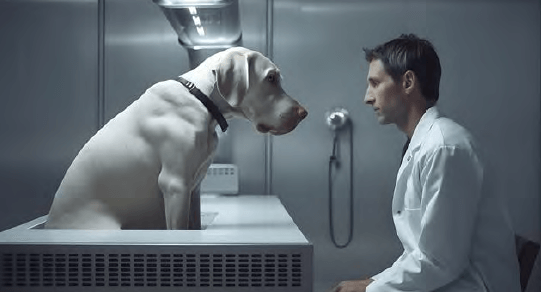 When we point at an object, the toddler
focuses on the object, while
the dog usually takes the gesture as a
directional cue. In a recent study, researchers
from Eötvös Loránd University
find explanations for this phenomenon.
It appears that the discrepancy is not
only due to how dogs see, but may, in
fact, reflect how they think. For ‘smarter’
dogs, the appearance of an object
matters as much as its location, suggesting
that their information processing
is more similar to that of humans.
Spatial bias is the phenomenon of
interpreting information in relation to
space, location or distance when the
same information could easily apply
to an object. “This is manifested, for
example, in the way dogs and children
react to gestures when we show them the position of an object. ...regardless
of the intention of the person giving
the cue, the meaning for children and
dogs is different. This phenomenon has
previously been observed in dogs using
a variety of behavioural tests, ranging
from simple associative learning to
imitation, but it had never been studied
per se,” explains Ivaylo Iotchev, first
author of the study, which appears in
the journal Ethology. ...
The study found that spatial bias is
smaller in dogs with better visual acuity
and who are ‘smarter’. “Spatial bias
in dogs is not simply a sensory problem
but also a mindset. We also found that
‘smarter’ dogs are resilient in difficult
learning situations and can overcome
their biases,” concludes Iotchev. ...
When we point at an object, the toddler
focuses on the object, while
the dog usually takes the gesture as a
directional cue. In a recent study, researchers
from Eötvös Loránd University
find explanations for this phenomenon.
It appears that the discrepancy is not
only due to how dogs see, but may, in
fact, reflect how they think. For ‘smarter’
dogs, the appearance of an object
matters as much as its location, suggesting
that their information processing
is more similar to that of humans.
Spatial bias is the phenomenon of
interpreting information in relation to
space, location or distance when the
same information could easily apply
to an object. “This is manifested, for
example, in the way dogs and children
react to gestures when we show them the position of an object. ...regardless
of the intention of the person giving
the cue, the meaning for children and
dogs is different. This phenomenon has
previously been observed in dogs using
a variety of behavioural tests, ranging
from simple associative learning to
imitation, but it had never been studied
per se,” explains Ivaylo Iotchev, first
author of the study, which appears in
the journal Ethology. ...
The study found that spatial bias is
smaller in dogs with better visual acuity
and who are ‘smarter’. “Spatial bias
in dogs is not simply a sensory problem
but also a mindset. We also found that
‘smarter’ dogs are resilient in difficult
learning situations and can overcome
their biases,” concludes Iotchev. ...
 Despite mythologizing and coveting
it and seeking technological solutions
beyond a magic ring or potion,
humans have not mastered invisibility
to become transparent. But transparency
has not gone undiscovered
by natural selection, having evolved
independently in unrelated animals
including octopuses, arthropods, and
fishes. Despite the animals’ differences,
they have followed similar transparency
“recipes” to reap the benefits of
being unseen, predators and prey alike,
particularly in aquatic environments.
Superficial camouflage employs mimicry,
disguise, and concealing or disruptive
coloration to avoid being seen. It
is a common tactic that has evolved
among many animals, from insects to
octopuses to large mammals. In essence,
camouflage tricks the viewer into misperceiving the hidden animal. Not to
cast aspersions on camouflage—it can
be a highly effective survival strategy
and, unlike transparency, can be used
by large animals—but it only scratches
the surface of deception.
Transparency veils an animal from
view but is also a deeper ploy. The
entire body —surface and inner tissues
alike— must work together to become
clear. Perfect transparency is not necessary;
viewed from a distance underwater,
even a translucent octopus becomes
invisible, and that can make all the difference
in survival. An animal must accomplish
two primary feats to become
transparent: First and most straightforward,
it must minimize the light it
absorbs. Second, it needs to reduce the
amount of light it scatters. ...
Despite mythologizing and coveting
it and seeking technological solutions
beyond a magic ring or potion,
humans have not mastered invisibility
to become transparent. But transparency
has not gone undiscovered
by natural selection, having evolved
independently in unrelated animals
including octopuses, arthropods, and
fishes. Despite the animals’ differences,
they have followed similar transparency
“recipes” to reap the benefits of
being unseen, predators and prey alike,
particularly in aquatic environments.
Superficial camouflage employs mimicry,
disguise, and concealing or disruptive
coloration to avoid being seen. It
is a common tactic that has evolved
among many animals, from insects to
octopuses to large mammals. In essence,
camouflage tricks the viewer into misperceiving the hidden animal. Not to
cast aspersions on camouflage—it can
be a highly effective survival strategy
and, unlike transparency, can be used
by large animals—but it only scratches
the surface of deception.
Transparency veils an animal from
view but is also a deeper ploy. The
entire body —surface and inner tissues
alike— must work together to become
clear. Perfect transparency is not necessary;
viewed from a distance underwater,
even a translucent octopus becomes
invisible, and that can make all the difference
in survival. An animal must accomplish
two primary feats to become
transparent: First and most straightforward,
it must minimize the light it
absorbs. Second, it needs to reduce the
amount of light it scatters. ...

 No virgin trees used. Eco-friendliest
double length, soft and scrunchable
rolls. 400 sheets. Super comfy 3 ply.
Cheaper cost per sheet than leading
brands. Biodegradable and plays well
with most septic tanks. Carbon neutral
shipping. uk.whogivesacrap.org
No virgin trees used. Eco-friendliest
double length, soft and scrunchable
rolls. 400 sheets. Super comfy 3 ply.
Cheaper cost per sheet than leading
brands. Biodegradable and plays well
with most septic tanks. Carbon neutral
shipping. uk.whogivesacrap.org
 This genuine Lucas the Spider®
is a super soft classic plush created
from premium materials.
Plastic Eyes, Mixed brown, Polyester,
7 X 5 X 3.75 inches.
© 2019 Fresh Interactive Inc.
lucasthespider.com
This genuine Lucas the Spider®
is a super soft classic plush created
from premium materials.
Plastic Eyes, Mixed brown, Polyester,
7 X 5 X 3.75 inches.
© 2019 Fresh Interactive Inc.
lucasthespider.com

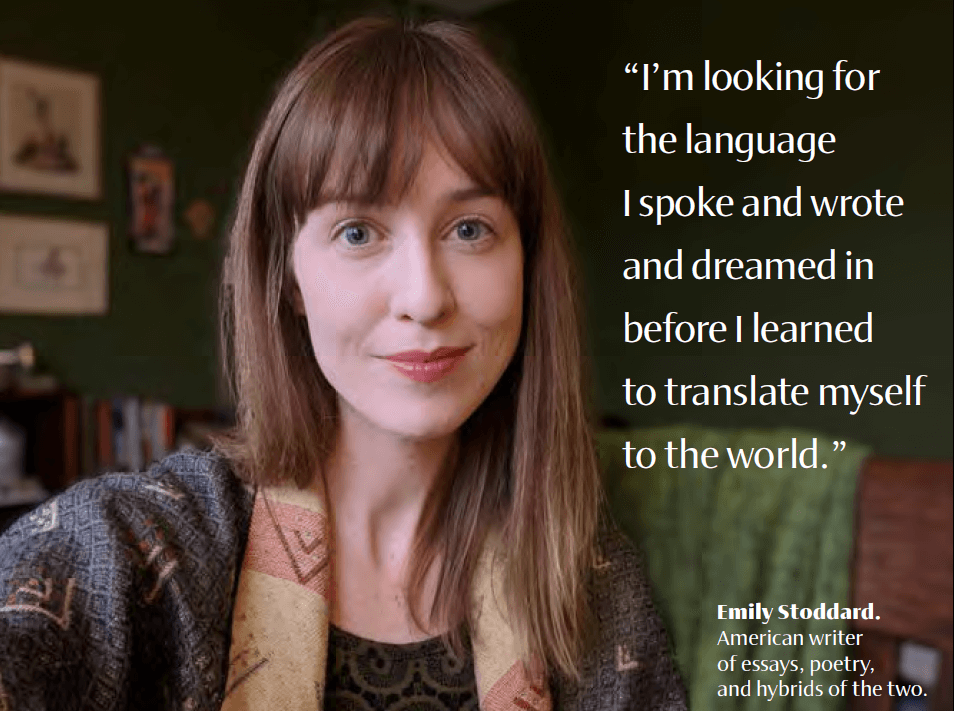 “I’m looking for
the language
I spoke and wrote
and dreamed in
before I learned
to translate myself
to the world.”
“I’m looking for
the language
I spoke and wrote
and dreamed in
before I learned
to translate myself
to the world.”


 The Bachelor’s Degree Program in
Technology for Education aims to
develop the theoretical, methodological
and practical conceptual aspects for
the creation, elaboration, transmission
and use of educational content related
to technology. To guide, systematize
and strengthen the training of professionals
in general and teachers in particular,
with respect to the capabilities
of using and taking advantage of ICT
and the resources provided by Educational
Technology.
Our program does not require every
student to study the same subjects and
use the same books and other learning
materials as every other student.
If you are a purpose-driven individual
who wants to elevate their life
and make a solid contribution to the
world, then this program is for you..
The Bachelor’s Degree Program in
Technology for Education aims to
develop the theoretical, methodological
and practical conceptual aspects for
the creation, elaboration, transmission
and use of educational content related
to technology. To guide, systematize
and strengthen the training of professionals
in general and teachers in particular,
with respect to the capabilities
of using and taking advantage of ICT
and the resources provided by Educational
Technology.
Our program does not require every
student to study the same subjects and
use the same books and other learning
materials as every other student.
If you are a purpose-driven individual
who wants to elevate their life
and make a solid contribution to the
world, then this program is for you..
 Atlantic International University is accredited by the Accreditation Service for International
Schools, Colleges and Universities (ASIC). ASIC Accreditation is an internationally
renowned quality standard for colleges and universities. Visit ASIC’s Directory of Accredited
Colleges and Universities. ASIC is a member of CHEA International Quality Group
(CIQG) in the USA, an approved accreditation body by the Ministerial Department of the Home Office
in the UK, and is listed in the International Directory of the Council for Higher Education Accreditation
(CHEA). The University is based in the United States and was established by corporate charter in 1998.
Atlantic International University is accredited by the Accreditation Service for International
Schools, Colleges and Universities (ASIC). ASIC Accreditation is an internationally
renowned quality standard for colleges and universities. Visit ASIC’s Directory of Accredited
Colleges and Universities. ASIC is a member of CHEA International Quality Group
(CIQG) in the USA, an approved accreditation body by the Ministerial Department of the Home Office
in the UK, and is listed in the International Directory of the Council for Higher Education Accreditation
(CHEA). The University is based in the United States and was established by corporate charter in 1998.
 In some cases, accredited colleges
may not accept for transfer courses and degrees
completed at unaccredited colleges, and some
employers may require an accredited degree as
a basis for eligibility for employment. Potential
students should consider how the above may affect
their interests, AIU respects the unique rules and
regulations of each country and does not seek to
influence the respective authorities. In the event
that a prospective student wishes to carry out any
government review or process in regards to his
university degree, we recommend that the requirements
of such are explored in detail with the relevant
authorities by the prospective student as the
university does not intervene in such processes.
AIU students can be found in over 180 countries,
they actively participate and volunteer
in their communities as part of their academic
program and have allocated thousands of service
hours to diverse causes and initiatives. AIU
programs follow the standards commonly used by
colleges and universities in the United States with
regards to the following: academic program
structure, degree issued, transcript, and
other graduation documents.
AIU graduation documents can include
an apostille and authentication from the
US Department of State to facilitate their
use internationally.
In some cases, accredited colleges
may not accept for transfer courses and degrees
completed at unaccredited colleges, and some
employers may require an accredited degree as
a basis for eligibility for employment. Potential
students should consider how the above may affect
their interests, AIU respects the unique rules and
regulations of each country and does not seek to
influence the respective authorities. In the event
that a prospective student wishes to carry out any
government review or process in regards to his
university degree, we recommend that the requirements
of such are explored in detail with the relevant
authorities by the prospective student as the
university does not intervene in such processes.
AIU students can be found in over 180 countries,
they actively participate and volunteer
in their communities as part of their academic
program and have allocated thousands of service
hours to diverse causes and initiatives. AIU
programs follow the standards commonly used by
colleges and universities in the United States with
regards to the following: academic program
structure, degree issued, transcript, and
other graduation documents.
AIU graduation documents can include
an apostille and authentication from the
US Department of State to facilitate their
use internationally.
| Dr. Franklin Valcin Presi den t/Academic Dean |
Dr. José Mercado Chief Executive Officer Chairman of the Board of Trustees |
Ricardo González, PhD Provost |
| Dr. Ricardo Gonzalez Chief Operation Officer and MKT Director |
Linda Collazo Logistics Coordinator |
AIU Tutors Coordinators: Deborah Rodriguez Amiakhor Ejaeta Amanda Gutierrez William Mora Miriam James Admissions Coordinators: Amalia Aldrett Sandra Garcia Junko Shimizu Veronica Amuz Alba Ochoa Jenis Garcia Judith Brown Chris Soto René Cordón Dr. Anderas Rissler Academic Coordinators: Dr. Adesida Oluwafemi Dr. Emmanuel Gbagu Dr. Lucia Gorea Dr. Edgar Colon Dr. Mario Rios Freddy Frejus Dr. Nilani Ljunggren De Silva Dr. Scott Wilson Dr. Mohammad Shaidul Islam |
| Dr. Miriam Garibaldi Vice provost for Research |
Carolina Valdes Human Resource Coordinator |
|
| Dr. Ofelia Miller Director of AIU |
Carlos Aponte Teleco mmunications Coordinator |
|
| Clara Margalef Director of Special Projects of AIU |
David Jung Corporate/Legal Counsel |
|
| Juan Pablo Moreno Director of Operations |
Bruce Kim Advisor/Consultant |
|
| Paula Viera Director of Intelligence Systems |
Thomas Kim Corporate/ Accounting Counsel |
|
| Felipe Gomez Design Director / IT Supervisor |
Maricela Esparza Administrative Coordinator |
|
| Kevin Moll Web Designer |
Chris Benjamin IT and Hosting Support |
|
| Daritza Ysla IT Coordinator |
Maria Pastrana Accounting Coordinator |
|
| Daritza Ysla IT Coordinator |
Roberto Aldrett Communications Coordinator |
|
| Nadeem Awan Chief Programming Officer |
Giovanni Castillo IT Support |
|
| Dr. Edward Lambert Academic Director |
Antonella Fonseca Quality Control & Data Analysis |
|
| Dr. Ariadna Romero Advisor Coordinator |
Adrián Varela Graphic Design |
|
| Jhanzaib Awan Senior Programmer |
Vanesa D’Angelo Content Writer |
|
| Leonardo Salas Human Resource Manager |
Jaime Rotlewicz Dean of Admissions |
|
| Benjamin Joseph IT and Technology Support |
Michael Phillips Registrar’s Office |
|
| Rosie Perez Finance Coordinator |
||
 The School of Business and Economics
allows aspiring and practicing
professionals, managers, and entrepreneurs
in the private and public sectors
to complete a self paced distance
learning degree program of the highest
academic standard.
The ultimate goal is to empower
learners and help them take advantage
of the enormous array of resources
from the world environment in order
to eliminate the current continuum of
poverty and limitations.
Degree programs are designed for
those students whose professional experience has been in business,
marketing, administration, economics,
finance and management.
The School of Business and Economics
allows aspiring and practicing
professionals, managers, and entrepreneurs
in the private and public sectors
to complete a self paced distance
learning degree program of the highest
academic standard.
The ultimate goal is to empower
learners and help them take advantage
of the enormous array of resources
from the world environment in order
to eliminate the current continuum of
poverty and limitations.
Degree programs are designed for
those students whose professional experience has been in business,
marketing, administration, economics,
finance and management.
 The School of Social and Human Studies
is focused on to the development of
studies which instill a core commitment
to building a society based on social and
economic justice and enhancing opportunities
for human well being.
The founding principles lie on the
basic right of education as outlined
in the Declaration of Human Rights.
We instill in our students a sense of
confidence and self reliance in their
ability to access the vast opportunities
available through information channels,
the world wide web, private, public,
nonprofit, and nongovernmental organizations in an ever expanding
global community.
Degree programs are aimed towards
those whose professional life has been
related to social and human behavior,
with the arts, or with cultural studies.
The School of Social and Human Studies
is focused on to the development of
studies which instill a core commitment
to building a society based on social and
economic justice and enhancing opportunities
for human well being.
The founding principles lie on the
basic right of education as outlined
in the Declaration of Human Rights.
We instill in our students a sense of
confidence and self reliance in their
ability to access the vast opportunities
available through information channels,
the world wide web, private, public,
nonprofit, and nongovernmental organizations in an ever expanding
global community.
Degree programs are aimed towards
those whose professional life has been
related to social and human behavior,
with the arts, or with cultural studies.
 The School of Science and Engineering
seeks to provide dynamic, integrated,
and challenging degree programs
designed for those whose experience
is in industrial research, scientific production,
engineering and the general
sciences. Our system for research and
education will keep us apace with the
twenty-first century reach scientific
advance in an environmentally and
ecologically responsible manner to allow
for the sustainability of the human
population. We will foster among our
students a demand for ethical behavior,
an appreciation for diversity, an understanding
of scientific investigation, knowledge of design innovation, a
critical appreciation for the importance
of technology and technological change
for the advancement of humanity.
The School of Science and Engineering
seeks to provide dynamic, integrated,
and challenging degree programs
designed for those whose experience
is in industrial research, scientific production,
engineering and the general
sciences. Our system for research and
education will keep us apace with the
twenty-first century reach scientific
advance in an environmentally and
ecologically responsible manner to allow
for the sustainability of the human
population. We will foster among our
students a demand for ethical behavior,
an appreciation for diversity, an understanding
of scientific investigation, knowledge of design innovation, a
critical appreciation for the importance
of technology and technological change
for the advancement of humanity.
 With access to a global catalog created and maintained collectively by more than
9,000 participating institutions, AIU students have secured excellent research
tools for their study programs.
With access to a global catalog created and maintained collectively by more than
9,000 participating institutions, AIU students have secured excellent research
tools for their study programs.