 March 20, 2020.
One of our graduates,
Angel Augusto
Roggiero,
has published his
doctoral thesis as
a book. You can find the publication
“The knowledge and
competencies that underlie the
teaching task” in MoreBooks!,
an online library.
Summary: How to train
professional teachers? What is a
professional teacher? Among the
answers given by the world of
education and research is that:
the practice is based on the existence
of a body of knowledge.
Professionalization consists of a process of rationalization of the
knowledge put into practice,
but also by effective practices
in the situation. Teachers are
teaching and learning professionals.
This means that they
must be trained in “technical
knowledge” and not just in the
domain of “disciplinary
knowledge”.
Therefore, to study
the practices of a
professional teacher
is to analyze his action
and the knowledge
that intervenes
in this action. We
will analyze the patterns
mobilized by teachers, which will allow us to
understand the organization of
their activity and how it is efficient,
reproducible, adaptable
and intelligible.
Find the book here:
Angel Augusto
Roggiero has completed
a Doctorate,
PhD program in
Education at Atlantic
International
University with
CUM LAUDE honors.
March 20, 2020.
One of our graduates,
Angel Augusto
Roggiero,
has published his
doctoral thesis as
a book. You can find the publication
“The knowledge and
competencies that underlie the
teaching task” in MoreBooks!,
an online library.
Summary: How to train
professional teachers? What is a
professional teacher? Among the
answers given by the world of
education and research is that:
the practice is based on the existence
of a body of knowledge.
Professionalization consists of a process of rationalization of the
knowledge put into practice,
but also by effective practices
in the situation. Teachers are
teaching and learning professionals.
This means that they
must be trained in “technical
knowledge” and not just in the
domain of “disciplinary
knowledge”.
Therefore, to study
the practices of a
professional teacher
is to analyze his action
and the knowledge
that intervenes
in this action. We
will analyze the patterns
mobilized by teachers, which will allow us to
understand the organization of
their activity and how it is efficient,
reproducible, adaptable
and intelligible.
Find the book here:
Angel Augusto
Roggiero has completed
a Doctorate,
PhD program in
Education at Atlantic
International
University with
CUM LAUDE honors.
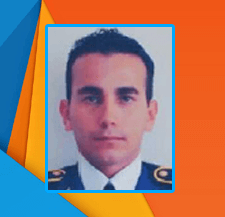 March 27,
2020. We are
very sad to
inform you
of that our
outstanding
Atlantic International
University student,
José Gregorio Vera Rodríguez
of Ecuador, has passed away.
José Gregorio completed in
AIU an Engineering program
for which AIU awarded him
CUM LAUDE honors due to
the quality of the program he
carried out.
A few years ago we had the
opportunity to meet you personally
at an AIU graduation ceremony where we could see
your excellence as a human
being and as a professional.
We light a candle, and we
offer our condolences to all
your family and friends.
March 27,
2020. We are
very sad to
inform you
of that our
outstanding
Atlantic International
University student,
José Gregorio Vera Rodríguez
of Ecuador, has passed away.
José Gregorio completed in
AIU an Engineering program
for which AIU awarded him
CUM LAUDE honors due to
the quality of the program he
carried out.
A few years ago we had the
opportunity to meet you personally
at an AIU graduation ceremony where we could see
your excellence as a human
being and as a professional.
We light a candle, and we
offer our condolences to all
your family and friends.
 February
25, 2020.
One of our
graduates,
Hassan
Elsan
Mansaray, published another
article in the Britain International
of Humanities and
Social Science (BioHS) Journal
untitled “The Consequence of
Human Resource Planning on
Organizational Performance:
An Ephemeral Review”.
Abstract: The drive for
human resource planning in every single organization is
to necessitate perfect use of
human resource currently
employed as well as, making
provision for the future human
resource needs regarding
skills, quantities and ages. The
purpose of this review is to
ascertain the practices of HRP
that can increase organizational
performance. Consequently,
the review discovered
that HR planning ensures that
organizations at all times have
the right number of people,
with the correct level of skills to do the right activities at the
right time for the achievement
of organizational objectives.
Besides, human resource
planning determines the right
numerical strength of individuals
that own these skills that
are needed by organizations
to meet the present and future
business requirements. Based
on this reality, organizations
nowadays need to have employees
that possess the right
skills that could be place in the
right places and at the right
time they would be needed in organizations. In order to
fulfill this condition, the study
found out that HR planning
ought to be part of any organization’s
objective. Incredibly,
many organizations have
the tendency of overlooking
the side of HR planning and
more or less, organizations
are even not totally conscious
of it. Hence, it is essential to
recognize that because of the
high knowledge requirements in the global market, most
organizations are determined
to stimulate performance,
which can engender surplus
profit through the application
of HRP philosophy.
Read his article here:
https://biarjournal.com/index.php/biohs/article/view/35/28
Hassan Elsan Mansaray
has completed a Doctorate
program in International
Management at AIU.
February
25, 2020.
One of our
graduates,
Hassan
Elsan
Mansaray, published another
article in the Britain International
of Humanities and
Social Science (BioHS) Journal
untitled “The Consequence of
Human Resource Planning on
Organizational Performance:
An Ephemeral Review”.
Abstract: The drive for
human resource planning in every single organization is
to necessitate perfect use of
human resource currently
employed as well as, making
provision for the future human
resource needs regarding
skills, quantities and ages. The
purpose of this review is to
ascertain the practices of HRP
that can increase organizational
performance. Consequently,
the review discovered
that HR planning ensures that
organizations at all times have
the right number of people,
with the correct level of skills to do the right activities at the
right time for the achievement
of organizational objectives.
Besides, human resource
planning determines the right
numerical strength of individuals
that own these skills that
are needed by organizations
to meet the present and future
business requirements. Based
on this reality, organizations
nowadays need to have employees
that possess the right
skills that could be place in the
right places and at the right
time they would be needed in organizations. In order to
fulfill this condition, the study
found out that HR planning
ought to be part of any organization’s
objective. Incredibly,
many organizations have
the tendency of overlooking
the side of HR planning and
more or less, organizations
are even not totally conscious
of it. Hence, it is essential to
recognize that because of the
high knowledge requirements in the global market, most
organizations are determined
to stimulate performance,
which can engender surplus
profit through the application
of HRP philosophy.
Read his article here:
https://biarjournal.com/index.php/biohs/article/view/35/28
Hassan Elsan Mansaray
has completed a Doctorate
program in International
Management at AIU.
 By Siva Mahendran
 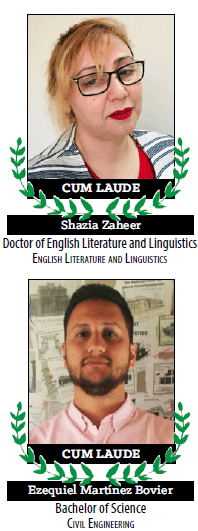 April, 2020. These graduate
students completed the majority
of the requirements to
obtain honors, which included
a 4.0 GPA, published works,
recommendation from their
respective advisors, patent a
product, etc.
Congratulations!
April, 2020. These graduate
students completed the majority
of the requirements to
obtain honors, which included
a 4.0 GPA, published works,
recommendation from their
respective advisors, patent a
product, etc.
Congratulations!
 Call for Papers
| Celestino Paulo Tchiwissi Bachelor of Business Manageme nt Human Res ources Management Angola |
Horacio Angel Casal Doctor of Philosophy Architecture Argentina |
Jacqueline Cox Taylor Doctor of Education Spe cial Education Australia |
Kira Roxanne Reneau Bachelor of Science Marketing Belize |
Ernânia Rocha Fortes Doctor of Education Education Cape Verde |
Rosanna del Carmen Hilario Javier Master of Science Health Science Dominican Republic |
| Maria Elizabeth Tejeda Tejeda Bachelor of Business Administration Business Administration Dominican Republic |
Yocasta Dinorah Cruz Hernández Bachelor of Education Educational Planning and Evaluation Dominican Republic |
Boris Patricio Shive Ramos Bachelor of Science Telecommunications Ecuador |
Oscar Alberto Mejia Hernandez Bachelor of Arts Graph ic Des ign El Salvador |
Erick de Jesus Cruz Castro Doctor of Psychology Neuroscience El Salvador |
Emmanuel Osei Bachelor of Business Administration Accounting and Auditing Ghana |
| Paola Portillo Bachelor of Science Nutrition Guatem ala |
Carlos Rafael Pineda Morales Doctor of Philosophy Legal Studies Guatem ala |
Greta Singh Shiwgobind Bachelor of Business Administration Business Administration Guyana |
Janet Angella Dyer Doctor of Education Leadersh ip & Strategic Planning Jamaica |
Horace Ryan Duhaney Bachelor of Science Business Management Jamaica |
Francisco Quiroz Ramírez Doctor of Science Telecommunications Mexico |
| Adil Fatnassi Master of Business Administration International Business Morocco |
Andrew Alaba Omolaye-Ajileye Doctor of Philosophy Legal Studies Nigeria |
Ubong Eno Uso Doctor of Philosophy International Relations Nigeria |
Oyeniran Omotoye Doctor of Science Information Technology Nigeria |
Agbalalah, Ebi Hitler Doctor of Human Resources Human Res ources Management Nigeria |
Olatunji Emmanuel Omoniyi Master of Science Public Health Nigeria |
| Udeala Nma - Arianzu Gertrude Certificate of Accounting Accounting Nigeria |
Huberto Guail Noriega Tirado Doctor of Business Administration Business Administration Peru |
Herbert Augusto Barco Paima Doctor of Science Psychology Peru |
Richnell Peter San Juan Albano Bachelor of Science Architecture Philippines |
Estefânia Fernanda André Domingos Bachelor of Business Administration Marketing Portugal |
Ishema Pierre Doctor of Philosophy Legal Studies Rwanda |
| Tushabe Emmy Doctor of Science Developmental Studies Rwanda |
Barnawi, Waleed Ahmed M Master of Education English as Second Language Saudi Arabia |
Edward E.R. Maelagi Doctor of Sociology Sociology Solomon Islands |
Woja James Simon Bachelor of Science Business Administration South Sudan |
Anibal Vásquez Suárez Bachelor of Science Industrial Enginee ring Spain |
Angwech Lillian Ochan Master of Human Resources Human Res ources Management Sudan |
| Fabiola del Valle León Ali Bachelor of Human Resources Human Res ources Switzerland |
Elishah Sidnord Bachelor of Business Administration Business Administration Turks and Caicos Islands |
Charles Barugahare Doctor of Business Administration Business Administration Uganda |
Nadia Yohanna Abdel-Massieh Khalil Bachelor of Human Resources Human Res ources United Kingdom |
Mabel Katherine Domínguez Kisiel Doctor of Science Psychology Uruguay |
Daniel Horacio Puyol Castiglioni Bachelor of Science Aeronautical Sciences Uruguay |
| Zione Magola Kansinde Bachelor of Business Administration Business Management USA |
Beatriz Elizabeth Garcia Cuadros Master of Science Psychology USA |
Haggai D. Cooper Bachelor of Science Information Technology USA |
Oniwell Nyekete Doctor of Public Health Community Health Zimbabwe |
 Ibianga Philip Brown
 Mukuru Ssessazi Alfred
 Kaphepha Kgosietsile Kaphepha

I was privileged to participate
in Curriculum development
for woodwork technology at
diploma level and review of
carpentry and joinery programmes
at Certificate level
held on 16th January 2020,
facilitated by the Technical
Education Vocational and
Entrepreneurship Training
Authority (TEVETA) which is
an institution established under
TEVET act No.13 of 1998.
Its functions are to regulate,
coordinate and monitor Technical
Education Vocational
and Entrepreneurship Training
in Zambia.
TEVETA executes its regulatory
function through the
provision of services amongst
others, the development,
reviewal of TEVET curricula
in consultation with industry,
employer, employee and other
stakeholders.
In the past years construction programmes
have registered a low turnout
in terms of enrolments, these
includes; carpentry and joinery,
bricklaying and plastering,
plumbing and sheet metal.
To normalize this, the Government
of the Republic of
Zambia through TEVETA decided
to elevate all the above
mentioned programmes to
Diploma level and review and
rebrand all the programmes
at certificate level to meet the
demand of the industry.
To carry out this crucial
exercise three experts in each
programme were invited
countrywide and the criterion
for selection was:
• Each expert should at least
have a diploma or degree in
their area of specialisation.
• Each expert should at least
possess knowledge in entrepreneurship
with proof of
certification from a recognised
institution.
• Each expert should be a
registered member with
TEVETA.
• Each expert should possess
a teaching qualification.
I made an effort to apply for
participation in developing and reviewing the carpentry
and joinery curriculum by
attaching my qualifications
together with the letter of
completion from Atlantic International
University, to my
surprise I was among the three
selected experts in carpentry
and joinery. I don’t regret joining
AIU, I have been with AIU
for a while and I can openly
promote that it is a good and
well organised university
which has made lives of many
easy by studying in their comfort
of their homes with up to
date technology.
I completed Bache
lors of Entrepreneurship
at AIU in 2019
but not yet graduated because
of the pending balances on
tuition fees, which I have committed
to pay a certain amount
every month. I see all closed
doors opening soon I receive
official document from AIU.
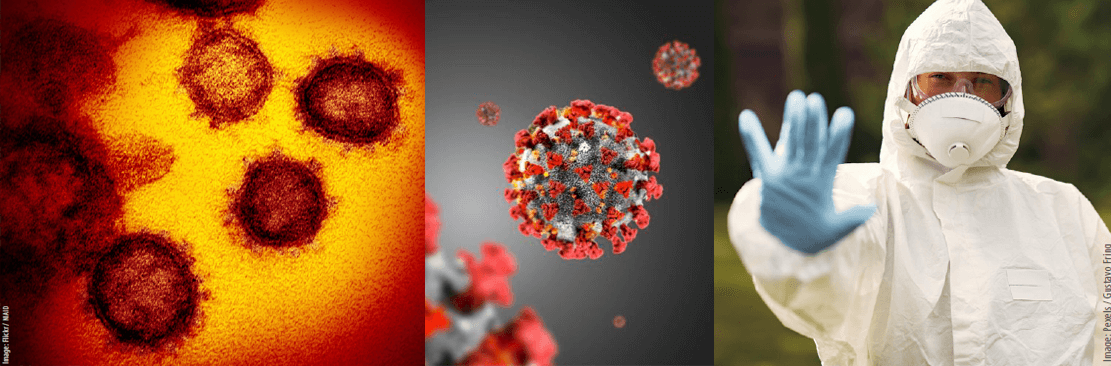
As I reflect deeply on the
pandemic (COVID-19)
currently ravaging the global
stage and the resultant panic
it has created with the race
against time for a vaccine and
flattening the curve of the
spread which has resulted to
lock-down of cities across the
globe with no clear standard
specific treatment, the more
it done on my thought that
safety is the truly one watch
word that cannot be ignored
in all known human sphere of
influence and endeavors.
It is not for want of celebration
the world day for safety is
introduced and celebrated on
the 28th of April every year to
create awareness of keeping
the world and workforce safe,
in fact COVID-19 has brought a
salient fact why world day for
safety should be given more
attention and global coverage,
which the UN (United Nations)
and the global communities
leaders should strongly put
in the front burners to raise
global awareness to resonate
with people everywhere as the
globe cannot afford to be complacent
with safety rules any
longer, with the outbreak of
the 2020 COVID-19 pandemic.
This COVID-19 outbreak
clearly demonstrated that
safety is the one thing if it goes
wrong, no matter how small its
begins, if not properly manage
or control has the potential
of a catastrophic impact that
could cripple a system, county,
country, region and the globe,
whether it is in business,
culture, religion, daily socio
cultural interaction and other
activities factor by the mere
mishandling or wrong communication
of a process.
What then is safety
In the term that does not
resonate with most class or
cadres, is not just the mere absent
of risk, but the planning
to prevent the loss, injury or
failing from happening and to
certain extent the control and
management of the risk in the
micro, macro and global scale
within a system should any
accident happened.
Why safety
Is a commitment of assurance
or pledge that ensure a
safety net in a given system
or business (or for the operators)
operational strategy in the
smooth running of any system
to control and prevent any
unforeseen incident through
identified risk to or through the
human resources (which is the
most valuable resource available
to any system) that might
lead to a catastrophic or fatal
consequence/ or event with
lots of human (physical and
health), economic and financial
ruin/failure and loss of confidence
or damage image.
Safety representation
Safety is commonly used
to denote or represent HSE
(Health Safety and Environment)
or OH&S (Occupational
Health & Safety) in many
public discuss generally by
many people.
Safety: can be seen or talked
from the Health angle.
Safety: can be seen or talked
from regulatory requirements
and the Well Being (physical),
economic angle or occupational
approach.
Safety: can be seen or talked
from the Environment angle.
Therefore, the safety profession
to some extent is “caught
in-between” the legal and medical
discipline, playing the dual
role in term of recommendation
and advisory of the Health
and Regulation requirement,
which the safety profession
are passionately committed in
keeping the medical doctors
and lawyers a little quite in
their comfort areas (Hospitals
and the law courts).
This bring to mind how the
“Lawyers” pride themselves or
are acclaimed to be the ‘learned
people’ and the “Medical Doctors”
also pride themselves or
are acclaimed to belonging to
the ‘noble profession’, in the
same vein, the “Safety Practitioners”
also pride themselves
and are acclaimed to be the
‘sustainer’ of humanity, environment
and the global system.
Some practical safety learning
that has cut across the
globe in recent time
The recent pandemic outbreak
ravaging the global system
started in late December
2019, (awareness was delayed
from the originating country)
and came to the world attention
in early January 2020,
(there was still no concrete
proactive measure on ground
globally), which originated
from China industrial city of
Wuhan with one of the two
speculations in the public
domain (print and electronic
media) to be the true source
of the pandemic outbreak
known as COVID-19, a virus
that is unknown to human
until its outbreak has been
established to belong in the
families of the corona virus
like SARS, MERS, Bird-Flu,
Ebola and Lassa fever, which
has forced the global economy
into another recession as declared
by the World Bank/IMF
(International Monetary Fund)
within three months (this is
safety represented FACTS AND
DETAILS before our very eyes
unfolding).
In any case of the two speculations
in the public domain
lies the fact of negligence or
violation of basic SAFETY
rules within such industry
playing a major role lets summarize
the two speculations.
Theory 1: Animal to Human
and Human transmission of
the virus
The Bat animal is said to be
the origin of the carrier of the
virus (primary carrier) and the
bat was then eaten by a snake
species, which make it the secondary
carrier and the snake
was then eaten by human,
which then make human the
transmitter of the virus from
human to human, through the
following established (medium)
fact sneezing, coughing,
depositing of the virus on a
surface which can survive for
some time and the subsequent
touching of such surfaces and
having a direct contact with
the human face opening like
the nose, mouth and eyes. The
virus first stayed around the
throat and nose region for a
couple of days which incubating
period is within one and
fourteen days before exhibiting
feverish symptoms from
pains, headache and running
temperature leading to respiratory
failure and death.
Theory 2: Man-made Biological
agent
A supposedly man-made
biological agent to build a
military biological weapon
being developed in a military
laboratory facility intended
for use to suppress the rising
protest in some part of the
world seen as a grave threat to
the power of an empire influence,
during the process of the transportation for further experimentation
of the biological
agent near a province of Hubei
one thing lead to another, a
specimen of the biological
agent in a seal container escaped
when the seal container
fell through safety negligence
of one of the researcher who
has full knowledge of how
fatal this biological agent was
to human exposure.
This event allegedly happened
near Wuhan wild animal
market which has since
been wildly reported in various
media outlet, which makes
it easier for some secret agents
to cleverly pin the outbreak as
a result of theory-1 “Animal to
Human transmission”.
What went wrong on both
speculations: in one word,
basic safety rules in the two
industries caught in the
speculation were neglected
and failed to follow best
industry practices with poor
communication.
Though this is an unfortunate
pandemic outbreak that
has brought untold suffering
and pain, it has help to raise
basic safety precautionary
awareness across the globe
as never seen, which safety
practitioners has been trying to
propagate for a long time with
not much success in various
industries is now resonating
well in the global communities
cutting across race, tribe and
breaking cultural and religious
boundaries on a daily basis
through different print, electronic
and social media outlets
which in many respect has
reinforce some of the principle of safety (which I will attempt
to highlight in ‘Conclusions’).
Let’s examine some of these
basic safety precautionary
measures and strategies in the
prevention and containment
of the COVID-19 virus (will also
be useful for other known and
unknown epidemic prevention)
which should be adopted
as a global standard after the
defeat of COVID-19 and linked
to the safety acronym “HSE”
The ‘H’- Health: Personal
hygiene through hand washing
with water and soap,
alcohol base sanitizers in the
absence of running water and
soap, drying of cloths after
every use under sunlight,
sanitizing of surface objects,
promotion of good dietary
habit to boost immune system
(drinking of hot/warm water
with herbal tea) as against the usual ice cold water at all time,
intakes of vitamin ‘C’, lemon
or lime in hot water to produce
alkaline, vegetables and
onions a natural antibiotic.
The ‘S’- Safety: The use
of basic Personal Protective
Equipment otherwise called as
PPE for front liner responders
like the medical team and the
general public which includes
Nose protection (mask), Hand
protection (medical and other
hand gloves), Full face shield
protection (strictly for the
medical team), Body protection
(coverall for medical team),
foot protection and the safety
precaution of social distancing
to curb the transmission from
person to person spread for
the virus which is not airborne
because of the weight, which
limit the virus to travel less
than a meter in the air.
The ‘E’- Environment: Good
ground and House-keeping
has become the order of the
day leading to city wild fumigations
exercises of public
and market places across the
globe (surprisingly African cities
are also part of the action)
and good laboratory practices
strictly observed as never
before in medical facilities.
It is important to note that
a particular ancient cultural
treatment that west Africans
has jettison has returned and
the need to sustain and improved
certain trado-medical
treatment like the improvise
sauna practiced by the Africans
fore-fathers, which is the
bringing of certain carefully
selected herbs into a cooking
pot heated to a hundred
degrees Celsius, the heated
pot brought down and a low
bench brought close alongside
with the feverish patient seat
and covered with a thick blanket
or clothing material, as
steam vapors produced within
the covered patient is directly
inhale and targeted at the patient
nostril and throat region
producing lots of sweating
from the patient. The western
world has developed this local
sauna with a coil heated in an
enclosed chamber.
However, the unfortunate
lesson of the use of PPE was
wrongly presented to the
general public due to the COVID-19 virus outbreak, to
correct this notation, use of
PPE is not just in crisis period,
PPE is to be use at all time during
operation or when within
an hazardous areas or during a
spread of harmful agents like
in the case at hand (COVID-19
outbreak).
PPE is one of the five lines
of defense in safety and it is
the fifth or last line of defense
that support all other defense
like the engineering or design
control, administrative procedures
control, transfer and
elimination control.
The 2020, COVID-19 pandemic
is not rated among the
top seven pandemic fatality
rate or the leading causes
of death in the world using
the same period of times the
COVID-19 outbreak has lasted
to measure other outbreak
or killer factors according to
source: University of Hamburg
data for the first two months
of the COVID-19 outbreak, but
what makes the COVID-19
outbreak spectacular or
terrifying was the reproductive
or transmission rate, unprecedented total world
man-hour (MH) disruption
leading to a global recession
and number of countries or
continent it has spread to due
to the ease of travel and mixed
residency round the world
in the 21st century improved
transport system and immigration
policies.’
The COVID-19 death rate is
relatively lower when compared
to other families of
corona virus or diseases according
to WHO (World Health
Organization), UNAIDS, CDC/
COMO Meningitis sources
of common cold influenza,
SARS (severe acute respiratory
syndrome), MERS (Middle
East respiratory syndrome),
HIV/AIDS, Ebola (EVD) and the
Bird Flu.
At the end of COVID-19 pandemic,
it would have present a
food for thought and a turning
point for humans to start considering
and re-strategizing
future travel and resident
policies, gathering in public
space arrangement. It will
strongly re-enforce thinking of the future workplace and
manpower with artificial intelligence
an already suggested
option on the table and also
altering saving for corporation
by e-working from homes
and future corporation labor
contract.
What this portend for safety
practitioners, a challenge ahead
of future occupational health
and safety regulation and other
requirements for the future
workplace, a challenge which
some learning will come as a
result or experience of incident.
The time is now for the world
to be proactive and start thinking
one step ahead for safety
of the future global system to
prevent another catastrophic
and fatalities.
Conclusion
It’s imperative for leaders to
pay closer attention and set
strong safety regulatory institution
(in the case of corporation,
strong autonomous HSE department)
to monitor and enforce
safety compliance across board
at all time and themselves be
an exemplary safety role model
leading from the front to be
clearly seen by all.
It’s equally important leaders
do not loose or become
docile from the learning COVID-
19 pandemic has brought to
the fore that clearly highlights
some of the safety principles
below: a) Management/leadership
is responsible: we all saw
the rise of global leadership,
leading from the front and
corporate ownership (leadership)
also joining by donation
of various financial support
and material with infrastructures
to combat the pandemic
(COVID-19) outbreak. This
leadership demonstration
should not begin and end
with COVID-19 or in crisis
situation, but should be demonstrated
at all time.
b) Safety is good business:
with what we all know now
(financial ruin, human suffering
and fatalities, economic
implication across corporation
worldwide and the global recession)
and the over stressing
of nations institutions capabilities
like the medical and other
support service facilities to a
breaking or halting point, lets
for a moment cast our mind or
re-wind the hand of the clock
backward or undo the deed in
our imagination and assume
all safety precaution was followed
strictly in the industries
highlighted in the two case
speculation above. Who would
have ever imagine in terms
of accuracy what keeping or
maintaining strict safety rules
in place would have saved
humanity and the global communities
and economies, now
leaders and all operators can
easily understand and imagine how many times in the past
has safety averts bending
risk and sustained corporation
financial base and global
economy including humanity
safety yet safety are the
unsung heroes that are not
celebrated, ignored in many
countries, corporation and institution
and has largely gone
unnoticed.
c) Safety is an ethical responsibility
and should be a
way of life: That’s the only way
this catastrophe and fatalities
we are currently going through
would have been prevented if
the whole operators or public
interest (customers) involved
had hold this ethical responsibility
first and foremost in all
their decision or actions.
d) Safety is a condition of
employment (and a condition
to continue in employment):
This COVID-19 pandemic outbreak
reinforces why operatives
and manager alike must
be trained o work safely and
should hold safety first and
foremost above all other consideration
in their activities.
Again, the recent COVID-19
pandemic reinforces why it
makes sense for good and
proactive safety decision to
move faster. The main reason
the framers of HSE/ or OH&S
(safety) policy in the workplace
and any system thought
it wise that safety shall have
a direct access to the highest level of leadership/management
in a given system. The
safety access present leadership
and management first
hand information of recommendation
and advise to help
make the system operation
safer and avoid loss that may
arise from litigation from
various injuries, which management/
leadership can then
use to bench mark with other
factors report as a parameter
to measure performance in
operation and other support
services.
Safety can only hope (leaders)
the global system and
corporation across would have learnt and make a tacit
giant stride going forward
to strengthen safety compliance
and enforcement when
we eventually overcome the
storm COVID-19 pandemic
has brought upon us, which
is just a matter of time and it
would be history to redirect
our ways of thinking.
In view of the pandemic,
in the forth coming world
day for safety the world
should demonstrate a greater
commitment towards safety
and our learning from the COVID-
19 a rigorous campaign
and awareness with leaders
on the fore front.

We get to observe any
of the big cities and
they have huge buildings with
extraordinary shops, people
walking fast to everywhere
and great transport movement.
It seems that the days
only have 10 minutes, so
everything you want to do has
to be at high speed.
If we go to the fields there
are few people who dedicate
to be farmer because the vast
majority of them have migrated
to the big cities.
Everyone is behind the
money and everyone is buying
and buying because they have
to have. Since the Renaissance
human beings have had
themselves as the maximum
of the world.
With the last stage of the development
of capitalism, everything
is to see where more
wealth is obtained: the rivers
are diverted because now
we want them here because
a dam is better here, now
this forest will be cut down
because we will build large buildings, because factories of
this and that will be built here.
Communication is more
to generate markets and we
see a world that many men of
scientists asking them.
Where are we going as a society?
What is life becoming?
Communication is also used
to generate the same needs to
facilitate the market and make
it global because we sell them
the same and not goods that
represent cultural differences.
That is why it appears in the
Colloquia of the 21st Century,
which was directed by Jérome
Bindé and which was published
as: Where are values
headed.
“Today’s world has preferred
development in its material
dimension, often sacrificing
numerous moral and spiritual
values for the sake of the god
of material progress”. (Bindé,
2006, p. 25)
We have to ask ourselves:
where is the human condition?
The world we live in seems
that we don’t think about what
happens to natural resources.
“Today it is established that
development can’t be infinite,
at least in quantitative terms”.
(Bindé, 2006, p. 33)
If development can’t be infinite
because infinity is only
as a mathematic topic where
do they think, those who are
only money and money will go
even though there are many human beings who in the
world of abundance starve or
they are homeless.
The world situation we are
experiencing is tremendously
surprising; we are with a pandemic
due to the coronavirus
called Covid-19.
What is happening? The
mentioned virus passed from
the animals to the human
beings, being with them very
aggressive. Today countries
are lagging behind in health
systems and people die in a
short time. Countries have
had to recommend, and in
others to compel the population
to remain at home and to
maintain a certain distance
from other people to avoid
contagion.
What we are experiencing
brings as a consequence
that the work activity of some
rubles has to be done from the
houses. This form of production
will bring its consequences
to each country. Developed
countries are looking for
mechanisms so that production
doesn’t contract due to
the social problems that the
situation will generate.
We have organizations like
the United Nations that are
requesting funds to help those
less favored countries. The
world situation, at the moment,
is somewhat complicated
because many economic
resources are required to invest them in health care,
and after the time production
is on a smaller scale, many
resources will also be needed
for the industry to reach a
level that allows the necessary
well-being of humanity.
The question is: where will
the forgotten of all political
and economic systems be?
You hear about a lot of
money to boost industrial development
and the well-being
of societies again, but the large
amounts of money will go to
the same people who have put
this Homeland of Morin, this
pale blue point of Sagan in the
conditions that we are living
today. Believe that we could
get resources and natural resources;
creating and creating
needs, reversing the order of
nature to do this and that and
that nothing would happen
was unthinkable.
Our planet Earth, the only
place where life is possible
until now, can’t give us that
life if we treat it as we have
done so far. As we mentioned,
since the Renaissance the
human beings have thought
of themselves as the best in
our world and at this time
they have had to recognize
that all the knowledge that we
have enters into the order that
nature has: you can’t develop
a vaccine to the speed with
which we do everything.
According to scientists a vaccine won’t be ready at least
until one year.
Our planet needs to create
life, our planet needs
to become a planet that
lives and gives life. Our
planet needs to be green.
We have to leave prints of life
instead of what we are living
now: death here and there. Now
there are so many infected and
we have already reached this
other amount and tomorrow
we are going to see if we have
reached this other amount. Our mother Earth is teaching
us that the path we take
leads only to death. What we
are living we will give us a
great experience. Hopefully it
will be the learning we need.
According to Bindé
Colloquiums:
“It is possible to give a less
aggressive dimension to our
development, and reproduce
it in the area of the quality of
relations between people and
between societies”. (Bindé,
2006, p. 35)
BIBLIOGRAPHY. Bindé, Jérome. (2006). ¿Hacia dónde se dirigen
los valores? Coloquios del siglo XXI. México: FCE. | Morin,
E. (2007). Introducción a una política del hombre. Buenos Aires:
Gedisa. | Naciones Unidas, Home page. Retrieved from http://
www.un.org/es/index.html | Organización de las Naciones Unidas
para la Educación, la Ciencia y la Cultura (UNESCO), Home
page. Retrieved from http://www.unesco.org/new/es | Sagan,
Carl. (2003). El Punto azul Pálido, una visión del futuro humano
en el espacio. México: Planeta. Retrieved from: https://lasteologias.
files.wordpress.com/2008/06/sagan-carl-un-punto-azul-palido-unavision-
del-futuro-humano-en-el-espacio.pdf
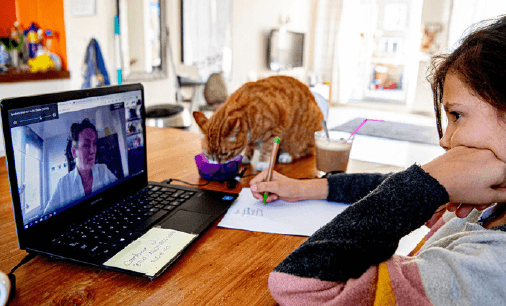 Since the Covid-19 pandemic hit,
we’re on video calls more than
ever before –and many are finding it
exhausting.
But what, exactly, is tiring us out?
BBC Worklife spoke to Gianpiero Petriglieri,
who explores sustainable learning
and development in the workplace,
and Marissa Shuffler, who studies
workplace wellbeing and teamwork effectiveness,
to hear their views.
Is video chat harder? What’s different
compared to face-to-face
communication? Being on a video
call requires more focus than a faceto-
face chat, says Petriglieri. Video
chats mean we need to work harder
to process non-verbal cues like facial
expressions, the tone and pitch of the voice, and body language; paying more
attention to these consumes a lot of
energy. “Our minds are together when
our bodies feel we’re not. That dissonance,
which causes people to have
conflicting feelings, is exhausting. You
cannot relax into the conversation
naturally,” he says.
“Silence creates a natural rhythm in a
real-life conversation. However, when
it happens in a video call, you became
anxious about the technology.” It also
makes people uncomfortable. One 2014
study by German academics showed
that delays on phone or conferencing
systems shaped our views of people
negatively: even delays ...
Since the Covid-19 pandemic hit,
we’re on video calls more than
ever before –and many are finding it
exhausting.
But what, exactly, is tiring us out?
BBC Worklife spoke to Gianpiero Petriglieri,
who explores sustainable learning
and development in the workplace,
and Marissa Shuffler, who studies
workplace wellbeing and teamwork effectiveness,
to hear their views.
Is video chat harder? What’s different
compared to face-to-face
communication? Being on a video
call requires more focus than a faceto-
face chat, says Petriglieri. Video
chats mean we need to work harder
to process non-verbal cues like facial
expressions, the tone and pitch of the voice, and body language; paying more
attention to these consumes a lot of
energy. “Our minds are together when
our bodies feel we’re not. That dissonance,
which causes people to have
conflicting feelings, is exhausting. You
cannot relax into the conversation
naturally,” he says.
“Silence creates a natural rhythm in a
real-life conversation. However, when
it happens in a video call, you became
anxious about the technology.” It also
makes people uncomfortable. One 2014
study by German academics showed
that delays on phone or conferencing
systems shaped our views of people
negatively: even delays ...
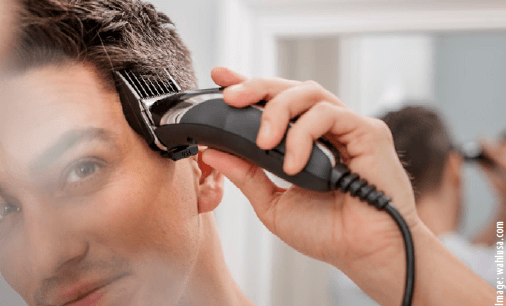 Have someone else help, consider
texture and length, start small,
avoid horizontal lines.
Basic instructions
1. Wash and condition your hair, and
then let it dry completely. This will
help you avoid taking off too much.
Work out any tangles using a brush
before getting started. If your hair is
unruly, you can mist it with water, but
try to avoid getting it too damp. Snip
with the ends of the shears rather than
with the full length of the blade.
2. Make sure you have your shears
or clippers and a comb on hand. Use
clips to help section your hair into
manageable segments.
3. Drape a cape (or an old towel)
over your shoulders.
4. Follow the advice below that best
applies to your hair.
For Long Hair: Bring one section
forward at a time, and determine how
much you want to take off —a quarter
of an inch to half an inch. (Cut a little
less than you think you should.) Trim
off the length and then snip the ends to
add texture and blend everything out.
For short hair: Just remember that
less is more. If you're using scissors,
have them start at the sides and work
around your head. ... Read full text and
find links to videos:
Have someone else help, consider
texture and length, start small,
avoid horizontal lines.
Basic instructions
1. Wash and condition your hair, and
then let it dry completely. This will
help you avoid taking off too much.
Work out any tangles using a brush
before getting started. If your hair is
unruly, you can mist it with water, but
try to avoid getting it too damp. Snip
with the ends of the shears rather than
with the full length of the blade.
2. Make sure you have your shears
or clippers and a comb on hand. Use
clips to help section your hair into
manageable segments.
3. Drape a cape (or an old towel)
over your shoulders.
4. Follow the advice below that best
applies to your hair.
For Long Hair: Bring one section
forward at a time, and determine how
much you want to take off —a quarter
of an inch to half an inch. (Cut a little
less than you think you should.) Trim
off the length and then snip the ends to
add texture and blend everything out.
For short hair: Just remember that
less is more. If you're using scissors,
have them start at the sides and work
around your head. ... Read full text and
find links to videos:
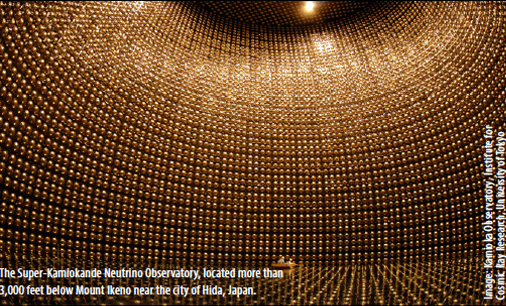 Scientists on Wednesday [April 15]
announced that they were perhaps
one step closer to understanding why
the universe contains something rather
than nothing. Part of the blame, or the
glory, they say, may belong to the flimsiest,
quirkiest and most elusive elements
of nature: neutrinos. These ghostly
subatomic particles stream from the
Big Bang, the sun, exploding stars and
other cosmic catastrophes, flooding the
universe and slipping through walls and
our bodies by the billions every second,
like moonlight through a screen door.
Neutrinos are nature’s escape artists.
Did they help us slip out of the Big
Bang? Perhaps. Recent experiments
in Japan have discovered a telltale
anomaly in the behavior of neutrinos,
and the results suggest that, amid the throes of creation and annihilation
in the first moments of the universe,
these particles could have tipped the
balance between matter and its eviltwin
opposite, antimatter.
As a result, a universe that started
out with a clean balance sheet —equal
amounts of matter and antimatter—
wound up with an excess of matter:
stars, black holes, oceans and us.
An international team of 500
physicists from 12 countries, known
as the T2K Collaboration and led by
Atsuko K. Ichikawa of Kyoto University,
reported in Nature that they had
measured a slight but telling difference
between neutrinos and their opposites,
antineutrinos. ...
Scientists on Wednesday [April 15]
announced that they were perhaps
one step closer to understanding why
the universe contains something rather
than nothing. Part of the blame, or the
glory, they say, may belong to the flimsiest,
quirkiest and most elusive elements
of nature: neutrinos. These ghostly
subatomic particles stream from the
Big Bang, the sun, exploding stars and
other cosmic catastrophes, flooding the
universe and slipping through walls and
our bodies by the billions every second,
like moonlight through a screen door.
Neutrinos are nature’s escape artists.
Did they help us slip out of the Big
Bang? Perhaps. Recent experiments
in Japan have discovered a telltale
anomaly in the behavior of neutrinos,
and the results suggest that, amid the throes of creation and annihilation
in the first moments of the universe,
these particles could have tipped the
balance between matter and its eviltwin
opposite, antimatter.
As a result, a universe that started
out with a clean balance sheet —equal
amounts of matter and antimatter—
wound up with an excess of matter:
stars, black holes, oceans and us.
An international team of 500
physicists from 12 countries, known
as the T2K Collaboration and led by
Atsuko K. Ichikawa of Kyoto University,
reported in Nature that they had
measured a slight but telling difference
between neutrinos and their opposites,
antineutrinos. ...
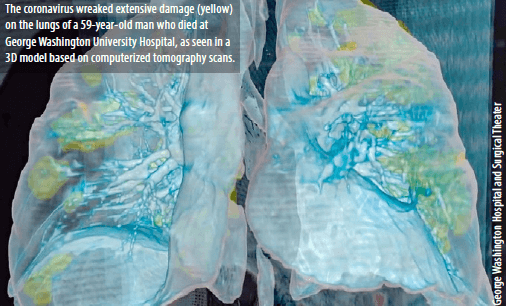 As the number of confirmed
cases of COVID-19 surges past 2.2
million globally and deaths surpass
150,000, clinicians and pathologists
are struggling to understand the
damage wrought by the coronavirus
as it tears through the body. They are
realizing that although the lungs are
ground zero, its reach can extend to
many organs including the heart and
blood vessels, kidneys, gut, and brain.
“[The disease] can attack almost
anything in the body with devastating
consequences,” says cardiologist
Harlan Krumholz of Yale University
and Yale-New Haven Hospital, who
is leading multiple efforts to gather clinical data on COVID-19. “Its ferocity
is breathtaking and humbling.”
What follows is a snapshot of the
fast-evolving understanding of how
the virus attacks cells around the body,
especially in the roughly 5% of patients
who become critically ill. Despite the
more than 1000 papers now spilling into
journals and onto preprint servers every
week, a clear picture is elusive, as the
virus acts like no pathogen humanity
has ever seen. Without larger, prospective
controlled studies that are only now
being launched, scientists must pull
info ...
As the number of confirmed
cases of COVID-19 surges past 2.2
million globally and deaths surpass
150,000, clinicians and pathologists
are struggling to understand the
damage wrought by the coronavirus
as it tears through the body. They are
realizing that although the lungs are
ground zero, its reach can extend to
many organs including the heart and
blood vessels, kidneys, gut, and brain.
“[The disease] can attack almost
anything in the body with devastating
consequences,” says cardiologist
Harlan Krumholz of Yale University
and Yale-New Haven Hospital, who
is leading multiple efforts to gather clinical data on COVID-19. “Its ferocity
is breathtaking and humbling.”
What follows is a snapshot of the
fast-evolving understanding of how
the virus attacks cells around the body,
especially in the roughly 5% of patients
who become critically ill. Despite the
more than 1000 papers now spilling into
journals and onto preprint servers every
week, a clear picture is elusive, as the
virus acts like no pathogen humanity
has ever seen. Without larger, prospective
controlled studies that are only now
being launched, scientists must pull
info ...
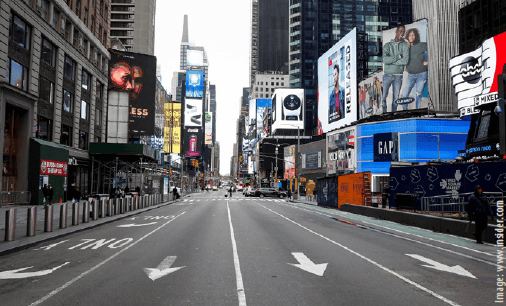 De Blasio and many other civic
leaders are trying to enforce the
6-foot line [social distance] by restricting
access to places where people get
together: dog parks, basketball courts,
playgrounds, beaches, hiking trails,
and the like. The problem with curtailing
the supply of open space, though,
is that it doesn’t reduce demand.
People still need to go outside, some
to work, others to play, all to keep
their sanity intact. Now, though, the
demand comes chiefly from people on
foot, rather than in vehicles.
In that shift, urbanists see a chance
to save city dwellers not just from
the sweep of a pandemic, but from
the auto-centric culture that has
dominated urban life for decades.
They want to prioritize the movement
of people —pedestrians, cyclists,
transit users, and their ilk— over cars.
This isn’t just opportunism, a shot at
grabbing street space while most cars
are parked. A range of tactics long
demanded by urbanists can make life
outside more pleasant and practical
amidst the Covid-19 pandemic. And
depending on how much life goes back
to “normal” once the pandemic has
passed, the moves could change cities
for the better, and for the long term.
One easy, obvious option is disabling
the buttons that pedestrians
use to summon a “Walk” sign
to cross the street. Advocates of pedestrian-friendly roads have long
lambasted these “beg buttons” for
making driving the default mode
of transportation: no push, no walk
signal. Now, public health officials see
the devices as potential conveyors
of the coronavirus. Several cities in
Australia and New Zealand have rejiggered
traffic signal cycles to include
walk signals, no push needed. So has
Berkeley, California. “That’s a good example
of an easy and sustainable thing
cities can do,” says Tabitha Combs,
who studies transportation planning
and policy at the University of North
Carolina at Chapel Hill. By turning
them off, cities are tacitly admitting
that the buttons aren’t meant to make
intersections safer for pedestrians,
but to keep cars moving as much as
possible. “They’ve let the cat out of the
bag that it’s something they can do,”
Combs says.
The bigger move is closing streets to
vehicles, so people have more room
to walk around or exercise. Bogota,
Colombia; Calgary, Canada; Denver,
Colorado; St Paul, Minnesota; Cologne,
Germany and other cities have
blocked off stretches of road in recent
weeks. Friday, Oakland said it will
close 10 percent of its street network
—74 miles worth— to vehicle traffic.
Others, like Vancouver, have booted
cars from roads in parks. Closing
streets, though, demands resources,
including materials to indicate cars
are no longer welcome and people to
enforce the new regime. ...
De Blasio and many other civic
leaders are trying to enforce the
6-foot line [social distance] by restricting
access to places where people get
together: dog parks, basketball courts,
playgrounds, beaches, hiking trails,
and the like. The problem with curtailing
the supply of open space, though,
is that it doesn’t reduce demand.
People still need to go outside, some
to work, others to play, all to keep
their sanity intact. Now, though, the
demand comes chiefly from people on
foot, rather than in vehicles.
In that shift, urbanists see a chance
to save city dwellers not just from
the sweep of a pandemic, but from
the auto-centric culture that has
dominated urban life for decades.
They want to prioritize the movement
of people —pedestrians, cyclists,
transit users, and their ilk— over cars.
This isn’t just opportunism, a shot at
grabbing street space while most cars
are parked. A range of tactics long
demanded by urbanists can make life
outside more pleasant and practical
amidst the Covid-19 pandemic. And
depending on how much life goes back
to “normal” once the pandemic has
passed, the moves could change cities
for the better, and for the long term.
One easy, obvious option is disabling
the buttons that pedestrians
use to summon a “Walk” sign
to cross the street. Advocates of pedestrian-friendly roads have long
lambasted these “beg buttons” for
making driving the default mode
of transportation: no push, no walk
signal. Now, public health officials see
the devices as potential conveyors
of the coronavirus. Several cities in
Australia and New Zealand have rejiggered
traffic signal cycles to include
walk signals, no push needed. So has
Berkeley, California. “That’s a good example
of an easy and sustainable thing
cities can do,” says Tabitha Combs,
who studies transportation planning
and policy at the University of North
Carolina at Chapel Hill. By turning
them off, cities are tacitly admitting
that the buttons aren’t meant to make
intersections safer for pedestrians,
but to keep cars moving as much as
possible. “They’ve let the cat out of the
bag that it’s something they can do,”
Combs says.
The bigger move is closing streets to
vehicles, so people have more room
to walk around or exercise. Bogota,
Colombia; Calgary, Canada; Denver,
Colorado; St Paul, Minnesota; Cologne,
Germany and other cities have
blocked off stretches of road in recent
weeks. Friday, Oakland said it will
close 10 percent of its street network
—74 miles worth— to vehicle traffic.
Others, like Vancouver, have booted
cars from roads in parks. Closing
streets, though, demands resources,
including materials to indicate cars
are no longer welcome and people to
enforce the new regime. ...
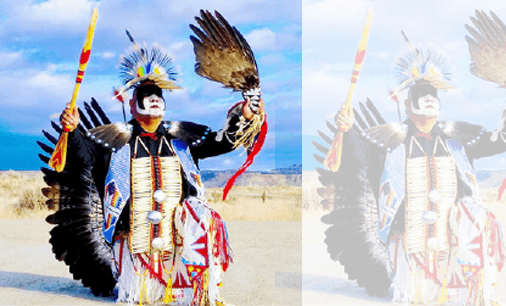 There’s a new powwow in cyberspace
and it’s taking the world by
storm. The sensational Social Distance
Powwow group on Facebook launched
just some weeks ago and its growth
has been exponential, in a good way!
The site, with 110,000 members
as of Monday, has been gaining up
to 10,000 members per day, said
Stephanie Hebert, Mi’kmaq, behindthe-
scenes platform coordinator and
beadworker.
“We broke the internet!” said Hebert.
“It’s exciting, it’s different, it’s vibrant!
There has been an explosion of activity
in the past two weeks.” Native
American dancers, singers, drummers,
storytellers, musicians, and artists are
posting video performances and photos
from all over the globe. ...
There’s a new powwow in cyberspace
and it’s taking the world by
storm. The sensational Social Distance
Powwow group on Facebook launched
just some weeks ago and its growth
has been exponential, in a good way!
The site, with 110,000 members
as of Monday, has been gaining up
to 10,000 members per day, said
Stephanie Hebert, Mi’kmaq, behindthe-
scenes platform coordinator and
beadworker.
“We broke the internet!” said Hebert.
“It’s exciting, it’s different, it’s vibrant!
There has been an explosion of activity
in the past two weeks.” Native
American dancers, singers, drummers,
storytellers, musicians, and artists are
posting video performances and photos
from all over the globe. ...
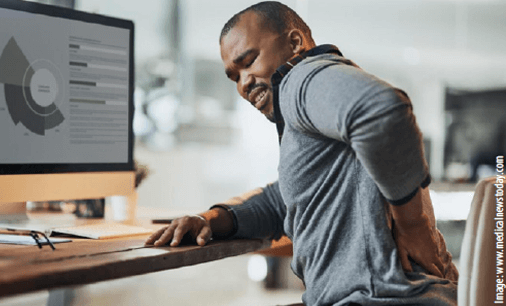 Look at your screens with a straight
neck. Don’t strain yourself by bending
your neck to look downwards, or
lift it to look upwards. Keep your neck
straight when you face the display at a
comfortable viewing height. If you’re
using a laptop, stack up a bunch of
books to attain the desired height.
Place your screen sideways to the
window. Don’t work with your back
facing the window as the light can
cause a glare on the screen, which can
affect your eyes. You also shouldn’t
face the window as you might end
up staring into the light. You can put
down your shades or drapes to cover
the sunlight, or simply tilt your screen
sideways to the window.
Sit back on your chair. You might
want to avoid sitting upright, hunching forward, or maintaining a rigid
position. The proper sitting position
involves your lower back curving in
towards your stomach, also known as
lordosis. This position is relaxing for
your lower back and puts minimum
pressure on your intervertebral discs.
Keep your feet rested on the floor
or with a support. Refrain from dangling
your feet or placing them below
your chair. This can increase the risk of
deep vein thrombosis, as the pressures
under your thighs will limit blood flow
to your lower legs and feet. Instead,
rest your feet on the floor. You can use
a pillow, a box, or a footrest to keep
your feet supported. ...
Look at your screens with a straight
neck. Don’t strain yourself by bending
your neck to look downwards, or
lift it to look upwards. Keep your neck
straight when you face the display at a
comfortable viewing height. If you’re
using a laptop, stack up a bunch of
books to attain the desired height.
Place your screen sideways to the
window. Don’t work with your back
facing the window as the light can
cause a glare on the screen, which can
affect your eyes. You also shouldn’t
face the window as you might end
up staring into the light. You can put
down your shades or drapes to cover
the sunlight, or simply tilt your screen
sideways to the window.
Sit back on your chair. You might
want to avoid sitting upright, hunching forward, or maintaining a rigid
position. The proper sitting position
involves your lower back curving in
towards your stomach, also known as
lordosis. This position is relaxing for
your lower back and puts minimum
pressure on your intervertebral discs.
Keep your feet rested on the floor
or with a support. Refrain from dangling
your feet or placing them below
your chair. This can increase the risk of
deep vein thrombosis, as the pressures
under your thighs will limit blood flow
to your lower legs and feet. Instead,
rest your feet on the floor. You can use
a pillow, a box, or a footrest to keep
your feet supported. ...
 Focus on what you can do. “You can’t
control the coronavirus. You can control
exercise, diet, sleep, calling friends.
And reward yourself for doing them
by self-administering dopamine, a
molecule released when you hit a goal,
which in turn motivates you to repeat
those behaviours and makes them
easier to do. —Charles Oxley, performance
coach, Power Speed Endurance
Stay active. “It’s not about pressuring
yourself into having the perfect
physique: it’s about engaging your
mind and switching off from WFH for a
second. Your brain needs this workout
right now. It’s your most important
‘muscle’ –take care of it.” —Sandy Macaskill,
co-founder, Barry’s Bootcamp UK
Feed your good bacteria. “Evidence suggests that the more diverse the
community of bacteria in your gut,
the more robust you’ll be. Shop from
this varied, inexpensive, long-life list:
frozen fruit (dark-coloured berries);
frozen veg (spinach, peas and sweetcorn);
fresh veg (onions, leeks and
garlic); starchy carbohydrates (oats and
tinned lentils).” —Matt Gardner, registered
nutritionist and host of the Big Feed
Up HQ podcast
Set your body clock. “Focus intensely
on supporting your circadian
rhythms. Being cooped up inside
means more time on electronic devices,
stressed-out late nights and lack of
light exposure. ...
Focus on what you can do. “You can’t
control the coronavirus. You can control
exercise, diet, sleep, calling friends.
And reward yourself for doing them
by self-administering dopamine, a
molecule released when you hit a goal,
which in turn motivates you to repeat
those behaviours and makes them
easier to do. —Charles Oxley, performance
coach, Power Speed Endurance
Stay active. “It’s not about pressuring
yourself into having the perfect
physique: it’s about engaging your
mind and switching off from WFH for a
second. Your brain needs this workout
right now. It’s your most important
‘muscle’ –take care of it.” —Sandy Macaskill,
co-founder, Barry’s Bootcamp UK
Feed your good bacteria. “Evidence suggests that the more diverse the
community of bacteria in your gut,
the more robust you’ll be. Shop from
this varied, inexpensive, long-life list:
frozen fruit (dark-coloured berries);
frozen veg (spinach, peas and sweetcorn);
fresh veg (onions, leeks and
garlic); starchy carbohydrates (oats and
tinned lentils).” —Matt Gardner, registered
nutritionist and host of the Big Feed
Up HQ podcast
Set your body clock. “Focus intensely
on supporting your circadian
rhythms. Being cooped up inside
means more time on electronic devices,
stressed-out late nights and lack of
light exposure. ...
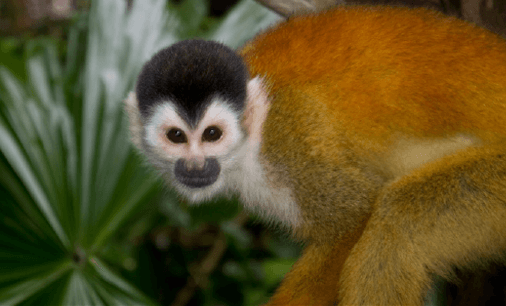 Wildlife species will die out and
natural ecosystems collapse in
the near future if the climate crisis
goes unchecked, scientists have
warned, as new research shows that
the natural world is at far greater risk
from climate breakdown than previously
thought.
Catastrophe could strike this decade
for some species, as key temperature
thresholds are crossed. Instead
of the anticipated gradual decline of
species, there are likely to be a series
of sudden collapses.
Ocean ecosystems will be first hit,
as the seas have already warmed to an
unprecedented extent, and problems
such as lack of oxygen and an increase
in acid worsen.
By the 2040s, a similarly abrupt
collapse is likely to spread to the land,
causing devastation among key species
in Indonesia, the Amazon, India,
northern Australia and sub-Saharan
Africa and the Congo rainforest.
“It’s not a slippery slope, but a series
of cliff edges, hitting different places
at different times,” said Alex Pigot
of University College London, lead
author of the study, published today in
the journal Nature.
What appears to happen, according
to the study’s authors, is that most
species can cope with warming temperatures
for a while. But when a certain
temperature threshold is crossed,
suddenly a large proportion of species
...
Read full text:
Wildlife species will die out and
natural ecosystems collapse in
the near future if the climate crisis
goes unchecked, scientists have
warned, as new research shows that
the natural world is at far greater risk
from climate breakdown than previously
thought.
Catastrophe could strike this decade
for some species, as key temperature
thresholds are crossed. Instead
of the anticipated gradual decline of
species, there are likely to be a series
of sudden collapses.
Ocean ecosystems will be first hit,
as the seas have already warmed to an
unprecedented extent, and problems
such as lack of oxygen and an increase
in acid worsen.
By the 2040s, a similarly abrupt
collapse is likely to spread to the land,
causing devastation among key species
in Indonesia, the Amazon, India,
northern Australia and sub-Saharan
Africa and the Congo rainforest.
“It’s not a slippery slope, but a series
of cliff edges, hitting different places
at different times,” said Alex Pigot
of University College London, lead
author of the study, published today in
the journal Nature.
What appears to happen, according
to the study’s authors, is that most
species can cope with warming temperatures
for a while. But when a certain
temperature threshold is crossed,
suddenly a large proportion of species
...
Read full text:
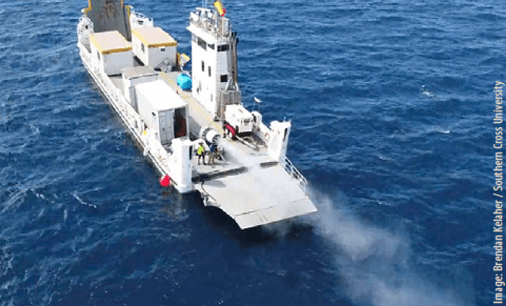 A list of 43 ideas to save coral reefs,
many of them desperate longshots,
has been released as Australia
faces the loss of one of its most precious
assets, the Great Barrier Reef
(GBR). Some trials have already begun
in the hope of establishing which ideas
can protect individual reefs. Those
that succeed will be assessed for their
capacity to scale up to defend a global
wonder 2,300 km (1,400 miles) long.
After years of denial of the dangers
faced by the GBR, the Australian
government announced in 2018 the
allocation of $500 million to address
the threats. The Reef Restoration and
Adaptation Program has considered
160 ideas, of which 43 have now
been announced as having sufficient potential to justify further investigation.
Hotter summers are generally considered
the greatest threat to Australian
corals, leading to three enormous
bleaching events in the last five years.
Consequently, three of the ideas,
including those that have attracted the
most attention, involve reducing summer
temperatures: • Spraying seawater
above the reef to use the presence of
salt to increase the sunlight clouds reflect
back to space. • Inducing fogs over
targeted reefs, again through spraying
seawater. • Spreading a molecule-thick
layer of calcium carbonate on the surface
of the ocean to cut sunlight by 20
percent. ...
A list of 43 ideas to save coral reefs,
many of them desperate longshots,
has been released as Australia
faces the loss of one of its most precious
assets, the Great Barrier Reef
(GBR). Some trials have already begun
in the hope of establishing which ideas
can protect individual reefs. Those
that succeed will be assessed for their
capacity to scale up to defend a global
wonder 2,300 km (1,400 miles) long.
After years of denial of the dangers
faced by the GBR, the Australian
government announced in 2018 the
allocation of $500 million to address
the threats. The Reef Restoration and
Adaptation Program has considered
160 ideas, of which 43 have now
been announced as having sufficient potential to justify further investigation.
Hotter summers are generally considered
the greatest threat to Australian
corals, leading to three enormous
bleaching events in the last five years.
Consequently, three of the ideas,
including those that have attracted the
most attention, involve reducing summer
temperatures: • Spraying seawater
above the reef to use the presence of
salt to increase the sunlight clouds reflect
back to space. • Inducing fogs over
targeted reefs, again through spraying
seawater. • Spreading a molecule-thick
layer of calcium carbonate on the surface
of the ocean to cut sunlight by 20
percent. ...
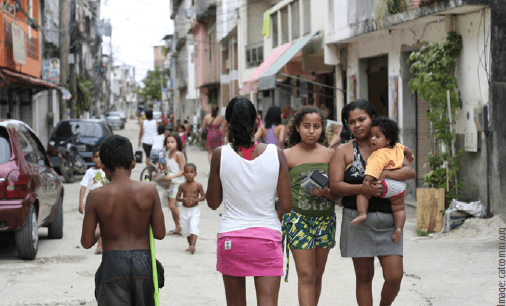
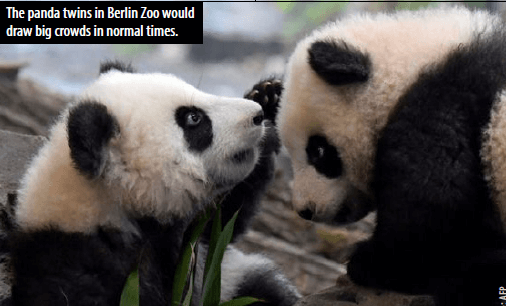 Zoos that should have been
crowded in the sunny Easter holidays
are now hard-up and asking for
donations, as the coronavirus lockdown
bites. A zoo director in northern
Germany has even admitted that some
animals might soon have to be fed to
others, if the zoo is to survive. “We’ve
listed the animals we’ll have to slaughter
first,” Neumünster Zoo’s Verena
Kaspari told Die Welt. ...
Ms Kaspari at Neumünster Zoo said
killing some animals so that others
could live would be a last resort, and
“unpleasant”, but even that would not
solve the financial problem. The seals
and penguins needed big quantities of
fresh fish daily, she pointed out. “If it comes to it, I’ll have to euthanize
animals, rather than let them
starve,” she said. “At the worst, we
would have to feed some of the animals
to others.”
Ms Kaspari’s zoo belongs to an
association, which is not covered by
the state emergency fund for small
businesses. She estimates the zoo’s
loss of income this spring will be about
€175,000 (£152,400). Besides direct appeals
for public donations, Germany’s
zoos are jointly requesting government
aid worth €100m, DPA reports.
Germany’s national zoo association
(VdZ) argues that zoos, unlike many
other businesses ...
Zoos that should have been
crowded in the sunny Easter holidays
are now hard-up and asking for
donations, as the coronavirus lockdown
bites. A zoo director in northern
Germany has even admitted that some
animals might soon have to be fed to
others, if the zoo is to survive. “We’ve
listed the animals we’ll have to slaughter
first,” Neumünster Zoo’s Verena
Kaspari told Die Welt. ...
Ms Kaspari at Neumünster Zoo said
killing some animals so that others
could live would be a last resort, and
“unpleasant”, but even that would not
solve the financial problem. The seals
and penguins needed big quantities of
fresh fish daily, she pointed out. “If it comes to it, I’ll have to euthanize
animals, rather than let them
starve,” she said. “At the worst, we
would have to feed some of the animals
to others.”
Ms Kaspari’s zoo belongs to an
association, which is not covered by
the state emergency fund for small
businesses. She estimates the zoo’s
loss of income this spring will be about
€175,000 (£152,400). Besides direct appeals
for public donations, Germany’s
zoos are jointly requesting government
aid worth €100m, DPA reports.
Germany’s national zoo association
(VdZ) argues that zoos, unlike many
other businesses ...
 Because everyone is baking one
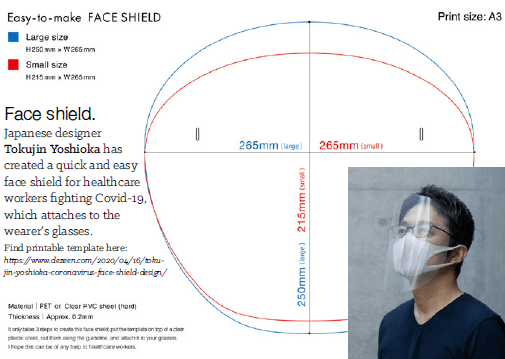 Japanese designer
Tokujin Yoshioka has
created a quick and easy
face shield for healthcare
workers fighting Covid-19,
which attaches to the
wearer’s glasses.
Find printable template here:
https://www.dezeen.com/2020/04/16/tokujin-
yoshioka-coronavirus-face-shield-design/
Japanese designer
Tokujin Yoshioka has
created a quick and easy
face shield for healthcare
workers fighting Covid-19,
which attaches to the
wearer’s glasses.
Find printable template here:
https://www.dezeen.com/2020/04/16/tokujin-
yoshioka-coronavirus-face-shield-design/
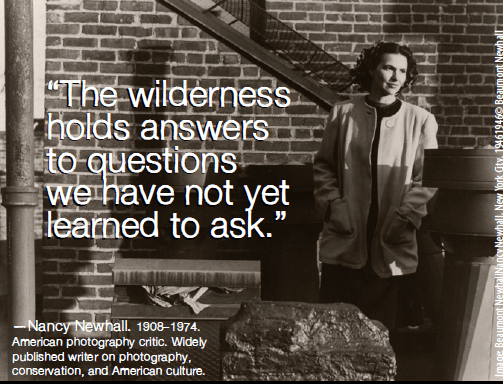 “The wilderness
holds answers
to questions
we have not yet
learned to ask.”
“The wilderness
holds answers
to questions
we have not yet
learned to ask.”
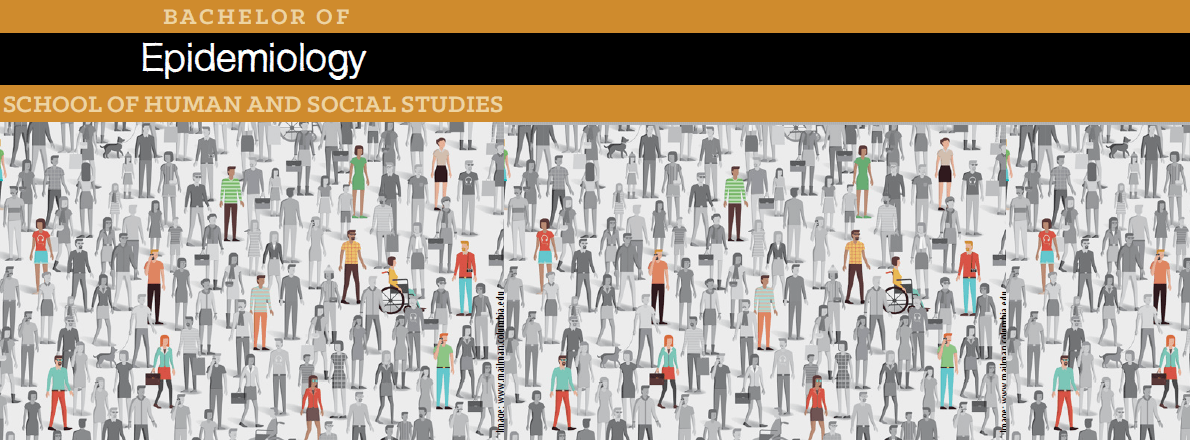 The Bachelor in Epidemiology
program develops scholarly expertise
in the field of health, including
both physical and mental disorders.
Epidemiology is the study of the
distributions and determinants of
states of health and disease in human
populations. These studies are the
foundation for prevention and control
of health disorders. Methods include
the measurement of manifestations of
disease and of the physical, social and
behavioral phenomena of the environment;
the design of studies; procedures
for collecting, handling and
interpreting large bodies of data; and
statistical analyses. Those enrolled in the program have the opportunity to
address major health problems of our
society from a research perspective.
The scope of the program is interdisciplinary.
The study of epidemiology
requires an understanding of human
biology and pathology of people in
their social context, and of the ways of
enumerating and analyzing populations.
Thus, closely affiliated fields
include the biomedical and social science
disciplines and biostatistics. The
well-trained epidemiologist should
have some familiarity with all three
fields and considerable depth in at
least one of the three. This program
permits specialization according to the student's background and interests, in
addition to general studies in epidemiology
and public health.
Your AIU Distance Learning
Bachelor in Epidemiology will be a
custom-made program, designed just
for you by you and your advisor. This
flexibility to meet your needs is seldom
found in other distance learning
programs. Our program does not require
every student to study the same
subjects and use the same books and
other learning materials as every other
student. Instead our online Bachelor
programs are designed just for you.
They are individually designed to meet
your needs and help you to reach your
professional and personal goals.
The Bachelor in Epidemiology
program develops scholarly expertise
in the field of health, including
both physical and mental disorders.
Epidemiology is the study of the
distributions and determinants of
states of health and disease in human
populations. These studies are the
foundation for prevention and control
of health disorders. Methods include
the measurement of manifestations of
disease and of the physical, social and
behavioral phenomena of the environment;
the design of studies; procedures
for collecting, handling and
interpreting large bodies of data; and
statistical analyses. Those enrolled in the program have the opportunity to
address major health problems of our
society from a research perspective.
The scope of the program is interdisciplinary.
The study of epidemiology
requires an understanding of human
biology and pathology of people in
their social context, and of the ways of
enumerating and analyzing populations.
Thus, closely affiliated fields
include the biomedical and social science
disciplines and biostatistics. The
well-trained epidemiologist should
have some familiarity with all three
fields and considerable depth in at
least one of the three. This program
permits specialization according to the student's background and interests, in
addition to general studies in epidemiology
and public health.
Your AIU Distance Learning
Bachelor in Epidemiology will be a
custom-made program, designed just
for you by you and your advisor. This
flexibility to meet your needs is seldom
found in other distance learning
programs. Our program does not require
every student to study the same
subjects and use the same books and
other learning materials as every other
student. Instead our online Bachelor
programs are designed just for you.
They are individually designed to meet
your needs and help you to reach your
professional and personal goals.
 Atlantic International University is accredited by the Accreditation Service for International
Schools, Colleges and Universities (ASIC). ASIC Accreditation is an internationally
renowned quality standard for colleges and universities. Visit ASIC’s Directory of Accredited
Colleges and Universities. ASIC is a member of CHEA International Quality Group
(CIQG) in the USA, an approved accreditation body by the Ministerial Department of the Home Office
in the UK, and is listed in the International Directory of the Council for Higher Education Accreditation
(CHEA). The University is based in the United States and was established by corporate charter in 1998.
Atlantic International University is accredited by the Accreditation Service for International
Schools, Colleges and Universities (ASIC). ASIC Accreditation is an internationally
renowned quality standard for colleges and universities. Visit ASIC’s Directory of Accredited
Colleges and Universities. ASIC is a member of CHEA International Quality Group
(CIQG) in the USA, an approved accreditation body by the Ministerial Department of the Home Office
in the UK, and is listed in the International Directory of the Council for Higher Education Accreditation
(CHEA). The University is based in the United States and was established by corporate charter in 1998.
 In some cases, accredited colleges
may not accept for transfer courses and degrees
completed at unaccredited colleges, and some
employers may require an accredited degree as
a basis for eligibility for employment. Potential
students should consider how the above may affect
their interests, AIU respects the unique rules and
regulations of each country and does not seek to
influence the respective authorities. In the event
that a prospective student wishes to carry out any
government review or process in regards to his
university degree, we recommend that the requirements
of such are explored in detail with the relevant
authorities by the prospective student as the
university does not intervene in such processes.
AIU students can be found in over 180 countries,
they actively participate and volunteer
in their communities as part of their academic
program and have allocated thousands of service
hours to diverse causes and initiatives. AIU
programs follow the standards commonly used by
colleges and universities in the United States with
regards to the following: academic program
structure, degree issued, transcript, and
other graduation documents.
AIU graduation documents can include
an apostille and authentication from the
US Department of State to facilitate their
use internationally.
In some cases, accredited colleges
may not accept for transfer courses and degrees
completed at unaccredited colleges, and some
employers may require an accredited degree as
a basis for eligibility for employment. Potential
students should consider how the above may affect
their interests, AIU respects the unique rules and
regulations of each country and does not seek to
influence the respective authorities. In the event
that a prospective student wishes to carry out any
government review or process in regards to his
university degree, we recommend that the requirements
of such are explored in detail with the relevant
authorities by the prospective student as the
university does not intervene in such processes.
AIU students can be found in over 180 countries,
they actively participate and volunteer
in their communities as part of their academic
program and have allocated thousands of service
hours to diverse causes and initiatives. AIU
programs follow the standards commonly used by
colleges and universities in the United States with
regards to the following: academic program
structure, degree issued, transcript, and
other graduation documents.
AIU graduation documents can include
an apostille and authentication from the
US Department of State to facilitate their
use internationally.
| Dr. Franklin Valcin President/Academic Dean |
Dr. José Mercado Chief Executive Officer Chairman of the Board of Trustees |
Ricardo González, PhD Provost |
| Dr. Ricardo Gonzalez Chief Operation Officer and MKT Director |
Linda Collazo Logistics Coordinator |
Dr. Silvia Restorff Academic Advisor |
| Dr. Miriam Garibaldi Viceprovost for Research |
Irina Ivashuk Alumni Association Coordinator |
Dr. Prakash Menon Academic Advisor |
| Clara Margalef Director of Special Projects of AIU |
Carlos Aponte Telecommunications Coordinator |
Dr. Nilani Ljunggren De Silva Academic Advisor |
| Juan Pablo Moreno Director of Operations |
David Jung Corporate/Legal Counsel |
Dr. Scott Wilson Academic Advisor |
| Paula Viera Director of Intelligence Systems |
Bruce Kim Advisor/Consultant |
Dr. Mohammad Shaidul Islam Academic Advisor |
| Felipe Gomez Design Director / IT Supervisor |
Thomas Kim Corporate/ Accounting Counsel |
Dr. Edgar Colon Academic Advisor |
| Daritza Ysla IT Coordinator |
Camila Correa Quality Assurance Coordinator |
Deborah Rodriguez Academic Tutor Coordinator |
| Nadeem Awan Chief Programming Officer |
Maricela Esparza Administrative Coordinator |
Cyndy Dominguez Academic Tutor Coordinator |
| Dr. Jack Rosenzweig Dean of Academic Affairs |
Chris Benjamin IT and Hosting Support |
Kinmberly Diaz Admissions Support Tutor |
| Dr. Edward Lambert Academic Director |
Mayra Bolivar Accounting Coordinator |
Amalia Aldrett Admissions Coordinator |
| Dr. Ariadna Romero Advisor Coordinator |
Roberto Aldrett Communications Coordinator |
Sandra Garcia Admissions Coordinator |
| Nadia Gabaldon Academic Coordinator |
Giovanni Castillo IT Support |
Jose Neuhaus Admissions Support |
| Jhanzaib Awan Senior Programmer |
Jaime Rotlewicz Dean of Admissions |
Junko Shimizu Admissions Coordinator |
| Leonardo Salas Human Resource Manager |
Dr. Mario Rios Academic Advisor |
Veronica Amuz Admissions Coordinator |
| Benjamin Joseph IT and Technology Support |
Michael Phillips Registrar’s Office |
Alba Ochoa Admissions Coordinator |
| Rosie Perez Finance Coordinator |
Rene Cordon Admissions Support |
Jenis Garcia Admissions Counselor |
| Chris Soto Admissions Counselor |
||
 The School of Business and Economics
allows aspiring and practicing
professionals, managers, and entrepreneurs
in the private and public sectors
to complete a self paced distance
learning degree program of the highest
academic standard.
The ultimate goal is to empower
learners and help them take advantage
of the enormous array of resources
from the world environment in order
to eliminate the current continuum of
poverty and limitations.
Degree programs are designed for
those students whose professional experience has been in business,
marketing, administration, economics,
finance and management.
The School of Business and Economics
allows aspiring and practicing
professionals, managers, and entrepreneurs
in the private and public sectors
to complete a self paced distance
learning degree program of the highest
academic standard.
The ultimate goal is to empower
learners and help them take advantage
of the enormous array of resources
from the world environment in order
to eliminate the current continuum of
poverty and limitations.
Degree programs are designed for
those students whose professional experience has been in business,
marketing, administration, economics,
finance and management.
 The School of Social and Human Studies
is focused on to the development of
studies which instill a core commitment
to building a society based on social and
economic justice and enhancing opportunities
for human well being.
The founding principles lie on the
basic right of education as outlined
in the Declaration of Human Rights.
We instill in our students a sense of
confidence and self reliance in their
ability to access the vast opportunities
available through information channels,
the world wide web, private, public,
nonprofit, and nongovernmental organizations in an ever expanding
global community.
Degree programs are aimed towards
those whose professional life has been
related to social and human behavior,
with the arts, or with cultural studies.
The School of Social and Human Studies
is focused on to the development of
studies which instill a core commitment
to building a society based on social and
economic justice and enhancing opportunities
for human well being.
The founding principles lie on the
basic right of education as outlined
in the Declaration of Human Rights.
We instill in our students a sense of
confidence and self reliance in their
ability to access the vast opportunities
available through information channels,
the world wide web, private, public,
nonprofit, and nongovernmental organizations in an ever expanding
global community.
Degree programs are aimed towards
those whose professional life has been
related to social and human behavior,
with the arts, or with cultural studies.
 The School of Science and Engineering
seeks to provide dynamic, integrated,
and challenging degree programs
designed for those whose experience
is in industrial research, scientific production,
engineering and the general
sciences. Our system for research and
education will keep us apace with the
twenty-first century reach scientific
advance in an environmentally and
ecologically responsible manner to allow
for the sustainability of the human
population. We will foster among our
students a demand for ethical behavior,
an appreciation for diversity, an understanding
of scientific investigation, knowledge of design innovation, a
critical appreciation for the importance
of technology and technological change
for the advancement of humanity.
The School of Science and Engineering
seeks to provide dynamic, integrated,
and challenging degree programs
designed for those whose experience
is in industrial research, scientific production,
engineering and the general
sciences. Our system for research and
education will keep us apace with the
twenty-first century reach scientific
advance in an environmentally and
ecologically responsible manner to allow
for the sustainability of the human
population. We will foster among our
students a demand for ethical behavior,
an appreciation for diversity, an understanding
of scientific investigation, knowledge of design innovation, a
critical appreciation for the importance
of technology and technological change
for the advancement of humanity.
 With access to a global catalog created and maintained collectively by more than
9,000 participating institutions, AIU students have secured excellent research
tools for their study programs.
With access to a global catalog created and maintained collectively by more than
9,000 participating institutions, AIU students have secured excellent research
tools for their study programs.