


- RESEARCHDistance Learning at AIU is enhanced by vast academic resources and innovative technologies build into the Virtual Campus: Hundreds of self-paced courses with video lectures and step by step lessons, thousands of optional assignments, 140,000 e-books, the Social Media & Networking platform allowing collaboration/chat/communications between students, and MYAIU develop students holistically in 11 areas beyond just academics.
- PROGRAMS OFFERED
- Areas of Study
- Courses and Curriculum
- Open Courses
- Register for a Program
- Associate Program
- Associate in Addiction Counseling
- Associate in Agriculture Food And Resources
- Associate in Anti Terrorism Security
- Associate in Behavior Analysis In Special Education
- Associate in Bioethics
- Associate in Climatology
- Associate in Cultural Theological Communication
- Associate in Culinary Arts
- Associate in Ecotechnology
- View all Associates Programs
- Bachelor Program
- Bachelors in Community Development
- Bachelors in Environmental Science
- Bachelor in Education (B.Ed, BS)
- Bachelors in Economics
- Bachelors in Entrepreneurship
- Bachelors in Financial Administration
- Bachelors in Human Resource Management
- Bachelors in Linguistics
- Bachelors in Nutritional Science
- Bachelors in Occupational Health and Safety
- Bachelors in Psychology
- View all Bachelor Programs
- Doctorate Program
- Doctor | of Biology (PhD)
- Doctorate in Business Administration (DBA, PhD)
- Doctor of Economics (PhD)
- Doctor of Electrical Engineering (D.Sc, PhD)
- Doctor of Finance (PhD)
- Doctorate in International Relations
- Doctorate in Information Technology (D.Sc)
- Doctor of Legal Studies (PhD)
- Doctor of Project Management (PhD)
- Doctor of Sociology (PhD, D.Sc)
- Doctorate in Sustainable Natural Resources Management
- View all Doctorate Programs
- Master Program
- Postdoctoral Program
- Postdoctoral in Animal Science
- Postdoctoral in Anti Terrorism Security
- Postdoctoral in Behavior Analysis In Special Education
- Postdoctoral in Bioethics
- Postdoctoral in Blockchain Technology and Digital Currency
- Postdoctoral in Business Management
- Postdoctoral in Cloud Computing
- Postdoctoral in Computer Engineering
- View all Postdoctoral Programs
AIU offers a wide range of majors in areas including the Arts, Business, Science, Technology, Social, and Human studies. More than 120 degrees and programs are available for adult learners at the associate’s, bachelor’s, master’s, doctoral and postdoctoral level. - VIRTUAL CAMPUS
Distance Learning at AIU is enhanced by vast academic resources and innovative technologies build into the Virtual Campus: Hundreds of self-paced courses with video lectures and step by step lessons, thousands of optional assignments, 140,000 e-books, the Social Media & Networking platform allowing collaboration/chat/communications between students, and MYAIU develop students holistically in 11 areas beyond just academics.
- ALUMNI
The world is YOUR campus!”, that is the message of AIU’s month magazine Campus Mundi. Hear the voices and see the faces that make up AIU. Campus Mundi brings the world of AIU to you every months with inspirational stories, news and achievements by AIU members from around the world (students and staff are located in over 200 countries).

What Would Today's Workplace Eckart Wintzen’s “Cell” Company?

In what ways does Eckart Wintzen’s “cell philosophy” present a radical view of corporate hierarchy, and what benefits or risks could that structure pose today in organizational settings?
In which ways can decentralized autonomous teams provide an organization with the ability to innovate, motivate, and sustain performance? Reference actuality.
If you were to build a business utilizing Wintzen’s ideals, what would that business be like, and how would you ensure that each “cell” maintains alignment to the mission and aims of the business?
Using Wintzen’s groundbreaking “cell-based” organizational model — which relies on structures that divide companies into small teams that are autonomous — imagine a future of work. Your essay needs to use ideas putting Wintzen’s views in comparison to traditional organizations and any barriers and advantages to pursuing such a system in today’s digital, globalized economy. You can use real examples or your ideas about how a “cell-based” structure could increase leadership, collaboration, and innovation.
(Login to your student section to access the AIU Additional Resources Library.)
What Would Today's Workplace Eckart Wintzen’s “Cell” Company?
A Dutch pioneer who split his firm into small autonomous “cells” in the 1970s anticipated modern-day decentralized organizations; as well as what his notions mean for work in 2025.
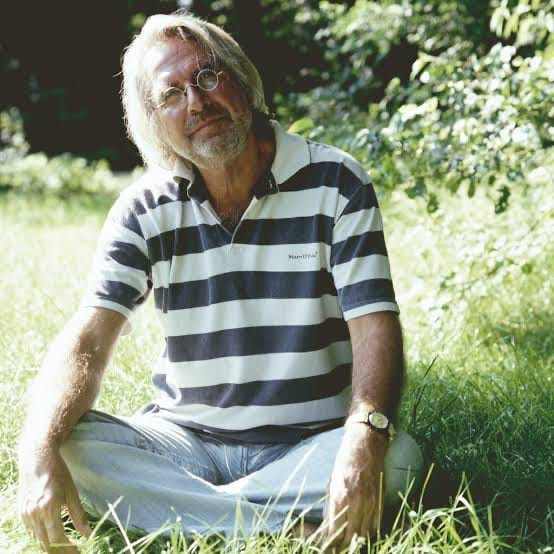
Introduction — a radical experiment that still resonates
In 1973 Dutch entrepreneur Eckart Wintzen did what was, at the time, organizational heresy: he purposely broke his growing software company into many small autonomous units or “cells” — each of which retained their own profit-and-loss responsibility, direct client relationships and rights to make decisions. Over the next two decades, BSO (later Origin from growth and transformations) scaled across the globe, with thousands of employees across multiple countries. Wintzen reinvested his wealth into purpose-driven companies, and watershed environmental initiatives, but the crux of his legacy is the organizational idea he developed, which foreshadowed many of the practices we now laud as “agile”, “teal”, or “modern work design”.
This article builds on that story and shares telling lessons for leaders in 2025. The topics include cell philosophy origin and mechanics, evidence and modern analogues, a practical playbook for cell-type autonomy, measurable results and metrics, risk factors and risk mitigation, and what Wintzen might have suggested we think about today with hybrid and remote workplaces.
The cell philosophy — simple idea, systemic implications
The foundation of the cell philosophy is simple yet grand:
- Have small, entrepreneurial work units.
- Have these units have total accountability to the customer, cash & decisions local to them.
- Do not have large centralized staff functions that can bottleneck or control the units, but instead allow simple service to support the units and be shared, and reusable.
- If a cell gets too big, cut it in half instead of having levels of hierarchy or an additional cell.
Wintzen pointedly borrowed from biology to advance his theory: cells divide when they need to maintain close responsiveness and nimbleness. The organizational corollary is that the organization must be made up of many semi-autonomous, replicable units that all have a strong line of accountability. This redistributes power from the hierarchy and puts it in the everyday practice of the teams to serve the customers. The outcome of this is quicker decisions, increased local accountability, and – if done well – amplified innovation as ideas permeate horizontally (instead of waiting for approval or permission from HQ). (extent.nl)
How it scaled: BSO/Origin’s story (1973-1996)
Wintzen took an under-utilized playbook and exploited it. BSO emerged from a management buyout and then intentionally replicated the model to expand into other geographies and market segments. By the mid-1990s, BSO/Origin was a global services company with thousands of employees and offices in dozens of countries; reporting at the time had them at close to 6,500 employees in 1995 and approximately 10-11,000 employees at the time of a tie-in with Philips around 1996, depending on which count (direct employees vs. affiliates) you believe. Regardless, every report supports that BSO/Origin expanded their company on an international basis while maintaining their decentralized structure. (WIRED)
There were two operational features that enabled the scaling: (1) the cells were directly financially accountable, responsible for their own invoicing and local finance and (2) there were service functions that existed, but they were light-weight, intentionally built to service rather than control objects. This allowed the organization to expand its services and personnel, quickly and aggressively, without building a heavy corporate center (reinventingorganizationswiki.com)

Why was the model important then - and why is it important now?
Wintzen’s model anticipated at least four themes that continue to dominate today’s organizational thinking:
Autonomy as a performance accelerant : Research has and continues to consistently correlate autonomy with motivation, creativity, and retention. Decentralized teams are able to make faster decisions and act more aggressively on customer problems (PMC)
Replication instead of scaling hierarchy : “By simply ‘copying’ small successful units into new markets, companies experience the benefits of retaining the entrepreneurial urgency of the market place and not layering management or hierarchy, which slows decision making” (Corporate Rebels)
Cross-functionality centric to employment : Cells will often use a hybrid of skills to achieve an outcome (Sales, Delivery, Support) that fit modern product-team thinking (squads, pods, squads), without heavy cross-functionality against a company mandate to a customer (Atlassian)
Values and environmental purpose : Wintzen expanded the model with a strong ethical posture: investing in green initiatives and promoting environmental accounting. Today, ESG and social impact and mission-led companies fit his insistence that companies must account for broad impacts beyond profit. (extent.nl)
Together, these collectively demonstrate why a decentralized first design can both give meaning to the workers and create resilient globally distributed organizations.
Scaling it: BSO/Origin’s Story (1973–1996)
Wintzen took a seriously under-utilized playbook and executed it doggedly. BSO emerged from a management buyout and purposefully replicated the cell model to penetrate new geographies and market segments. By the mid-1990s, BSO/Origin was a global services firm with thousands of employees and offices in dozens of countries; contemporary reporting places the company at approximately 6,500 employees in 1995 and 10–11,000 employees at the time of an affiliation with Phillips in 1996, depending on which count (direct versus affiliates) you accept. What is consistently reported across disjointed sources is that BSO expanded internationally, as a global services firm, while preserving a decentralized structure. (WIRED)
Two pragmatics allowed scaling to happen: (1) cells were financially accountable – they managed the invoicing and local finance (accounting), and (2) while all units needed to have shared services, they were intentionally designed to be lightweight and consumable versus creating a centralized structure to funnel services through a corporate center. These elements allowed the organization to expand without having to build up a corporate center . (reinventingorganizationswiki.com)
The significance of the model during Wintzen’s time remains relevant today.
Wintzen’s model predicted at least four contemporary organizational thinking trends :
- Autonomy as a performance lever : There is ample research that demonstrates the links between autonomy, motivation, creativity, and retention. Decentralized teams can react more quickly and engage in experimentation more boldly in service of solving customer problems. (PMC)
- Replication rather than scaling hierarchy : In terms of “copying” small, successful units into new markets, we have at least preserved entrepreneurial urgency as a key motivator — in contrast to traditional scaling, where “decisions take time” because layers of bureaucracy between the management above and the team below multiply (Corporate Rebels).
- Customer-focused cross-functionality : While Wintzen describes what he calls “cells,” they often combine skills (e.g. sales delivery & support ) necessary to own the outcome, similar to what is happening if companies are moving towards product teams (squads and pods and squads) to assume end-to-end product or service responsibility (Atlassian).
- Values and environmental purpose : Wintzen extended the model to represent a strong ethical posture of social responsibility – and he later invested his earnings into green businesses and called for environmental accounting. Today’s ESG, social impact, and mission-driven companies are similar in insistence that companies measure the impact of their actions beyond profit (extent.nl)
As a whole, they illustrate Wintzen’s point that adopting a decentralization-first design was both an empowering model for workers and a resilient organizational design/global distribution of the workforce.
Contemporary versions and complementary examples
Wintzen’s notion has not disappeared; it has resurfaced in various forms in various settings :
Buurtzorg (nursing care) : Buurtzorg is a well-respected Dutch example of decentralization in action. Teams of caregivers coordinate local nursing care on their own, and manage local autonomy with the smallest possible central office. Buurtzorg is demonstrating great outcomes with minimal overhead costs. Corporate Rebels and others are explicitly linking Wintzen-type cells with Buurtzorg-type cells. (Corporate Rebels)
Morning Star (tomato processing) : Morning Star is arguably one of the more famous examples of a self-managed organization in which workers co-organize into autonomous units that negotiate their responsibilities and commitments without hierarchical managers. It is a notable example in which the idea of a “cell” has been shown to be viable in a non-technology and non-service-based setting. (Academy4socialskills Flux Change)
Spotify model & modern “squads” : The product teams (squads, tribes) that Spotify popularized have adapted this autonomy + alignment pattern for software development, offering some ideas about how autonomy might be coupled with light structures for coordination across teams. (Atlassian)
The academic and management literatures appear to be recently revisiting the notion of decentralization as we note that reviews and empirical studies are showing that decisional decentralization is on the rise — as organizations seek to be more adaptable and agile in increasingly turbulent markets and environments. However, the literature caution us to not regard decentralized approaches as a panacea, as they require appropriate systems to support them.
A pragmatic playbook: actualizing the cell idea — in steps
What follows is a pragmatic series of steps for trialing Wintzen-type cells in a contemporary work organization.
1) Define the unit of work and limit the size
You must articulate the specific work circumstance/effort that qualifies as a “cell” in your environment (e.g., customer segment, product line, geographic region). Then, specify an upper limit/number on the cell size being considered. Most modern examples keep teams to under 12–50 /make size decisions based on function. How to prevent the unwanted managerial behaviors is by building in the idea of splitting: Once the limit is reached, the “cell” can automatically trigger splitting. This will then prevent potentially negative outcomes of perceived managerial roles occurring when you have OUTGROWN the original cell size.(Corporate Rebels)
2) Provide cells with P&L ownership and customer ownership
It is critical that clear financial and customer-focused accountability metrics are assigned at the unit level. Every cell should understand the financial implications of their decisions in terms of revenue, gross margin, and cash. Aligning ownership to positive outcomes allows for a culture of accountably entrepreneurial behavior. (reinventingorganizationswiki.com)
3) Create a shared-services marketplace instead of gatekeeping
Offering modular templates, legal playbooks, finance tools, and HR playbooks is a way for cells to consume every resource on demand. The centre’s focus should be about making it easy to transact as opposed to gatekeeping. Provide coaching and one-click services as an option and not required approvals. (extent.nl)
4) Institute light-weight governance and interfaces
While autonomy is enacted, it must be done in the context of protocols. The interface contracts provide cells with (APIs for) the information and decision flows giving cells opportunities for coordination without applying for each action. Use established federated standards (e.g., this data field must exist) not require heavy compliance burdens. (reinventingorganizationswiki.com)
5) Instrument the outcomes including non-financial criteria
Develop the metrics that must be collected for customer loyalty, lead-time delivery, employee engagement and social/environmental (i.e., energy used, waste) and profit margins and other financial considerations. Wintzen pushed for environmental accounting practices; modern teams should use comparable social criteria as operational levers…not for PR efforts. (WIRED)
6) Coach for culture, don’t compliance
Deploy leadership coaching, peer review practice, and cross-cell learning. Culture binds the brand consistency without micro-managing. Train for onboarding for new cells so the effective practices become the normal practice. (LinkedIn)
Measurement of success, what to measure cell-level and enterprise-level
Examples of cell-level metrics: customer NPS or CSAT, revenue per employee, cash runway, sprint/iteration throughput, a defect/quality rate, employee engagement, and a small set of environmental/social consideration.Metrics at the enterprise level include aggregate customer satisfaction, brand consistency metrics, nonsensical costs/duplicate work, total costs of shared services per cell, and systemic risk (e.g., one supplier concentration). Keep reporting simple and straightforward – short dashboards on a frequent basis for cells and quarterly synthesis with executive teams to ensure health monitoring.
Why both? Because decentralization eliminates many bottlenecks, but it introduces variance, and measurements will recognize when variance turns into fragmentation and allow for light-touch remediation.
Risks, trade-offs, and mitigation strategies
A cell design introduces trade-offs. The biggest risks with a cell structure and potential solutions to mitigate included:
- Fragmentation and duplicate work
Mitigation: invest in knowledge sharing tools, and develop incentives for reusing work (i.e., credit systems, shared royalties, or otherwise compensating reused IP).
- Brand and experience inconsistency
Mitigation: set standards for customer-facing work and non-negotiable language, and designs, and provide a template and brand library that cells must use.
- Scale complexity on the infrastructure side
Mitigation: centralize commodity infrastructure (i.e., cloud, payroll, compliance, etc.), but keep local authority to make decisions.
- Coordination costs and energy for cross-cell initiatives
Mitigation: use “ambassador” roles, federated councils, and time-bound cross-cell projects with an explicit set of criteria for success.
- Short-term financialism and outcomes at the cell level
Mitigation: govern via balanced scorecards with long-term investment and sustainability metrics instead of focusing on short-term gains.
Wintzen knew that in order for decentralization to be effective, he would have to invest in “plumbing,” that is, the shared systems, coaching, and cultural scaffolding to make autonomy productive rather than chaotic.(reinventingorganizationswiki.com)
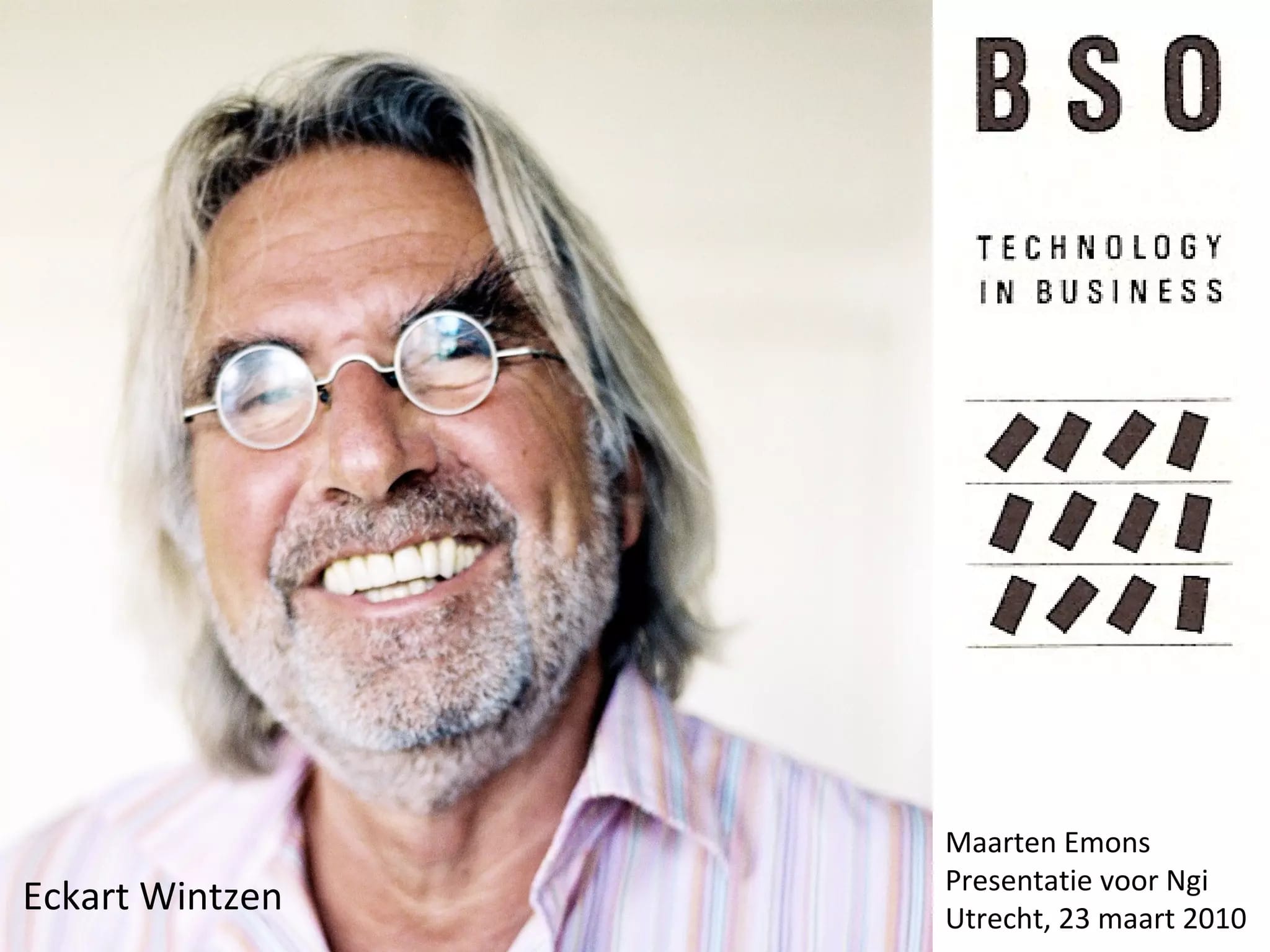
What Eckart Wintzen would probably say to leaders in 2025 - a distilled manifesto
If Wintzen were to have a conversation today with undeniably the most powerful current leaders of publicly owned organizations – the CEOs – he might say:
- Think of organizations as ecosystems and not mechanical parts. Design for change; ultimately, create organizational units that can split apart and replicate. (extent.nl)
- Treat the planet in the same way that you think about a balance sheet. Environmental accounting should be part of day-to-day organization function: if the units you manage are creating pollution in the system / the atmosphere – consider the cost in your planning decisions. (WIRED)
- Trust your teams and stop meeting with them so often. Identify your teams’ mission or purpose and provide the resources necessary to carry it out. Then, do not get in your team’s way. If they have to coordinate with each other to get work done, you can then fix the interfaces when that happens, but do not centralize. (Atlassian)
- Rely on duplicating to scale the initiative. Rather than adding additional management levels, clone as many small responsive, accountable units as you can that look like what will work. (reinventingorganizationswiki.com)
His holistic message would have moral implications, too: companies are social actors, and the way that they organize matters to human flourishing and planet well-being. That’s why, after stepping away from the corporate rigours, he invested in green ventures and education. (extent.nl)
Practical case study snapshots – this is what success can look like
Buurtzorg – small, community nursing teams coordinate care, and neighborhood footprints yield an elevated patient satisfaction level than the overhead one finds in most traditional models of home-care. Another healthcare example that cellular teams are producing measurable results. (Corporate Rebels)
Morning Star – self-managed teams in food processing reveal how soft “face-to-face” environments can maximally leverage autonomy and clarity of work to sustain a rich and complex food operation. (Academy4socialskills Flux Change)
Origin/BSO – arguably a direct historical example of the cell system in practice. Activities in 30 countries allow service firms to rapidly expand globally while sustainably achieving the entrepreneurial spirit. (WIRED)
Final thoughts – why Wintzen’s lesson matters in a post-industrial world
Eckart Wintzen’s cell framework was no intention to be an experiment in management, but a way to leverage limitations and scale more humane work. In an era characterized by rapid technology disruption, climate urgency, and changing workforce expectation, Wintzen’s view of small decentralized team structures that work under the banner of trust and accountability and a common themed purpose, has never meant more.
For those leaders that are willing to give up control for the sake of a more compassionate and escalating approach – and both realize the cost and investment in improvement to subsystems to mindfully protect trust – the cell is a mechanism to life away from bureaucracy, innovate away from rigidity, and grow without creeping. Ultimately, it is just a framework to show larger scale options can be explored, without losing agility, entrepreneurship, largeness, and are deeply humane capacities.
At Atlantic International University (AIU), we see it this way too: education, leadership, innovation – all must move on from hierarchy – if they are to meaningfully respond to the emergence of our new world. Our work can provide that response to whatever extent of bunch-thinking leadership you can respond to and offer, at a continental lens—and especially at the north-south transition of the globe – we make global change.
Join Atlantic International University today, and be the forward-thinking leader who does not just get comfortable with the future, but shapes it, with the basic understanding we are all connected and respond as a common humanity through education. Engage with a program, and get the process started here.Academic and management literature has recently revisited decentralization. Reviews and empirical studies show a resurgence of decentralization as firms seek adaptability in turbulent markets — but they also caution that decentralization is not a panacea and needs supporting systems. (journals.aom.org).
References
- Wikipedia — Eckart Wintzen. (Wikipedia)
- Wired — “Origin’s Original” (1996 profile of Wintzen/Origin). (WIRED)
- Reinventing Organizations — BSO/Origin case summary. (reinventingorganizationswiki.com)
- Extent (Wintzen’s site) — articles and biography. (extent.nl)
- Corporate Rebels / Buurtzorg coverage — modern cell-like example. (Corporate Rebels)
- Academic and review literature on decentralization and organizational learning. (PMC)
Reminder to our Dear Students,
Please ensure you are logged in as a student on the AIU platform and logged into the AIU Online
Library before accessing course links. This step is crucial for uninterrupted access to your learning
resources.
AIU Success Stories







Contact Us Today!
Begin Your Journey!
AIU’s Summer of Innovation and Growth gives you the ability to earn up to $5000 in tuition credit by completing free lessons and courses.
Whether you’re looking to acquire new skills, advance your career, or simply explore new interests, AIU is your gateway to a world of opportunities. With free access to 3400 lessons and hundreds of courses the ability to earn credits and earn certificates there’s no better time to start learning.
Join us today as a Guest Student and take the first step towards a brighter, more empowered future.
Explore. Learn. Achieve.


