Komodo Dragons Have Iron-Coated Teeth: Nature's Armored Predators
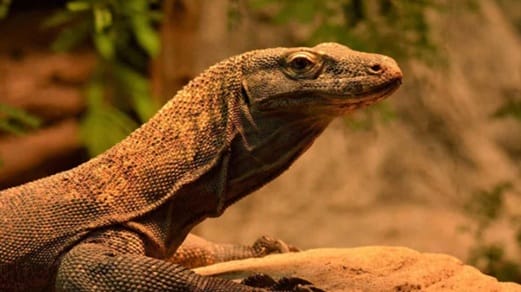
It is often said that – In the wild, survival doesn’t favor the kind rather it favors – the cunning, the silent, and the swift. However, few creatures inspire awe such as – the Komodo dragon. They are the largest living lizard on Earth. They can grow up to 10 feet in length and weigh over 150 pounds. These Komodo dragons are apex predators – native to a handful of Indonesian islands.
Yet, beyond their formidable size, stealthy movements, and venomous bite – scientists have discovered an even more chilling feature – Komodo dragons have iron-coated teeth. Yes, iron! The very metal that forges swords and armor also fortifies the jaws of this ancient reptile. But why would a lizard need iron teeth? Let’s dive into the world of nature’s armored predators to find out.
The Teeth of a Monster
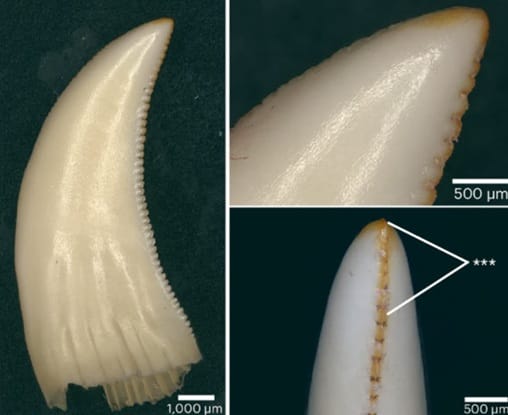
At first glance, Komodo dragon teeth don’t seem too extraordinary. They’re serrated – much like a shark’s teeth and arranged in a similar fashion which makes them ideal for slicing flesh. But a deeper look, especially under a scanning electron microscope can narrate a more fascinating story.
According to secondary research, scientists examining Komodo dragon teeth found that they were unusually dark and gleaming – particularly around the cutting edges. Chemical analysis revealed that the teeth are coated with a layer of ferric iron oxide – a form of iron that gives them both durability and their unusual coloration. Now, the interesting part is that this is not just a cosmetic feature – it significantly strengthens their teeth, making them better suited for their brutal style of feeding.
Why Iron?
The evolution of iron-coated teeth is not random as it seems. It is a survival strategy perfected over millions of years. Komodo dragons are opportunistic carnivores. They feed on – deer, wild boar, water buffalo, and even smaller Komodo dragons. They don’t just bite – they rip and shred their prey apart, using powerful neck and jaw muscles to saw through skin, muscle, and bone. This feeding behavior places extreme mechanical stress on their teeth.
An iron coating helps mitigate that stress by:
- Increasing hardness, so the teeth remain sharp longer
- Reducing wear, especially at the cutting edges
- Providing rust resistance, as saliva and blood can be corrosive
- Enhancing killing efficiency – ensuring faster and cleaner kills
Evolutionarily speaking – these advantages mean better-fed dragons, higher survival rates, and more successful reproduction.
The Dragon’s Arsenal: More Than Just Teeth
Komodo dragons aren’t just deadly because of their teeth. They wield a triad of biological weaponry that makes them uniquely lethal:
- Venom
For decades, scientists believed Komodo dragons killed through bacterial infection—thanks to the filthy state of their mouths. But recent research shows they possess venom glands that secrete anticoagulants and hypotensive agents, causing their prey to bleed out and go into shock.
- Stealth and Ambush
Despite their size – Komodo dragons are masters of ambush. They lie in wait for hours, then strike with incredible speed, delivering a powerful bite and retreating while the venom takes effect.
- Iron-Coated Teeth
Finally, the iron-enhanced teeth make sure that when the bite comes, it’s efficient, clean, and often fatal. In some cases, they sever tendons or arteries in a single swipe.
Pigmented cutting edges in Komodo dragon teeth
Source: LeBlanc et al.
Evolution’s Blacksmith: How Did They Get Iron Teeth?
Nature doesn’t forge iron the way humans do. So how did Komodo dragons evolve such a feature?
According to secondary research, scientists believe that specialized proteins in the dragon’s body bind iron ions during tooth development. These proteins likely help deposit iron oxide on the surface of the tooth enamel as the teeth emerge. It is a slow but steady process – more like plating than forging.
Interestingly, Komodo dragons replace their teeth frequently throughout their lives, like sharks. Each new tooth is born with a fresh layer of iron – ensuring the dragon never loses its edge literally.
This trait may have evolved in response to their high-risk, high reward feeding strategy, where each bite counts, and injuries during feeding (even from prey) are common.
Other Animals with Metal-Infused Anatomy
Komodo dragons aren’t the only creatures with metallic body parts. In fact, biometals show up in other species in surprising ways:
- Chiton mollusks have teeth coated with magnetite, one of the hardest natural substances.
- Raspberry crazy ants use metal ions in their exoskeletons to resist insecticides.
- Marine polychaete worms have copper in their fangs for increased hardness.
These examples show that nature often turns to the periodic table to solve evolutionary problems. But the Komodo dragon may be one of the most dramatic—and visually terrifying—cases of bio-metal integration.
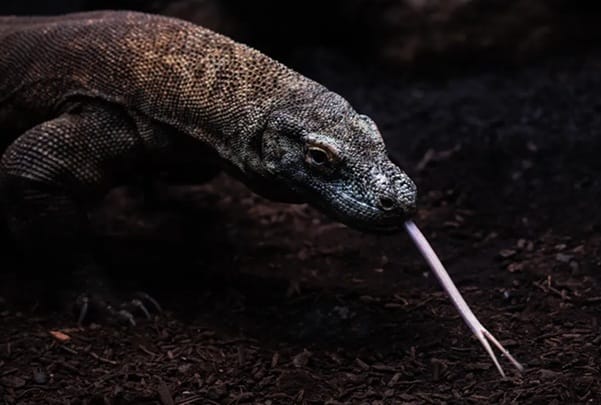
Source: Marcos del Mazo / LightRocket
A Glimpse into Prehistoric Power
Komodo dragons are the last surviving members of a once-diverse group of giant monitor lizards. Their ancestors may have hunted dwarf elephants and massive reptiles. The iron in their teeth links them to a prehistoric lineage of reptilian dominance – where brute force met biochemical innovation.
In a world increasingly dominated by mammals – the Komodo dragon remains a relic of reptilian supremacy – a living embodiment of evolution’s raw and unforgiving power.
Final Bite: What Komodo Dragons Teach Us
The truth behind the fact that Komodo dragons have iron-coated teeth reshapes how we understand both them and the wider animal kingdom. It shows us how evolution happens. It also raises possibilities for biomimicry. Can we learn anything from the Komodo’s biology in the age of steel and silicon.
So next time you see footage of a Komodo dragon stalking its prey, remember – beneath that calm, lumbering exterior is a jaw full of iron-forged weaponry – honed by nature, hardened by time, and ready to strike.
If this article triggers curiosity, explore more about how animals use metals in their bodies, the role of evolution in shaping predator adaptations, and the fascinating survival strategies of other apex creatures across the globe. Nature often hides extraordinary science in the most unexpected places. AIU offers a list of Mini courses, Blogs, News articles and many more on related topics that one can access such as:
AIU also offers a comprehensive array of recorded live classes spanning various subjects. If any topic piques your interest, you can explore related live classes. Furthermore, our expansive online library houses a wealth of knowledge, comprising thousands of e-books, thereby serving as a valuable supplementary resource.
Reference
Reminder to our Dear Students,
Please ensure you are logged in as a student on the AIU platform and logged into the AIU Online
Library before accessing course links. This step is crucial for uninterrupted access to your learning
resources.