Bachelor of Theater

School of Social and Human Studies

Academic Freedom to Discover Your Purpose

Open Curriculum Design at Atlantic International University

The Bachelor of Theater is an all-inclusive undergraduate program that aims at developing creative, technical and performance skills for budding artists. If you are looking to obtain a Bachelor’s of theater, a bachelor of theatre, or a theater degree, you will get knowledge about the various techniques of acting, script writing, stage productions, theater direction, and performance. 

The performing arts program involves practical knowledge and classroom study. It equips individuals with the skills required for theatrical performances, storytelling, and even leadership roles within the entertainment industry. A theater arts degree, acting degree, stage performance degree, theater production degree, or playwriting degree helps build confidence, communication, and collaboration.

Learning choices, such as academic freedom and open curriculum, ranging from an acting degree online or online theater degree, can help students balance their educational and career responsibilities while receiving good education in theater arts and performing arts from any place in the world. With the rise of technology in the creative industries, AI and data analytics have become increasingly significant in areas like audience engagement, production planning, digital marketing, ticket sales insight, and personalization of content.

It is vital for those who pursue theater arts degrees and major in stage production studies or dramatic arts to understand the significance of these technologies together with their performance skills.

Important: Begin a captivating journey to discover potential study areas and subjects as you navigate through your academic adventure. It’s crucial to highlight that this list is not exhaustive or obligatory, highlighting AIU’s commitment to personalized learning experiences rather than rigid course work or degree requirements. Consider this sample as an illustration of the wide range of options at your disposal. If AIU’s unique, flexible curriculum and comprehensive exam structure piques your interest, does it inspire you to delve further for a thorough understanding?

Bachelor of Theater Industry Growth & Global Impact

The Bachelor of Theater Degree at Atlantic International University (AIU) equips individuals in a holistic and asynchronous to work creatively and technically in an industry which continues to develop with technology and globalization. There have been significant growth rates in the global artificial intelligence (AI) industry with applications for theater development ranging from stage production, analyzing theater audiences, ticketing processes, virtual rehearsals, to theater performance experiences. With the bachelor’s in theater degree, theater degree, or theater arts degree, graduates become well-versed in areas such as acting techniques, analysis of scripts, performance studies, and theater direction, and pursue careers in production, education, and entertainment. 

A performing arts degree, acting degree, stage performance degree, or theater production degree provides another avenue for careers in theater, directing, playwriting, and digital media. Increased demand for creative artists together with the production processes through AI are contributing to highly competitive salaries around the globe. Whichever area of specialization – drama school degree, playwriting degree, online theater degree, or performing arts programs – graduates are ready for many theater careers in the performing arts industry.

Trends, Insights & Predictive Analytics in Theater

Being a combination of the connection between people and the innovative approach to production, the theater industry retains its value even in the modern world full of technology. The Bachelor of Theater course provides knowledge and skills which are very applicable in the current conditions. The art of live performances is focused on empathy, teamwork, and participation—traits that are appreciated by audiences in the age when “offline” experiences become luxury because of their uniqueness.

Future Trends

There is a shift in theater towards creating immersive, accessible and technologically integrated experiences. Some of the innovations that have emerged are increased diversity in narrative and casting, use of projection and digital design, community and outdoors theater productions, extensive social media use for audience acquisition and nurturing of young talent. Hybrid forms that integrate live and digital components and premium, interactive forms have seen an increase in usage.
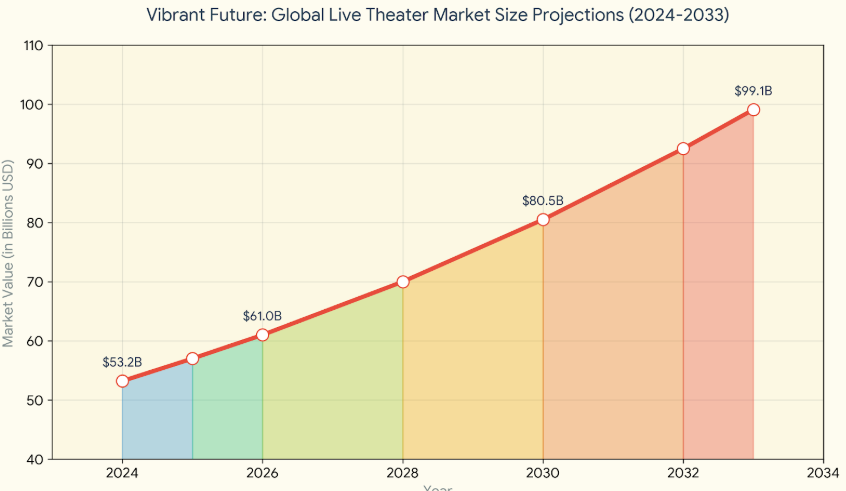
vibrant future global live theater market size projections 2024 2033
The chart projects the global live theater market growing from $53.2 billion in 2024 to $99.1 billion by 2033, highlighting steady expansion, rising audience demand, and strong long-term industry growth worldwide.
Trend Comparisons

In contrast to past times, inclusivity and hybridity in modern-day theater take precedence over being purely traditional in nature. Whereas earlier performances would use extensive physical set designs, nowadays it is more efficient to use projective and augmented/virtual reality overlay techniques. The theater experience is pitted against streaming, which is won through the irreplaceable connection created with live performance and community activities. Site-specific theater differs from the traditional proscenium stage because it allows individual involvement of the spectator, similar to the trends in entertainment elsewhere.
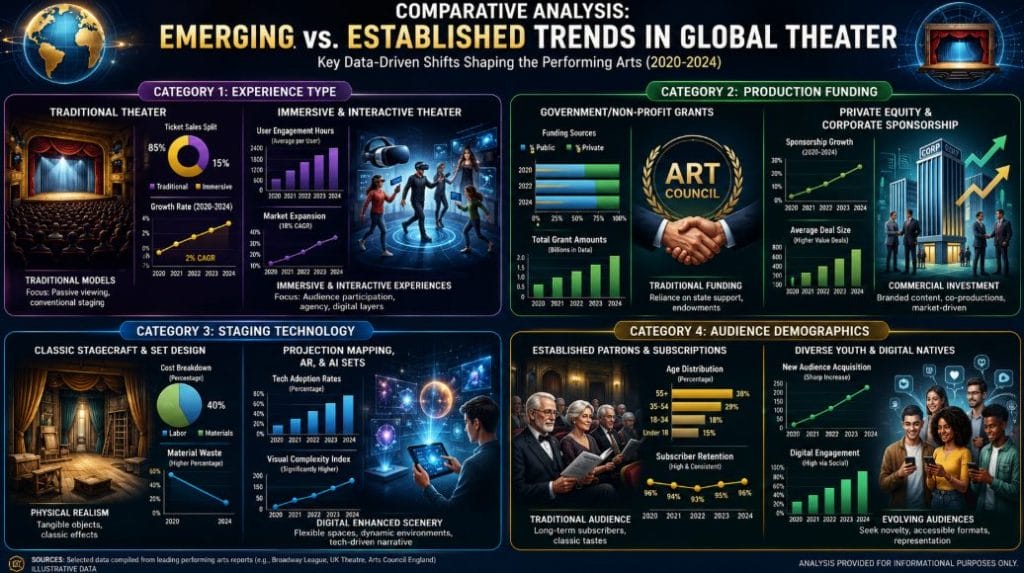
comparative analysis emerging vs established trends in global theater
This infographic compares emerging and established global theater trends, highlighting immersive experiences, evolving funding models, advanced staging technologies, and shifting audience demographics, showcasing innovation, digital engagement, and industry transformation between 2020–2024.
Predictive Analytics

Tools utilizing data have been employed in predicting preferences for audiences, making programming and predicting revenue generation in the theater and entertainment industries. Box-office performance is analyzed together with sentiment analysis and demographic data to make informed decisions on what to produce and how to market the production or tickets. Theater programs can use the same technology to plan and allocate resources effectively.

Industry Growth Charts

Growth and recovery in the global industry of performing arts continue on an even keel. The global market for the performing arts businesses was estimated at approximately USD 185.67 billion in 2024 and will increase up to USD 292.24 billion by 2032 (CAGR ~5.9%). Significant growth will be witnessed in live theatre businesses, and some predictions forecast that the value will reach USD 99 billion by 2033 (CAGR ~7.1%). Movie theatres, which are also part of this industry, predict growth from ~USD 73 billion in 2026 to above USD 108 billion by 2034 (CAGR ~5.1%).
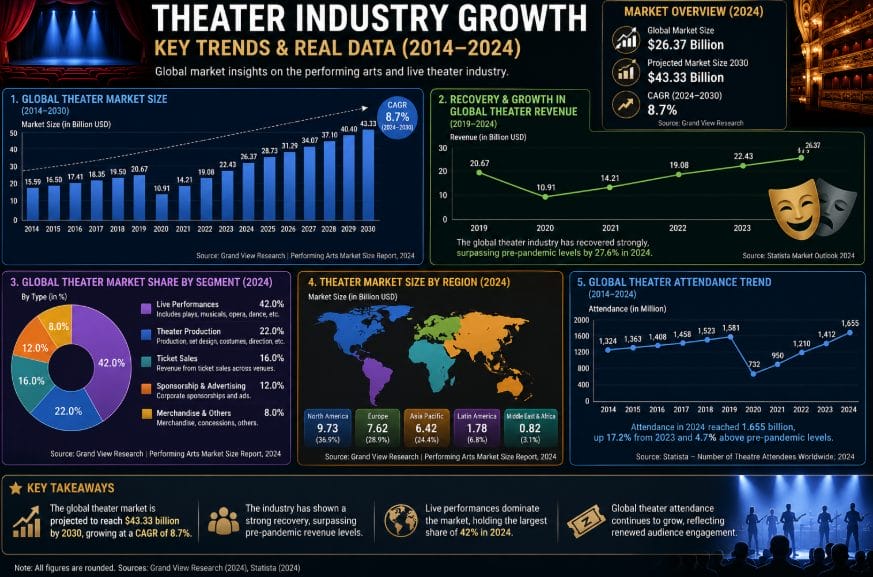
theater industry growth key trends real data 2014 2024
This infographic presents global theater industry growth, highlighting market expansion, revenue recovery, regional distribution, audience attendance trends, and key market segments, demonstrating sustained growth, resilience, and increasing worldwide demand through 2024.
Insights on Future Technologies & Smart Industries

Future theater will integrate VR, AR, and immersive technologies for blended real-virtual experiences, such as AR overlays with live actors or fully virtual environments. Smart stages with AI-driven lighting, soundscapes, and interactive elements will enable dynamic, personalized performances. These align with broader “smart” entertainment industries emphasizing sustainability, data-informed operations, and hybrid accessibility. Technologies lower barriers for smaller productions while creating new creative possibilities, positioning theater within innovative cultural-tech ecosystems.

Impact of AI on the Field

AI can aid in making administrative work efficient, analyzing the audience, designing (such as creating lighting cues or soundscapes based on description), and marketing. It helps in scriptwriting or coming up with ideas for production. However, it is unable to replace the human ability to bring about emotional involvement in theater through live performance. The positives of AI in the theater industry include reducing costs and making theater more accessible; negatives include loss of jobs in technical positions and questions regarding artistic integrity.

Scope of Automation

AI and robotics through automation would be able to perform all the repetitive tasks in set building, lighting, sound, stage management, and ticketing, thus leaving artists free to work creatively. During production, this approach will allow more efficient operations and even create complex effects at an affordable budget. Nevertheless, some aspects of performance and interpretation have to be performed by humans because of the presence of empathy and spontaneous creativity.

Future Career Demand in Evolving Digital Economies

Graduates from a Bachelor of Theater program would be able to combine their performing arts skills with knowledge of digital technologies in a variety of fields, including immersive experience design, AR/VR creation, digital production, community engagement, tech-savvy directing or teaching, among others. 

The need for live performance skills will remain high in the entertainment industry, education sector, business training, and new industries such as interactive media. Theater skills can add value through human-centered perspective complementing artificial intelligence capabilities. While some occupations may change, there are plenty of new prospects in hybrid productions and audience development.
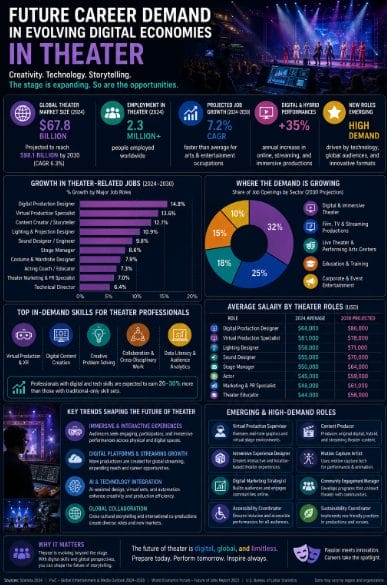
future career demand in evolving digital economies
This infographic highlights future theater career demand, showcasing industry growth, rising employment, emerging digital skills, salary trends, AI-driven innovation, and expanding opportunities across production, performance, technology, and creative entertainment sectors.

Career Opportunities & Professional Development of a Student with Bachelor of Theater

A Bachelor of Theater or Bachelor of Theatre gives students a well-rounded mix of creative, technical, and leadership skills to make their careers in theatre exciting. Those who hold a degree in theater, theater arts, performing arts, acting, stage performance, theater production, theater directing, or playwriting have options to work in entertainment live, film, television, OTT, advertising, teaching, events management, media, and culture sectors. With a bachelor’s degree in theater, one can look forward to having a live theater career, stage performance career, theater arts teaching, and performing arts teaching as well. 

Some newer areas based on technology such as virtual production, digital storytelling, motion capture, immersive theatre, AI-enabled content creation, and online performance platforms also offer great opportunities for graduates including those seeking an acting degree online or online theater degree. 

The comprehensive program of performing arts or theater arts gives you expertise in acting, script writing, theatrical performance, stage production, theater directing, performance studies, and dramatic arts in addition to a solid portfolio as part of the program goals. At AIU, students benefit from internships, industry mentors, job placement help, networking, career counseling, and professional development services.
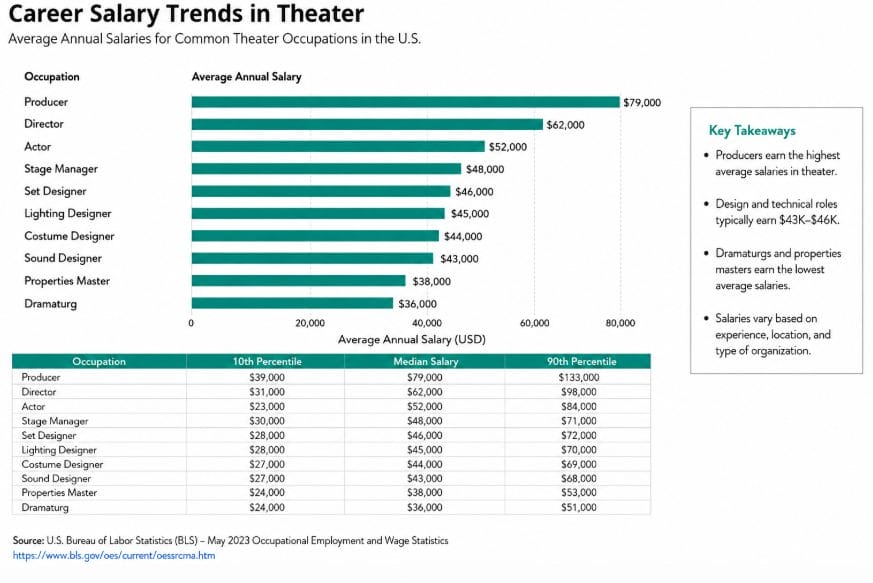
average annual salaries for common theater occupations in the us
The infographic highlights average annual salaries for theater careers in the U.S., showing producers earn the highest pay, followed by directors and actors. Salaries vary by role, experience, location, and organization type.
Employment Growth Projections
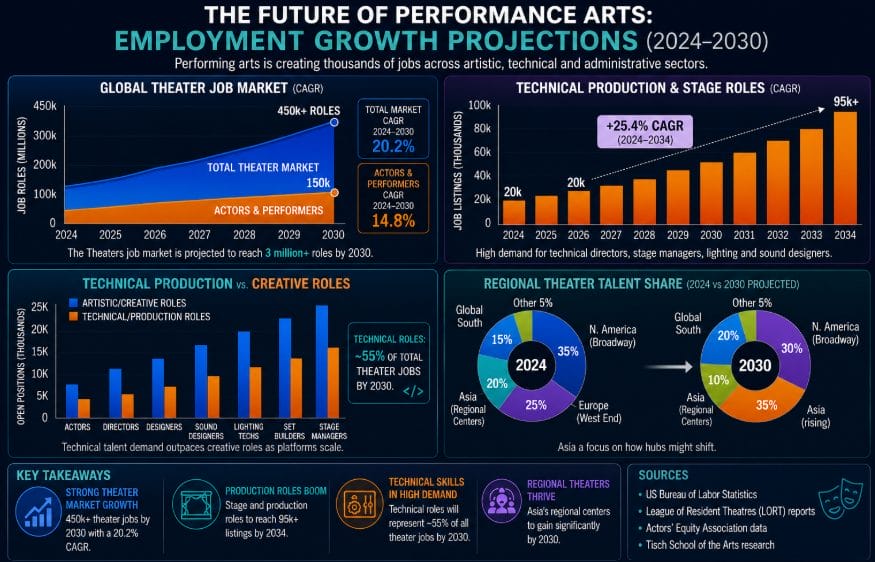
the future of performance arts employment growth projections 2024 2030
The infographic projects strong performing arts employment growth through 2030, highlighting rising demand for theater professionals, technical production specialists, and regional talent, driven by technology, creative innovation, and expanding global opportunities.

Contact Us Today!

Begin Your Journey!
AIU’s Summer of Innovation and Growth gives you the ability to earn up to $5000 in tuition credit by completing free lessons and courses.
Whether you’re looking to acquire new skills, advance your career, or simply explore new interests, AIU is your gateway to a world of opportunities. With free access to 3400 lessons and hundreds of courses the ability to earn credits and earn certificates there’s no better time to start learning.
Join us today as a Guest Student and take the first step towards a brighter, more empowered future.
Explore. Learn. Achieve.

Academic Freedom & Customized Curriculum

The Bachelor of Theater is the perfect course for individuals interested in pursuing a degree in performing arts and theater arts. The Bachelor of Theater, Bachelor of Theatre, or specialized Bachelor of Theater Arts will provide the opportunity to study in the areas of performing arts and theater arts in a liberal environment where you get to customize the course in line with your artistic interests. You will have the chance to study various areas such as acting techniques, scriptwriting, performance, directing, theater, and theater performance under the guidance of mentors and academic advisors.

A comprehensive performing arts program or theatre arts program also supports performing arts education, theater arts education, and stage production studies. Learners seeking flexibility can consider an acting degree online or online theater degree. Graduates with a theatre degree, acting degree, stage performance degree, or performing arts degree are well prepared for theater careers, stage performance careers, and live theater careers across the entertainment industry.

Why Study Bachelor of Theater at AIU

Enrolling into the Bachelor of Theater course at AIU provides learners with a very dynamic approach towards creating a bright future in theater arts and performing arts. Irrespective of whether one is looking for a bachelor of theater, theater degree, or even an online theater degree, AIU combines self-paced learning, customization of curriculum and AI-based education as per individual needs.

Learners have the option to customize their performing arts degree through various options ranging from acting, script writing, performance studies, stage production, theater directing, and other interdisciplinary subjects. This complete theater arts degree makes learners ready for various theater career options including theatrical performance careers, stage performance careers, live theater careers, and theater production degree, theater directing degree, playwriting degree, and stage production studies. 

The international learning platform at AIU helps bring together the world’s view, creating a collaborative environment from different cultures with flexibility in combining work and life while being able to use curriculum builder tool. Whether your dream is to earn an acting degree, acting degree online, performing arts degree, theater arts degree, theatre arts program, drama school degree, or stage performance degree, AIU offers you relevant industry knowledge and skills for success in the current dynamic environment.

Take the First Step Toward a Successful Theater Career

Apply Now for Admission

Core Courses and Topics in Bachelor of Theater

Theater degree and theatre degree provide complete education via an innovative performing arts curriculum that combines creative and technical knowledge. The BA in Theater degree and associate of theater degree include such important topics as acting, script writing, performance studies, theater productions, theater directing, and theatrical performance. Students who enroll in a theater arts degree, acting degree, theatre degree, and theater production degree acquire practical skills in theater arts, performing arts, and stage performance.

The curriculum also includes playwriting degree concepts, stage production studies, and theater arts education, preparing graduates for diverse theater careers, stage performance careers, and live theater careers. Whether enrolled in a traditional drama school degree, performing arts degree, theatre arts program, performing arts education, theater directing degree, or an online theater degree or acting degree online, students build the expertise needed for success in the evolving world of dramatic arts.

  • Acting Techniques
  • Stage Performance
  • Stage Production Studies
  • Voice and Speech for Performance
  • Theater History and Dramatic Literature
  • Script Analysis
  • Theater Directing
  • Playwriting
  • Movement and Physical Theatre
  • Performance Studies

Tools & Technologies You Will Master

A Bachelor of Theater program equips students with industry-relevant tools and technologies, including digital lighting and sound systems, stage design software, video editing applications, costume and set design tools, scriptwriting platforms, stage management software, multimedia production equipment, projection technology, and live performance technologies, preparing graduates for modern theatrical productions.

  • DraCor: An open-access digital platform for exploring, analyzing, and comparing dramatic texts using computational methods and network analysis.
  • Voyant Tools: A web-based text analysis tool that helps examine word frequency, trends, and patterns in theatrical scripts and literary works.
  • CATMA: A collaborative text annotation and analysis tool used for close reading, coding, and interpreting dramatic and literary texts.
  • ELAN: A multimedia annotation software for analyzing video and audio recordings of performances, rehearsals, and actor interactions.
  • Omeka: A digital publishing platform for creating online archives, exhibitions, and collections of theater-related materials and artifacts.
  • Palladio: A data visualization tool that enables users to explore relationships, networks, maps, and timelines within theater research data.
  • Scalar: A digital authoring platform for creating interactive, multimedia-rich scholarly projects and theater documentation.
  • Zotero: A reference management tool for collecting, organizing, citing, and sharing research sources for theater studies.
  • Mendeley: A citation and research management platform that helps organize academic literature and collaborate on theater research projects.
  • NVivo: A qualitative data analysis software used to code, organize, and interpret interviews, scripts, audience feedback, and performance research data.

Career-Focused Learning in Theater

A bachelor of theater or bachelor’s in theater equips students with practical, industry-ready skills that extend far beyond the stage. Whether pursuing a theater degree, theatre degree, or bachelor of theatre, students develop professional competencies that prepare them for evolving creative industries, entrepreneurship, digital opportunities, and AI-enabled workplaces.

Industry-Ready Skills for Theater Careers
  • Gain hands-on experience through a comprehensive performing arts program that combines classroom learning with practical production work. 
  • Build expertise in theatrical performance, acting techniques, movement, voice training, and character development through an acting degree or stage performance degree. 
  • Develop technical skills in stage production, lighting, sound, costume design, set construction, and backstage operations through a theater production degree. 
  • Learn professional script analysis, storytelling, and performance studies to interpret diverse dramatic works. 
  • Strengthen leadership and creative decision-making through a theater directing degree and collaborative production management. 
  • Explore creative writing and storytelling through a playwriting degree, preparing students for multiple content creation roles. 
  • Graduate with career-ready skills for live theater careers, production companies, film, television, digital entertainment, and stage performance careers. 
  • Build a versatile portfolio through theater arts education and performing arts education that showcases practical production experience. 
Entrepreneurship and Creative Business Opportunities
  • Learn how to launch independent theater companies, production houses, and creative studios. 
  • Develop business planning, budgeting, fundraising, and audience engagement strategies. 
  • Gain marketing and branding skills to promote performances across digital platforms. 
  • Create original productions, workshops, and educational programs using expertise gained from a theatre arts program. 
  • Build freelance careers as performers, directors, producers, writers, choreographers, or creative consultants. 
  • Use skills from stage production studies to manage events, festivals, and community arts initiatives. 
  • Monetize creative talents through online classes, coaching, performance workshops, and digital content creation. 
Preparing for Remote and Digital Careers
  • Adapt performing arts skills for virtual productions, livestream performances, and digital storytelling. 
  • Develop online collaboration skills using cloud-based production and project management tools. 
  • Create digital portfolios featuring theater arts, directing projects, scripts, and performance reels. 
  • Explore opportunities in voice acting, audiobook narration, podcast production, and virtual performance. 
  • Pursue flexible learning pathways through an online theater degree or acting degree online while building professional experience. 
  • Apply creative communication skills to content production, media, advertising, corporate training, and entertainment technology. 
  • Expand career possibilities with a performing arts degree that supports both in-person and remote creative work. 
Consulting and Professional Advisory Roles
  • Apply expertise in communication, presentation, and storytelling to corporate consulting. 
  • Use script analysis and audience engagement strategies to improve organizational communication. 
  • Support businesses with public speaking, executive presence, leadership coaching, and presentation skills. 
  • Advise educational institutions on curriculum development in performing arts education and theater arts education. 
  • Consult for event management, experiential marketing, cultural organizations, museums, and arts festivals. 
  • Leverage a drama school degree to train professionals in confidence, teamwork, and effective communication. 
  • Offer specialized coaching in acting, directing, creative writing, and performance development. 
Skills for Future AI-Driven Workplaces
  • Combine human creativity with AI-powered content creation and production technologies. 
  • Use AI tools for script development, production planning, scheduling, audience analytics, and creative research. 
  • Strengthen uniquely human skills including emotional intelligence, collaboration, empathy, improvisation, and creative problem-solving. 
  • Apply theater directing and storytelling expertise to immersive media, virtual reality, and interactive experiences. 
  • Adapt dramatic arts knowledge to emerging entertainment technologies and digital production environments. 
  • Build interdisciplinary careers by combining performance studies, digital media, and creative technology. 
  • Prepare for evolving theater careers that value creativity, leadership, communication, and innovation alongside AI-enabled workflows. 
Career Outcomes After a Theater Degree
  • Performer in theater, film, television, or digital media. 
  • Stage manager, production coordinator, or technical director. 
  • Theater director, producer, or creative project manager. 
  • Playwright, scriptwriter, or content creator. 
  • Arts administrator or cultural organization manager. 
  • Acting coach, educator, or workshop facilitator. 
  • Event producer or experiential marketing specialist. 
  • Creative consultant for corporate communication and leadership development. 
  • Voice artist, narrator, or digital performer. 
  • Entrepreneur launching independent productions or creative businesses. 

A theater arts degree or performing arts degree provides a strong foundation in creativity, communication, leadership, collaboration, and technical production. By integrating stage performance, stage production, theater directing, acting techniques, script analysis, and performance studies, graduates are prepared to succeed across traditional entertainment industries, entrepreneurial ventures, remote creative careers, consulting opportunities, and the rapidly evolving AI-driven workplace.

Real-World Projects & Capstone Experience

In AIU, the Bachelor of Theater and Bachelor of Theatre degrees provide an extensive curriculum focusing on practical application of knowledge that is important in professional practice to enhance student experience. No matter whether one chooses a degree in theater, theater arts, performing arts, or acting, the portfolio is developed through a number of assignments and projects such as productions, theatrical performance, script analysis, acting, and stage production. 

In addition, learners have the opportunity to examine how AI can be used for developing creative tools, how audience analytics can be used in performance studies, and what research tools are applied in theater directing and production. The capstone course allows the development of original work in playwriting, stage performance, or theater production. Through the practical work, the skills in dramatic arts, theater arts, and performing arts are gained. The curriculum provides opportunities for acquiring skills which are important in stage production studies and theater arts programs. 

Performing arts education, theater arts education, as well as preparation for careers in theater arts and careers in live theater and stage performances are provided through performing arts program, drama school degree, and theater directing degree.
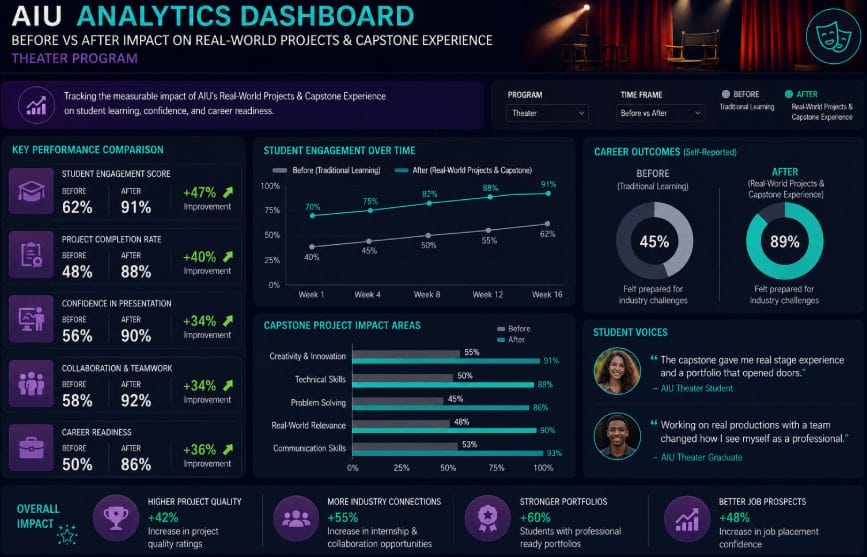
aiu analytics dashboard
AIU Analytics Dashboard highlights significant improvements in Theater students’ engagement, project completion, collaboration, career readiness, and capstone outcomes. Real-world projects, AI-driven learning, and portfolio development enhance confidence, employability, industry connections, and professional success.
Research Projects & Innovation in Bachelor of Theater

Bachelor of theater programs provide an opportunity to conduct research creatively via performance, production, and storytelling. In any case, whether one is doing a bachelor’s in theater or a theater arts degree, he/she will do research in the areas of acting methods, playwriting and script writing, performance studies, theater directing, and stage production. The performing arts and theater arts program provides a combined education in performing arts and innovation in theatrical performance. Such a program will train students through academic resources to have a career in the field of theater and stage performance. 

Additionally, one can choose from a theater production degree, playwriting degree, theater directing degree, acting degree, or stage performance degree program. Dramatic arts can also be explored through cooperative projects. Options such as an acting degree online or online theater degree have been made available to allow more access to high-quality theater arts education. 

  • MBM300 Thesis Proposal
  • MBM302 Bachelor Thesis (5,000 words)

Publication: At AIU, we prioritize cutting-edge graduate research here, fostering academic excellence through the dissemination of groundbreaking discoveries. In the field of Theater, we empower graduate students to present innovative ideas, enriching scholarly dialogues. Our commitment to publishing student research enhances their academic impact, laying a solid foundation for budding scholars and driving the field forward.

Discover Where Your Talent Can Take You

Unlock Your Potential

Dissertation & Thesis Defense

In the final stage of the Theater course at AIU, students are presented with a unique chance to demonstrate their proficiency and creativity through an extensive thesis proposal. This critical stage marks the culmination of their journey, providing a venue to delve into complex topics within the curriculum.

The thesis defense, a fundamental element of the program, enables students to exhibit their research abilities, analytical thinking, and literary knowledge, highlighting their preparedness to make significant contributions to the field after graduating from AIU.

Student Experience in Pursuing Bachelor of Theater

Pursuing a bachelor of theater offers students an immersive journey into – creativity, collaboration, and artistic expression through continuous support for online study. A bachelor’s in theater combines practical training with academic learning, helping students build a strong theater degree or theatre degree foundation. Whether enrolled in a bachelor of theatre, performing arts program, or theatre arts program, students develop advanced acting techniques, script analysis, and stage production skills. 

A theater arts degree or performing arts degree also introduces theater directing, playwriting degree concepts, and performance studies, preparing graduates for theatrical performance and live theater careers. Students gain hands-on experience through theater production degree coursework, stage production studies, and theater arts education, enhancing confidence and teamwork. 

For flexible learning, an acting degree online or online theater degree can complement traditional study. These experiences open diverse theater careers, stage performance careers, and opportunities in performing arts education, making a drama school degree or acting degree a rewarding path.

Community & Social

The Bachelor of Theater at AIU cultivates an energetic educational community using cutting-edge technologies and collaborative tools, ensuring students complete a nurturing academic journey. Through platforms like the Virtual Campus, Mobile APP, MYAIU, AIULink, and AIUTV, students, faculty, and alumni come together, creating a network of interconnected minds. Engaging in thought-provoking symposiums, webinars, and conferences fosters global connections among the community.    

Accessing the Merlin Media Center provides a wealth of other academic and professional programs core courses and resources while staying linked through AIULink ensures ongoing internet connectivity. The AIU Virtual Campus, APP compatible with both Android and iOS, offers effortless access to online programs, tools and academic resources. These platforms facilitate the sharing of personal narratives, exploring holistic development, and contributing to the betterment of humanity, shaping an AIU experience that stands unparalleled.

Live Classes

AIU introduces an innovative approach to virtual learning by incorporating dynamic live sessions twice daily. One can also access these live classes from the archive that hosts 100s of classes that can be combined to personalize the academic journey of a student. Led by seasoned former faculty members and experts from various industries, these sessions offer real-time discussions, interactive Q&A segments, and collaborative problem-solving, enriching your comprehension of community.

Participating in these sessions augments your expertise, equipping you to shape policies and refine your skills in Theater. AIU’s live classes promise intellectually engaging dialogues, up-to-the-minute industry perspectives, and individualized instructor feedback, guaranteeing a rewarding journey through the study of Theater. You can access 700+ live classes, 2000+ assignments and projects, 3400 mini courses free of cost as a Guest Student to learn new skills, new abilities, and earn certificates to grow and access new opportunities in your field of interest. In fact, one can earn up to $5000 credit towards their tuition fee by completing 5 Mini-courses and/or Live classes as a Guest Student.     

Feel free to glance through some of our recorded live sessions on related subjects

Academic Resources

At AIU, the Virtual Campus, on campus serves as an innovative center equipped with more than 25 specialized tools, all geared towards supporting and empowering students throughout their educational endeavors in real and digital world. Our newest feature, the Virtual Reality 3D immersive online learning and teaching experience here, elevates community engagement and interaction, nurturing growth, motivation, and inspiration among our diverse student population.

Also, AIU includes the leading Artificial intelligence (AI) teaching tools such as ChatGPT, Dall-E and Midjoruney, PDF Executive Assistance, Slide Generator Slide Generator plus others and is adding new AI tools to ensure students are fluent in this emerging trend in computer science and benefit from the major boost in productivity they bring.

Within our extensive online library, comprising 260,000 books and 30 million articles, journals, and peer-reviewed articles, alongside 109,000 resources co-curated by the AIU community, we establish an unmatched academic setting dedicated to fostering the growth, development, and success of our students.

Sign-in As a Guest and Experience Success

Our Guest Student Access

Admission Requirements for Bachelor of Theater

Requirements to enroll into bachelor of theater or bachelor’s in theater programs may consist of high school diploma or its equivalent, academic transcripts, and for some schools, an audition or portfolio illustrating talent. Theatre degree or bachelor of theater may also require a personal statement explaining your love for performing arts and theater arts. 

Bachelor of theatre, acting degree, stage performance degree, or performing arts degree students demonstrate their ability in acting techniques, theatrical performance, and script analysis through webinars and conferences. Programs like drama school degree, theater directing degree, playwriting degree, or theater production degree from selected universities may demand interviews and letters of recommendation. 

Options of acting degree online or online theater degree may be available from some institutions. Strong program in performing arts, theater arts, or performing arts education will allow students to become successful in theater careers, live theater careers, stage performance careers, stage production studies, theater directing, and performance studies.

How Can You Apply for Bachelor of Theater?

To apply for the online Bachelor of Theater at AIU, visit the official AIU website and navigate to the admissions section. 

  • Complete the online application form with your academic background, professional experience, and a statement of purpose. 
  • Submit required documents such as transcripts, a resume, and identification. No standardized test scores are typically required, making the process more accessible. 
  • Once submitted, your application will be reviewed by the admissions team. If accepted, you’ll receive enrollment instructions and access to the university’s online learning platform. 

This flexible, self-paced program is ideal for professionals aiming to advance in Theater.

Financial Support & Scholarships

We are thrilled to offer a broad range of scholarships, online graduate school programs tailored for our own undergraduate degree, graduate degree or master’s degree students here. Please provide your information to explore various distance education and scholarship opportunities designed to support your academic pursuits. Let us assist you in achieving your educational and professional goals and nurturing your scholarly ambitions.

FAQs

What is a Bachelor of Theater?

A Bachelor of Theater is an undergraduate degree focused on acting, directing, stage production, playwriting, and performance studies, preparing students with creative, technical, and practical skills for performing arts careers.

What can I do with a theater degree?

A theater degree prepares graduates for acting, directing, stage management, theater production, playwriting, arts administration, education, entertainment, and creative media while developing communication, collaboration, and leadership skills.

Is a theater degree worth it?

Yes, a theater degree is worthwhile for students passionate about performing arts, offering professional training, creative development, networking opportunities, and transferable skills valued across entertainment, education, media, and business industries.

What jobs can I get with a Bachelor of Theater?

Graduates can become actors, directors, stage managers, playwrights, producers, drama teachers, theater technicians, casting assistants, arts administrators, or pursue careers in television, film, and live performances.

How long does it take to earn a theater degree?

A theater degree typically takes four years of full-time study to complete, though accelerated, part-time, and online programs may vary depending on institution, curriculum, and student enrollment status.

Let us know your goals and aspirations so we can chart a path at AIU to achieve them!
//
Admissions Counselor
Juan Mejia
Available
//
Admissions Counselor
Sandra Garcia-Fierro
Available
//
Admissions Counselor
Adekunle Bamgbose
Available
//
Admissions Counselor
Ariadna Romero
Available
//
Admissions Counselor
Prof. Emmanuel Gbagu
Available

"*" indicates required fields

This field is for validation purposes and should be left unchanged.
Name*

"*" indicates required fields

This field is for validation purposes and should be left unchanged.
Name*

"*" indicates required fields

This field is for validation purposes and should be left unchanged.
Name*

"*" indicates required fields

This field is for validation purposes and should be left unchanged.
Name*

"*" indicates required fields

This field is for validation purposes and should be left unchanged.
Name*

"*" indicates required fields

This field is for validation purposes and should be left unchanged.
Name*

"*" indicates required fields

This field is for validation purposes and should be left unchanged.
Name*

"*" indicates required fields

This field is for validation purposes and should be left unchanged.
Name*

"*" indicates required fields

This field is for validation purposes and should be left unchanged.
Name*

"*" indicates required fields

This field is for validation purposes and should be left unchanged.
Name*

"*" indicates required fields

This field is for validation purposes and should be left unchanged.
Name*

"*" indicates required fields

This field is for validation purposes and should be left unchanged.
Name*

"*" indicates required fields

This field is for validation purposes and should be left unchanged.
Name*

"*" indicates required fields

This field is for validation purposes and should be left unchanged.
Name*

"*" indicates required fields

This field is for validation purposes and should be left unchanged.
Name*

"*" indicates required fields

This field is for validation purposes and should be left unchanged.
Name*

"*" indicates required fields

This field is for validation purposes and should be left unchanged.
Name*

"*" indicates required fields

This field is for validation purposes and should be left unchanged.
Name*

"*" indicates required fields

This field is for validation purposes and should be left unchanged.
Name*

"*" indicates required fields

This field is for validation purposes and should be left unchanged.
Name*

"*" indicates required fields

This field is for validation purposes and should be left unchanged.

Submit your data.

After submitting, a widget will appear at the bottom-left corner so you can start your training.

Name*

Do you hate spam? Don’t worry, we hate them too. Your email is 100% secure with us.

"*" indicates required fields

This field is for validation purposes and should be left unchanged.

Submit the form below to begin your interview.

After submitting, a widget will appear at the bottom-left corner so you to start your AI interview.

Name*
Accepted file types: docx, pdf, Max. file size: 500 MB.

Do you hate spam? Don’t worry, we hate them too. Your email is 100% secure with us.