





Postdoctoral in Logistics

School of Business and Economics

Academic Freedom to Discover Your Purpose

Open Curriculum Design at Atlantic International University

This postdoctoral logistics program is based on andragogy (the principles of adult learning), academic freedom and the use of distance learning. It is intended for individuals eager to advance their career while conducting research on innovative ideas within the area of logistics. The supply chain optimization curriculum gives logistics doctoral research students the opportunity to study logistics for both their logistics and distribution studies, professional life and their research work. Students of advanced logistics research will gain the knowledge and ability to think independently; through self-motivation and through collaboration with other logistics postdoc program individuals worldwide, there are many opportunities to continue developing skills and talents relevant to improving logistics issues.

What are the Core Courses & Topics for Postdoctoral in Logistics ?

Important: Below is an example of the topics or areas you may develop and work on during your studies. By no means is it a complete or required list, as AIU programs do not follow a standardized curriculum. It is meant solely as a reference point and example. Want to learn more about the curriculum design at AIU? Check here: Course and Curriculum

The core curriculum of the Postdoctoral Program in Logistics is a comprehensive foundation of theory, analysis and research, whilst being in accordance with the principles of andragogy, academic freedom and the principles of distance learning. The core components of the program focus on advanced logistics strategy, applied logistics research, global supply chain optimization, sustainable and resilient logistics systems, digitally and AI enabled logistics, risk and crisis management and advanced research methodology. Participants are encouraged to critically assess real-world logistics challenges, incorporate interdisciplinary global supply chain management perspectives into their assessments of logistics challenges, and tailor the structure of their academic experience to reflect the intersection of their professional background and research goals, thus providing for the development of a meaningful, flexible and globally relevant post-doctoral experience.

Orientation Courses : Postdoctoral in logistics

Researchers enrolled in the Postdoctoral Logistics Program will attend orientation courses to learn about the andragogical learning model (for adult learners), academic freedom, and distance learning within this program. The courses will provide scholars with an understanding of self-directed research planning, as well as responsible and ethical scholarship, writing professionally at the level to be a successful researcher, and how to utilize digital learning platforms and research tools properly. Each postdoctoral logistics scholar will learn how to set their own goals, develop reflective learning techniques, collaborate across disciplines, and tie their research interests to the larger logistics postdoc program global challenges related to logistics for a seamless transition to independent, high-level postdoctoral research, all within the framework of this flexible and supportive academic structure.

  • Communication & Investigation (Comprehensive Resume)
  • Organization Theory (Portfolio)
  • Experiential Learning (Autobiography)
  • Academic Evaluation (Questionnaire)
  • Fundament of Knowledge (Integration Chart)
  • Fundamental Principles I (Philosophy of Education)
  • Professional Evaluation (Self Evaluation Matrix)
  • Development of Graduate Study (Guarantee of an Academic Degree)

What are the Research Projects for Postdoctoral in Logistics ?

The Postdoctoral Program in Logistics’ research projects are structured to facilitate high-impact original scholarship based on originated research and self-directed exploration of challenging logistics issues. Postdoctoral researchers work independently and collaboratively to develop solutions to current problems affecting today’s logistics and supply chain industries including sustainable logistics practices, integration of digital technologies in the supply chain, increasing resiliency of logistics operations and humanitarian logistics issues and developing optimally functioning global trade systems. 

The research methodology and interdisciplinary component of each project must be robust and relevant in a practical sense, enabling researchers to create publishable research products. In addition, the researchers can directly impact policy and processes relating to logistics in their respective countries and can also provide significant innovations to the ever-changing and rapidly evolving nature of global logistics through flexible distance learning opportunities.

  • Postdoctoral Dissertation Project
  • MBM900 Postdoctoral Proposal
  • MBM902 Postdoctoral Dissertation (15,000 words)

Publication – Through their participation in the Postdoctoral Logistics, postdoctoral scholars develop scholarly skills through publishing, conveying original research through peer-reviewed academic journals, conferences, policy papers, and publications targeted toward industry professionals. Based on the tenets of andragogy and academic freedom, postdoctoral logistics students can publish on topics related to their independent research while adhering to high-quality academic/ethical standards. The distance learning format of logistics postdoc program promotes international collaboration and mentorship; additionally, it gives postdoctoral students access to digital sources of logistics postdoc program research, allowing them to share valuable information that improves logistics theory; improves the logistics innovation studies professionalism of logistics professionals; and provides solutions for complex global supply chain problems.

Are You Ready to Apply for a Postdoctoral in Logistics ?

Apply Now

Dissertation Defense

The dissertation defence for the postdoctoral program in Logistics is the conclusion of the research carried out by an independent scholar (postdoc.) in accordance with the andragogical principles of adult education and under the authority of academic freedom, while maintaining scholarly rigor. During the Dissertations or Defence, a researcher presents their findings and argues why these contributions are significant contributions to the field of logistics and supply chain management in front of a panel of scholars who evaluate the quality and strength of the methodological approach, theoretical applicability, and practical value of the research.

Postdoctoral in Logistics Student Experience

Postdoctoral Logistics includes AI technologies that enhance advanced knowledge acquisition and research by providing intelligent logistics postdoc program support tools (analysis of data, creation of predictive models, mapping the resources on a specific topic, and personalized academic guidance) . The integration of these AI technologies with andragogy (the study of adult education) and academic freedom ensures that postdoctoral researchers develop their own independent research paths and successfully navigate their way through their studies and coursework while taking full advantage of the current trends and the potential future opportunities in the field of logistics. Logistics postdoc program researchers in a modern distance learning environment will benefit from the features of the AI-powered systems as they enable global collaboration, support adaptive learning, promote evidence-based decision-making, and facilitate the development of new innovations in logistics that will be of significance in many areas of business today.

Community & Social

The community and social engagement part of the supply chain logistics strategy programme for postdoctoral research at Logistics demonstrates how the use of advanced research can contribute to making a positive difference in society. The programme supports the development of solutions to real-world logistics problems (e.g., sustainability, humanitarian supply chains and equitable access to resources) by encouraging postdoctoral researchers to work with global academic networks, industry stakeholders (private and government), non-profit organizations (NGOs), and local communities. This part of the programme is also designed to help create transport systems and ethical leadership, social responsibility, and the sharing of knowledge in a flexible distance-learning format guided by andragogy and academic freedom. In this environment, scholars are supported in their efforts to use their research to improve the local and global community.

Contact Us Today!

Begin Your Journey!
AIU’s Summer of Innovation and Growth gives you the ability to earn up to $5000 in tuition credit by completing free lessons and courses.
Whether you’re looking to acquire new skills, advance your career, or simply explore new interests, AIU is your gateway to a world of opportunities. With free access to 3400 lessons and hundreds of courses the ability to earn credits and earn certificates there’s no better time to start learning.
Join us today as a Guest Student and take the first step towards a brighter, more empowered future.
Explore. Learn. Achieve.

Academic Resources

The academic resources of the Postdoctoral Program in Logistics offer postdoctoral researchers many digital libraries, peer-reviewed journals, research databases, virtual lab spaces, and advanced analytical/A.I. tools. Resources are designed to allow postdoctoral researchers the ability to access interdisciplinary information related to global logistics and supply chain innovations without limits on researching, assessing, and interpreting this information. The researchers have access to these resources on a global basis 24 hours a day 7 days a week, enabling them to have a flexible and research-oriented educational setting to conduct research and strive for excellence.

Live Classes

Each day in the Postdoctoral Logistics Program, there are two live classes that offer a combination of flexible and structured opportunities for scholarly discussions at the same time. By using these interactive classes, postdoctoral researchers can connect with faculty members, experts from industries, and peers from around the world to explore the latest emerging theories in Logistics as well as case studies based on real-world applications and new findings in logistics.

These classes use the principles of andragogy (the science of adult education), academic freedom, and distance learning as their foundation. Live classes create space for students to engage in critical discourse, collaborate on solutions, and share their ideas with each other, thereby complementing what they have learned through independent study and offering a wholesome experience of an interconnected global academic environment.

AIU Live Classes Examples of Logistics :

Special Projects, Research Publications, & Co-Authoring

As part of the Post-doctoral Logistics Program, researchers will be working on special projects and publications, as well as collaborating with other researchers to create new knowledge. These projects and publications will allow most of their work to be completed by independent and team activities and will result in an impact on logistics and supply chain research through innovative solutions to complex logistical problems. Post-doctoral researchers will receive support from Universities and research institutions worldwide, as well as support from the industry. The independent and team activities of Post-doctoral researchers will result in a variety of outputs, including journal articles, policy papers, and applied research outputs. The distance-learning model of the Post-doctoral Program will support international collaboration, mentoring, and sharing of knowledge to enhance the visibility of universities and professional influence.

Start Evolving with AIU Now

Begin Your Exploration

Career Center for Postdoctoral in Logistics

The Career Center for the Postdoctoral Logistics supports postdoctoral researchers in making their advanced research relevant to leading global scholars, researchers, and practitioners. It will use personalized mentoring for professionals looking to establish their research impact, develop their logistics postdoc program publication strategy and connect to international institutions and organizations in the field. The Career Center of our logistics postdoc program can align an individual’s goals with their research expertise using Career Coaching and will offer its support in alignment with three principles of Andragogy, Academic Freedom and Distance Learning to help postdoctoral researchers achieve the positions they seek within the global logistics and supply chain system of distribution networks, including Teachings, Consultancies, Policy Influencers, and Executives.

Job Description

The Postdoctoral Program in Logistics will benefit graduates by providing multiple significant career paths that are available to postdoctoral graduates across academic, research, industrial and governmental sectors. The job role postings will provide a detailed description of the expertise developed in recent years in the areas of Supply Chain Innovation, Digital Transformation, AI Systems, and Logistics Strategy. All of the postings have been developed in concert with the principles of Distance Education, Academic Freedom, Andragogy, and the use of Independent Research, Global Perspectives and Thought Leadership to fill senior roles that will play an integral role in delivering innovative solutions and strategic decision making within the international logistics sector.

Logistics and supply chain is a very broad career field for university professors/lecturers that have experience working with Logistics & Supply Chain Management fields. Specifically, prof/lecturers will have an opportunity to pursue several different careers within logistics and supply chain components.

  • Postdoctoral Researcher – Global Supply Chain
  • Supply Chain Strategy Consultant
  • Logistics Operations Director
  • Logistics Innovation Research Director or Principal Investigator
  • Transportation and Trade Policy Advisor
  • Consultant for Sustainable and Resilient Supply Chains
  • Digital Transformation and AI Logistics Specialist
  • Humanitarian and Emergency Logistics Coordination
  • Global Trade Compliance Analyst
  • Senior Operations/Distribution Manager.

Tools for Postdoctoral in Logistics

The tool database within the Postdoctoral Program in Logistics shows scholars what advanced technological, analytical, and research tools are at their disposal when conducting independent research. The tools offered by the program include; AI data analysis solutions, Supply Chain Simulation Software, Digital Collaboration & Communication Systems, Virtual Labs, Predictive analytics tools, and Access to Extensive Academic Databases. The tools available to the postdoctoral researcher are designed to complement the principles of andragogy, learning freedom, and distance learning, ultimately enabling the researcher to examine complicated logistical issues, support better decision making processes, and generate creative and relevant Global working research results.

Associations for Postdoctoral in Logistics Professionals

The Post-Doctoral Program in Logistics has a listing of important Professional, Academic, or Industry groups/Associations where individuals can network with each other and collaborate to conduct joint research. As such, these Association Memberships offer Post-Doctoral students the opportunity to remain abreast of the most applicable and practical knowledge concerning Logistics, Supply Chain and Global Trade. Associate members are likely to develop professionally and be aware of operations logistics opportunities to collaborate across multiple disciplines, access global trade conferences, Journals and Mentorship that will aid in development and contribute to both the Academic and Practical elements of Logistics.

  1. Council of Supply Chain Management Professionals (CSCMP)
  2. Association for Supply Chain Management (ASCM)
  3. European Logistics Association (ELA)
  4. International Association of Logistics and Supply Chain Professionals (IALSCP)
  5. Global Cold Chain Alliance (GCCA)
  6. International Society of Logistics (SOLE)
  7. Intermodal Association of North America (IANA)
  8. International Warehouse Logistics Association (IWLA)
  9. Chartered Institute of Logistics and Transport (CILT)
  10. Institute for Supply Management (ISM)

Read AIU’s Mundi Magazine

Stay Updated

Postdoctoral in Logistics Admission Requirements

In order to gain admission into the Postdoctoral Programme in Logistics, candidates must demonstrate that they have an exceptional level of academic preparation, research capability and organisational experience which will enable them to engage in high level scholarship. Candidates will be expected to hold a doctoral-level degree related to logistics or supply chain management; in addition, Applicants must also have, or be expected to develop a strong research track record and be proficient in both quantitative and qualitative research methodologies; and provide a comprehensive detailed research proposal and letters of recommendation demonstrating their commitment towards independent interdisciplinary research. 

The Admissions Committee will review all applications based on compatibility with the principles of andragogy, academic freedom and distance learning; and focus on the candidate’s intellectual curiosity, self-directed learning and potential for making substantial contributions to the global logistics research community.

How Can You Apply?

Prospective candidates for the Postdoctoral Program in Logistics review all necessary requirements and prepare application materials (including the doctorate transcript(s), curriculum vita(e) and letters of recommendation) before their application can be considered complete. Therapeutic Educational Research Educators (TERE) also provide prospective scholars with detailed instructions during the initial application process regarding how to submit documentation supporting their application. Application materials must be submitted via an electronic application and will be sent to the admissions committee for review. If selected for admission into the program, the candidate will be notified of the date(s) and time(s) for virtual interview(s) with the admissions committee to discuss their research interests and career objectives. Candidates accepted into the program must complete all necessary documentation required for enrollment and participate in educational orientation training sessions. Accepted candidates will also have access to program resources and participate in the community of program scholars.

Financial Support & Scholarships

The Logistics Postdoctoral Program’s intention is to facilitate academic achievement for qualified researchers by removing the financial burden that sometimes inhibits advanced studies as well as promoting excellence in research through its financial support and scholarship options, such as merit-based scholarships, research grants, funding for conferences/publications, and special projects. The program aligns with principles and concepts of andragogy, academic freedom, and distance education and provides assistance with finding external funding sources, fellowships, or collaborative opportunities for research sponsoring. The broad nature of this financial support allows postdoctoral researchers to devote their entire attention to innovative research, global collaboration, and making significant contributions to the logistics and supply chain management industries.

How Much Does a Postdoctoral in Logistics Cost Per Year?

The AIU annual cost for an Online Distance Learning Post Doctoral in Theatre & Performing Arts allows for diverse accessibility options, thus meeting individual student needs. As an on-line Distance Learning institution, emphasizing Andragogy and Academic Freedom, AIU’s tuition structure has been developed with regard to the self-directed learning model that it employs within its programs. The cost of the Post Doctorate (PD) will be determined by the number of credit hours taken along with the tuition and research components of the above programs taken by students throughout each academic year. By being able to tailor the costs of the PD according to the students’ progress along their desired program path, AIU can alleviate some of the financial burden associated with traditional PD programs, which would provide students with access to a multidisciplinary environment of academic scholars and support from faculty members around the globe as they complete their PD.

FAQs

What is a Postdoctoral in Logistics program?

The Logistics Postdoctoral Fellowship Program is an academic program for individuals with a PhD that focuses on advanced research into the field of Logistics/Supply Chain Management. The intent of the program is to build PhD student’s expertise in the area of Logistics/Supply Chain Management through independent research, high-level problem-solving, and the development of innovative solutions for Global Supply Chains, Green Logistics, and Artificial Intelligence-based Logistics Systems. Many PhD students can complete this fellowship program completely via on-line or through a distance learning environment; therefore enhancing the option for flexibility in academic freedom and the promotion of interdisciplinary collaboration across multiple academic fields.

How is a postdoctoral logistics program different from a PhD?

A postdoc logistics program focuses more on advanced and independent research than a doctorate, as a postdoc allows an individual to delve deeper into their area of expertise, publish and lead their own research projects, while a PhD is mostly coursework, research and writing a dissertation to earn one’s doctorate. Professional development, impact and specializing in their field, are the primary goals of the postdoctoral researcher, and while a doctor can be obtained through an amount of coursework, the postdoc does not usually require more formal coursework.

What research topics can be explored in logistics?

Topics of research within logistics can encompass supply chain optimization, eco-logistics and green logistics, digital and AI‐enabled technologies, transportation and distribution management, risk and resilience, humanitarian logistics, inventory and warehouse management, compliance with global trade regulations, logistics policy and innovation.

Who should pursue advanced research in logistics?

The field of logistics offers an excellent opportunity for advanced academic, professional, and organisational research. Scholars and organisations will already have established knowledge and experience in supply chain management, business or engineering, and they will look to contribute to innovation, strategic decision propensities, and global solutions of complexity in international logistics.

Is the logistics postdoctoral program flexible and online?

Yes, AIU offers a 100% online and flexible postdoctoral program in logistics.

Let us know your goals and aspirations so we can chart a path at AIU to achieve them!
//
Admissions Counselor
Veronica Amuz
Available
//
Admissions Counselor
Juan Mejia
Available
//
Admissions Counselor
Alba Ochoa
Available
//
Admissions Counselor
Ariadna Romero
Available
//
Admissions Counselor
Sandra Garcia-Fierro
Available
//
Admissions Counselor
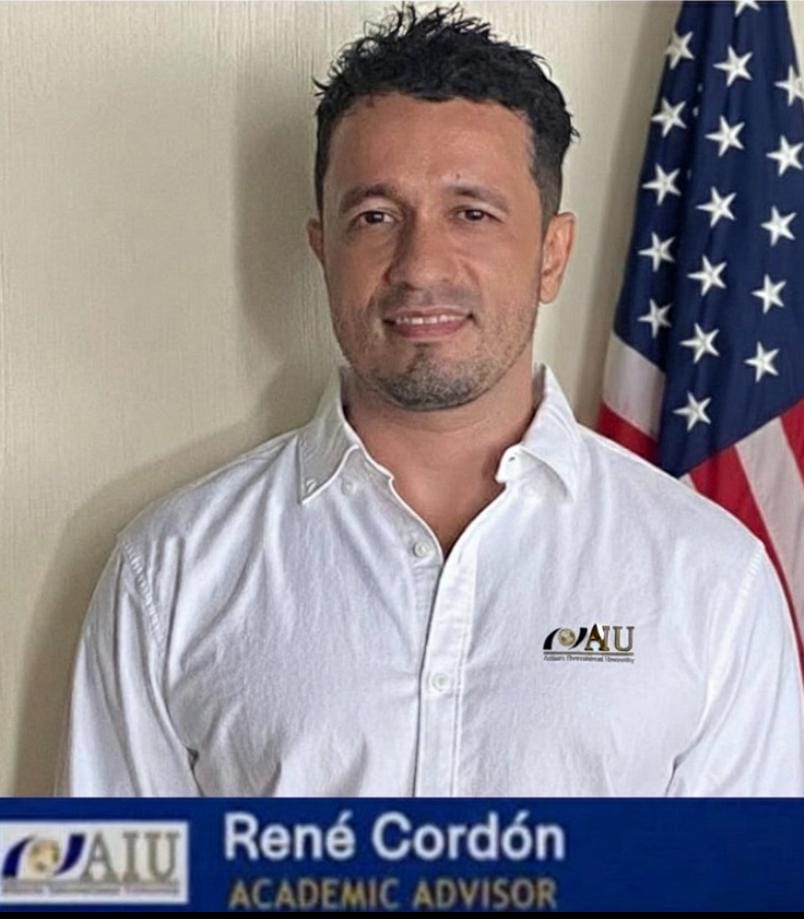
Rene Cordon
Available

"*" indicates required fields

This field is for validation purposes and should be left unchanged.
Name*

"*" indicates required fields

This field is for validation purposes and should be left unchanged.
Name*

"*" indicates required fields

This field is for validation purposes and should be left unchanged.
Name*

"*" indicates required fields

This field is for validation purposes and should be left unchanged.
Name*

"*" indicates required fields

This field is for validation purposes and should be left unchanged.
Name*

"*" indicates required fields

This field is for validation purposes and should be left unchanged.
Name*

"*" indicates required fields

This field is for validation purposes and should be left unchanged.
Name*

"*" indicates required fields

This field is for validation purposes and should be left unchanged.
Name*

"*" indicates required fields

This field is for validation purposes and should be left unchanged.
Name*

"*" indicates required fields

This field is for validation purposes and should be left unchanged.
Name*

"*" indicates required fields

This field is for validation purposes and should be left unchanged.
Name*

"*" indicates required fields

This field is for validation purposes and should be left unchanged.
Name*

"*" indicates required fields

This field is for validation purposes and should be left unchanged.
Name*

"*" indicates required fields

This field is for validation purposes and should be left unchanged.
Name*

"*" indicates required fields

This field is for validation purposes and should be left unchanged.
Name*

"*" indicates required fields

This field is for validation purposes and should be left unchanged.
Name*

"*" indicates required fields

This field is for validation purposes and should be left unchanged.
Name*

"*" indicates required fields

This field is for validation purposes and should be left unchanged.
Name*

"*" indicates required fields

This field is for validation purposes and should be left unchanged.
Name*

"*" indicates required fields

This field is for validation purposes and should be left unchanged.
Name*

"*" indicates required fields

This field is for validation purposes and should be left unchanged.

Submit your data.

After submitting, a widget will appear at the bottom-left corner so you can start your training.

Name*

Do you hate spam? Don’t worry, we hate them too. Your email is 100% secure with us.

"*" indicates required fields

This field is for validation purposes and should be left unchanged.

Submit the form below to begin your interview.

After submitting, a widget will appear at the bottom-left corner so you to start your AI interview.

Name*
Accepted file types: docx, pdf, Max. file size: 500 MB.

Do you hate spam? Don’t worry, we hate them too. Your email is 100% secure with us.