How an Open Curriculum Helps Media Students Build Industry-Relevant Skills
April 9, 2026 2026-04-09 2:47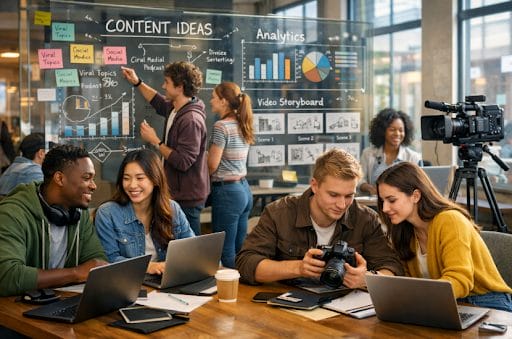
The media environment is undergoing a pace of change that is unprecedented in most other sectors. From algorithmic content systems to immersive storytelling experiences in streaming, gaming, and social media, the set of expectations for graduates entering the industry has been completely transformed. The traditional and not flexible academic model often finds it difficult to keep up. Few renowned universities came forward to address that concern with flexible models of curriculum design that can enable students to take more control of their academic paths.
At the forefront of this change is the academic freedom and open curriculum for media students – a model intended to better align academic education with the realities of the industry. Rather than setting out a strict sequence of required courses, this model enables students to make informed decisions about their coursework choices that will support their professional objectives, facilitate fluency across disciplines, and develop media industry skills.
This article will explore how open curriculum media education supports the development of media industry skills, improves career readiness, and enables students to take control of designing their own educational experience within a flexible media degree program.
The Shift Toward Flexibility in Media Education
Over the years, the media industry has undergone a radical shift from basic print media, television, and radio to digital media, interactive storytelling, AI-powered media production, influencer economies, transmedia branding, and data analytics for audience insights. The industry is seeking students with the ability to conceptualize across media platforms, interpret audience metrics, interpret production technology, understand platform evolution, and collaborate with other functions.
The current media landscape cannot be served by a closed curriculum that is based on outdated silos. The open curriculum in media studies bridges this divide by enabling students to integrate creative practice, theory, technical knowledge, and business knowledge in a manner that reflects the real-world media landscape.
What Is an Open Curriculum in Media Studies?
An open curriculum reduces prescriptive core requirements and offers broad thematic clusters instead of fixed tracks, substantial elective choice, interdisciplinary integration, and independent study.
In a flexible media program – students are much more than a mere passive consumer of content. They are the designers of their own educational paths. This approach to personalized media studies is what makes Atlantic International University (AIU) unique – promoting informed decision-making. The approach is simple where students need to discuss their career goals with mentors and academic advisors to develop a structured plan to achieve them.
Building Industry Relevant Media Skills Through Customization
One of the most important benefits of an open curriculum for media students is its ability to develop expertise in cross-platform storytelling. Today, media professionals need to think not only in terms of one platform but also beyond it. By allowing students to take courses in film production, digital journalism, social media strategy, podcasting, interactive design, and gaming narratives – they can develop adaptive storytelling skills that are very important for media professionals.
Another key aspect is technical and analytical skills. The media today is deeply connected to data and technology. Under the open curriculum media and communications education framework – students can choose to pursue the syllabus in data visualization, media analytics, user experience design, coding for interactive media, and AI-assisted content creation. This interdisciplinary approach enables students to develop well-rounded skills in the media industry – equipping them to thrive in a technology-driven world.
Another key area is business acumen. The hallmark of career-oriented media education is not only being able to create media content but also to distribute, monetize, and position it. With the flexibility of electives – students can choose to pursue coursework in media economics, brand management, digital marketing, intellectual property law, and entrepreneurial incubation. This enables the student to graduate with the skills to start their own business or work in an existing one.
Designing Your Own Media Degree: Strategic Advantages
The idea of students designing your own media degree is a reflection of the structural shift in the philosophy of education. When students take ownership of their educational design, they gain a better understanding of how skills overlap and compound.
Skill stacking becomes a reality. For instance, documentary filmmaking and data journalism can be combined to create expertise in investigative multimedia reporting. Again, social psychology and content marketing can be integrated together to develop expertise in audience-driven campaign strategy. Similarly, sound design and immersive media studies can be combined to equip students with the skills required in virtual and augmented reality storytelling.
Learning through such a portfolio-driven approach further can enhance the professional aspect – making students ready for the job market. Since, employers are more interested in output than transcripts – a media studies open curriculum can help which focuses on capstone projects, internships, group productions, and client-based coursework. These can be directly applied to the creation of portfolios, which are essential elements of effective media training and ultimate employability.
Another key benefit of the open curriculum is flexibility. The media technology and platform landscape is constantly changing. An open curriculum enables institutions to incorporate new media subjects such as generative AI in content creation, streaming platform analytics, monetization of the creator economy, and virtual production methods. Students following an open curriculum as media students can easily shift to integrate new skills into their curriculum.
Personalized Media Studies and Career Alignment
The strength of personalized media research is in its alignment with professional objectives. Under one flexible media program, a student can build a concentration in digital strategy by merging media theory, analytics, marketing automation, and consumer psychology. In fact, students can build a concentration in investigative multimedia journalism by merging documentary production, data reporting, ethics, and public policy. A third student can build a concentration in immersive storytelling by merging film studies, game design, 3D modeling, and narrative theory with the right academic resources.
Each concentration is built from the same structural foundation but creates a different professional identity. This allows students to graduate with specialized knowledge that distinguishes them in the marketplace rather than graduating with generalized skill sets.
Enhancing Media Industry Skills Development Through Experiential Learning
Experiential learning is frequently incorporated deeply into open curriculum media education with educational learning theories that helps to master the subject. Industry internships, collaborative labs, client-based production courses, global study abroad experiences, and interdisciplinary innovation studios mimic professional practices. Students are exposed to actual deadlines, editorial comments, stakeholder requirements, and development cycles. Such learning is essential for developing media industry skills, as it helps develop both technical skills and professional rigor.
Flexibility does not equate to reduced academic rigor. On the contrary, the most effective media studies open curriculum models integrate strong theoretical foundations with applied practice. Students engage critically with media ethics, cultural studies, political economy, audience theory, and global communication system -strengthening analytical reasoning and strategic thinking, enabling graduates to navigate complex media environments with intellectual sophistication.
The Competitive Edge in a Saturated Market
The media job market is highly competitive. The generic degree is no longer a guarantee of employment. Students need to show differentiation, initiative, and flexibility. By enabling students to create their own media degree, the institution promotes a sense of ownership of professional development where students can create niche knowledge, show cross-functional proficiency, create cohesive portfolios, and integrate their studies with current industry trends – leading to a truly career-focused media education experience, one that produces graduates equipped not only to enter the industry but to grow within it.
The Last Word!
In a media landscape that is characterized by technological acceleration, diversification of platforms, and changes in audience behavior, traditional academic frameworks are no longer adequate. The open curriculum media education framework allows students to develop necessary media skills in the industry by designing their own media degree.
By giving students, the opportunity to design your own media degree, the institution provides a flexible media degree program that focuses on autonomy, adaptability, and industry relevance. The result is a comprehensive development of media industry skills based on both theory and practice. For students who want to pursue a career in the media industry, the open curriculum is more than just a model innovation – it is a foundation to create success stories worth celebrating.
Ready to take control of your future in media?
Author Bio

Kathakali Basu is a dynamic Content Strategist and Brand Communication expert at Atlantic International University, with a knack for transforming ideas into compelling narratives. With a Masters in Sociology and certification in Content Marketing, Kathakali expertly crafts strategies that elevate brands and captivate audiences. Her extensive experience in content writing and strategy has helped numerous businesses articulate their vision and connect meaningfully with their target market. Passionate about blending creativity with data-driven insights, Kathakali thrives on creating impactful content for the last 16+ years that not only resonates but drives results.
An animal lover and believer in inclusivity, she actively participates in animal rescues and rehoming. When she’s not strategizing, you’ll find her exploring the latest trends in digital marketing or indulging in reading and her love for storytelling.